
We are searching for
--
Please wait. This should take only a few seconds.
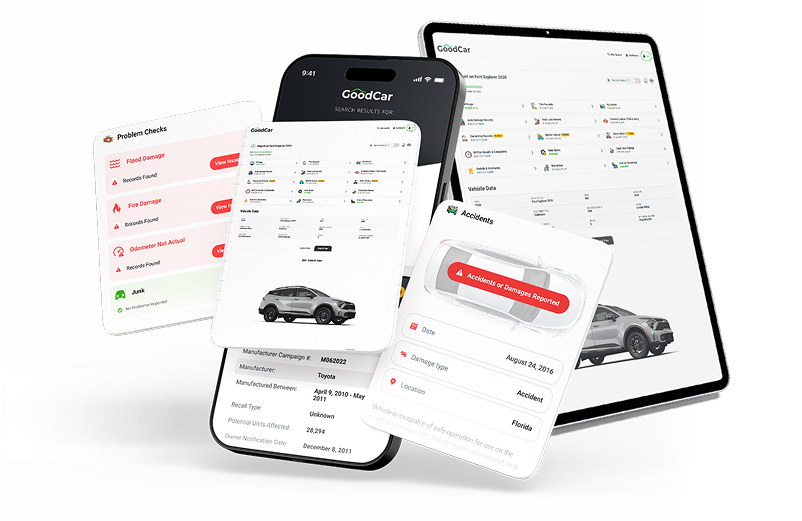
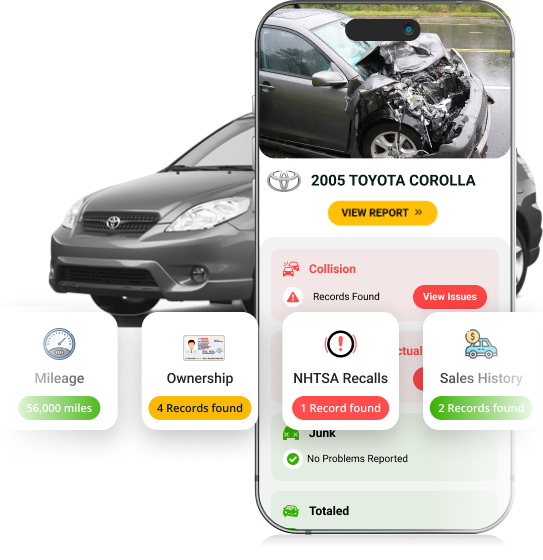
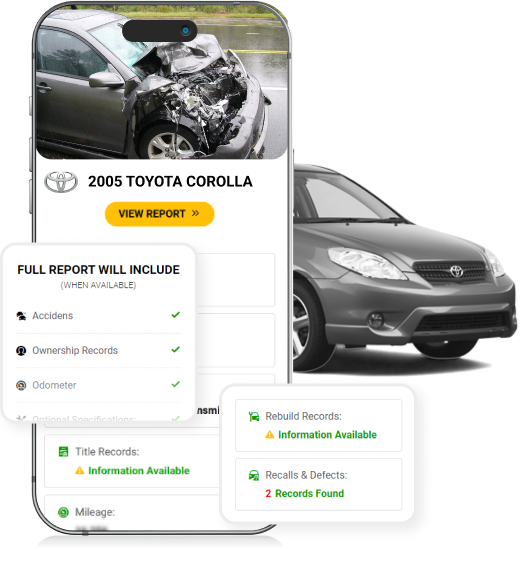
Car accident records are reports that outline the details of a crash. The records consist of police and insurance-reported crashes. This can include people, vehicles, witness statements, damages, injuries, and citations.
The reports can go into detail about the accident, including the time of the crash, the response of first responders, and road and weather conditions. This kind of information is important for verifying a car's history for buyers and owners who want to avoid purchasing a car with problems.
Car accident rates can be useful for legal purposes, such as filing lawsuits or insurance claims.
Let's dive further inInformation in a car crash report includes, but is not limited to:
Crash fatalities fluctuate over time. According to the U.S. Department of Transportation’s National Highway Traffic Safety Administration (NHTSA), fatal car accidents in 2024 included 39,345, which was a 3.8% decrease from 2023.
This decrease is linked to updated safety regulations and policymakers’ focus on the safe system approach.
Not all vehicles will carry the same risk level. For example, a motorcycle has a higher risk of a fatal accident compared to a car.
But it also depends on the driver and their behavior behind the wheel. This section compares cars, SUVs, motorcycles, and pedestrians to highlight which groups face the highest risk.
The daily frequency of car crash statistics in the U.S. depends largely on factors such as season, weather, and location that affect road conditions. For example, the holiday season often sees higher traffic volumes, and bad weather, such as heavy rain, can cause a spike in automobile accidents and influence the number of car accidents per day the state experiences.
Traffic accident death rates will vary state by state due to factors such as population size, traffic density, driving laws, enforcement policies, and weather conditions. This section compares fatal crashes across states to identify high- and low-risk states nationwide. Lawmakers use this data to improve safety measures in high-risk states.
| State | Fatal crashes% |
|---|
Car accidents can stay on your DMV and insurance records for several years. The exact number will depend on the state regulations.
Whether you’re at fault or not, your auto accident is reported to the Department of Motor Vehicles (DMV) in your state and becomes a part of your driving record.
The length of time it remains can be anywhere from three to five years or more. For example, in California, accidents remain on your record for three years, whereas in Oregon, it’s at least five years.
The severity of an accident can also influence how long the DMV records it. Serious offenses like reckless driving or DUI can stay on a DMV record for 10 years or more.
Your insurance record will follow a different timeline than the DMV. Insurance companies can review your driving history over the past three to seven years. The actual time will depend on the severity and the insurer’s policies.
At-fault accidents will stay on your insurance records longer than not-at-fault accidents. You’ll want to keep your insurance records as clear as possible by avoiding adding more accidents to your record, as this can lengthen how long they’ll appear on your driving record.
Accidents in your driving history can cause insurance premiums to increase by as much as 50% depending on the insurer.
Accident records are vital for legal and insurance purposes. After a crash, these reports document the sequence of events, damages, injuries, and witness statements, and help establish who was at fault.
Having access to accident records is invaluable when dealing with a dispute, as they include police statements, medical reports, repair quotes, and even photos. All of this can be used by a driver to strengthen their case for damage-related expenses.
Think of the accident record as the most important piece of evidence in your case, and the more evidence (vehicle details, photos, diagrams, video footage) you add to this report, the stronger your case will be.
When filing a car accident claim, having accident records is crucial for verifying witness statements and linking injuries to the crash. Without an accident record, it can be difficult to substantiate claims and can delay the claim process.
Accident records serve different purposes for different users.