


"Test Vehicle" Title Brand - What It Means for Vehicle Owners
- "Test Vehicle" Title Brand - What It Means for Vehicle Owners
- What Is a "Test Vehicle" Title Brand?
- How Does a Vehicle Get a "Test Vehicle" Title Brand?
- How States Handle "Test" or "Experimental" Vehicles
- Types of "Test Vehicles"
- Impact of a "Test Vehicle" Title Brand
- Buyer and Seller Responsibilities
- Should You Buy a "Test Vehicle"?
- How to Check for Title Brands
- FAQs About the "Test Vehicle" Title Brand
- FREE Vehicle Search
The typical car owner doesn't think twice about their vehicle's title. However, a few critical words printed on the title certificate can impact resale value, insurance eligibility, and DMV registration. These brief but critical terms are called title brands, which indicate a vehicle's past condition or previous use. You may be familiar with some title brands, like "Rebuilt" or "Salvage". There are more obscure ones, such as "Fire Damage" or "Theft-Recovered".
One of the least common designations is the "Test Vehicle" Title Brand. This label applies to cars once used by automakers, engineers, or government agencies during development and evaluation. The National Motor Vehicle Title Information System (NMVTIS) recognizes "Test Vehicle" as Brand Code 12, but you're unlikely to encounter this exact term, as no U.S. state applies this brand on a title.
Most test vehicles never enter the title system. Still, it's worthwhile to understand this classification, as some state DMVs may use a Manufacturer, Experimental, or Prototype brand, which has a similar meaning to the Test Vehicle Title Brand.
The resulting gap in naming conventions can mean that a car that once served as a prototype, pre-production sample, or engineering testbed may look completely normal in person. Digging into a car's vehicle identification number (VIN) data can uncover a used car's history and prevent a catastrophic purchase mistake.
What Is a "Test Vehicle" Title Brand?
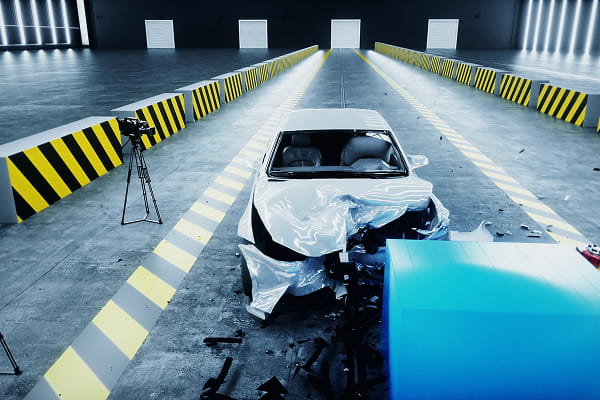
A test vehicle is built for development or evaluation purposes instead of retail sale. Examples include manufacturer prototypes, crash-test mules, and engineering validation cars. Sometimes, these vehicles are used to give a preview of a new model at a media briefing or at an auto show.
Although NMVTIS recognizes "Test Vehicle" (Brand Code 12), most state DMVs refer to such cars under alternate title categories. This is covered in more detail later. The idea behind the Test Vehicle Brand is to alert dealers, wholesalers, state motor vehicle agencies, consumers, and other automotive industry players that these cars are never intended for public sale. Yet this sometimes occurs, accidentally or otherwise, through auctions, remarketing (reselling of used vehicles), and surplus liquidations.
Numerous examples exist of automakers selling cars to consumers when they shouldn't have. Although these aren't directly tied to test vehicles, some of these instances are eye-opening. One of the most infamous examples involves a Ford Mustang with Serial No. 1. It was intended to be a pre-production model only used for display when sent to a dealer in Newfoundland, Canada. In 1964, a customer convinced the retailer to sell him the car. It took Ford two years to get the vehicle back via swap for the one-millionth Mustang. In a 1999 MotorTrend report, NHTSA discovered that some crash-tested vehicles, intended for destruction, had been rebuilt and sold through title washing. More recently, a 2019 federal case alleges that Volkswagen knowingly sold pre-production and press-fleet-cars as certified pre-owned vehicles.
While it may seem unlikely that a car not meant for public sale would slip through, history shows it's happened more than once.
How Does a Vehicle Get a "Test Vehicle" Title Brand?
A car can earn a test vehicle designation (or related title brand) depending on what stage of the development process it's in:
-
Prototype: Early test mules validate engineering and durability while setting the stage for emissions compliance.
-
Pre-Production: Bringing thousands of parts together requires pilot production to ensure a smooth assembly line later.
-
Crash-Test: Vehicles are intentionally destroyed to verify compliance with the Federal Motor Vehicle Safety Standards (FMVSS). There are two primary testing bodies in the U.S; NHTSA assesses FMVSS performance, and the non-profit Insurance Institute for Highway Safety (IIHS) conducts its own set of crash tests with standards different from those of the federal government. In addition, automakers may conduct their own crash tests, as these companies are required to self-certify compliance with FMVSS.
-
Preview/Demonstration: Before placing a model in dealer showrooms, automakers may make pre-production or early-production examples available to the media or display them at auto shows.
When automakers retire these vehicles, outcomes differ:
-
Destruction: Most vehicles crash-tested by NHTSA are crushed or dismantled under federal regulation 49 CFR Part 512, which governs the confidentiality of certain business information.
-
Parts-Only Sale: Some prototypes and pre-production models aren't drivable on public roads, but they contain components that have market value. These vehicles are sold as non-repairable or scrap.
-
Retitling for Resale: Some vehicles built close to the start of full production and used as samples or press cars may be refurbished and certified as safety- and emissions-compliant. These are sold as used automobiles.
How States Handle "Test" or "Experimental" Vehicles
Although the Test Vehicle Title Brand exists in the NMVTIS system, no state currently uses this nomenclature for title branding. Instead, each motor vehicle agency has its own approach to titling vehicles used for testing and other purposes.
Arguably, Maine comes closest to matching the intent of the NMVTIS Test Vehicle Title Brand. The state's Bureau of Motor Vehicles offers Experimental Motor Vehicle plates to builders and manufacturers for cars "in the developmental stage that have not reached production". While these vehicles may be driven on public roads for testing, they require re-certification before being sold to the public. Once retitled for sale, the previous Experimental brand will remain in the vehicle's VIN-based history.
Given Michigan's significance to the U.S. auto industry, it's unsurprising that the state offers specialized services for car makers. Manufacturer plates and titling are authorized for prototype and validation cars operated by automakers and suppliers. In other words, automakers can operate unregistered vehicles on public roads for testing, demonstration, or engineering purposes. These vehicles may be resold to the public once they pass all safety and emissions regulations. The subsequent title branding may reflect previous ownership as a manufacturer vehicle.
With California being the largest vehicle market in the U.S., and home to many automakers' design and production operations, the DMV issues special license plates for manufacturers, distributors, and others in the automotive trade. Title records for some of these vehicles may also reflect prior manufacturer ownership.
Nevada has a Manufacturer Vehicle registration class that covers evaluation and demo cars. Dealers must disclose prior manufacturer use at resale, though no "Test Vehicle" title exists.
Tennessee requires vehicles deemed "non-repairable" to receive appropriate branding. Former manufacturer test vehicles that have been damaged would fall under these existing "Salvage" and "Rebuilt" designations. The state does not issue a separate Test Vehicle or Experimental brand.
Virginia requires all salvage and rebuilt vehicles to pass DMV inspection before re-titling, regardless of prior ownership. A former manufacturer test vehicle would only require inspection if it had been damaged and received salvage branding. The state transmits all NMVTIS brand data but does not issue a specific Test Vehicle or Manufacturer title brand.
Texas's 2023 title mapping guide lists Brand Code 12 but maps it to "N/A" like other states, confirming that while the brand exists federally, the state does not apply it to titles issued in the state. "Mapping" is when a state aligns NMVTIS brand codes with its specific title-brand labels.
Kentucky recognizes manufacturer repurchases under lemon law provisions, which receive "Manufacturer Buyback" branding. However, the state does not issue Experimental or Test Vehicle brands. Title branding is primarily limited to Salvage and Rebuilt designations.
Wisconsin has an extensive array of specialty brands, such as "Replica" and "Prior Police Vehicle", but no options exist for "Manufacturer Vehicle" or Test Vehicle Title Brand.
Each state takes its own approach via manufacturer registrations and experimental plates, but no printed title bears the words "test vehicle". So, despite the official existence of NMVTIS Brand Code 12, each state agency sets its own path. This means that consumers may have a harder time identifying test vehicles. Nonetheless, a VIN-based history report can still provide valuable insight into a car's background.
Types of "Test Vehicles"
Let's expand on what cars can be considered test vehicles, even if state DMVs don't provide specific definitions. Here are the different categories:
Manufacturer Prototypes
Prototypes are usually hand-built, one-offs with non-standard parts. They serve as testing beds for everything from drivetrains to suspensions, and also help automakers meet strict safety standards that will be required on production models. Because prototypes rarely comply with FMVSS requirements or emissions regulations, most are destroyed or sold as non-repairable units once testing ends. Some prototypes find their way into private hands through approved auctions or museums, yet this is the exception. In these circumstances, rare examples may be sold without a title. And those that come with a title won't be branded as a test vehicle.
Pre-Production Models
Before starting mass production, automakers assemble a small number of pilot vehicles to test the manufacturing line. Some pre-production cars may be sent for emissions and safety certifications, while others are used for photography and other marketing activities.
Mechanically and visually, these test vehicles resemble retail cars, but minor equipment differences may exist, or the engine or suspension isn't quite tuned to final specifications. A pre-production vehicle can be sold to the public if it passes federal safety and emissions requirements. Depending on the state, it may need to be recertified or pass a safety inspection. Nonetheless, a Test Vehicle Title Brand won't apply here.
Crash-Test Units
Automakers crash-test vehicles to verify occupant-protection standards, whether through self-testing or third parties. Once a car has experienced a controlled impact, it can't be rebuilt safely or economically, so it's sold as a non-repairable or scrap-only vehicle. In addition, NHTSA-regulated crash-test cars are classified as non-repairable under federal regulations. Proper VIN-based records can prevent these cars from being resold or titled as clean vehicles.
Press and Review Cars
A key element of automotive marketing is getting new models into the hands of journalists for test drives, media shoots, and comparison testing. Getting this done sooner rather than later means using early-production vehicles. These cars have come off the assembly line but may have been loaned to dozens of testers who tend to drive them to their limits. So, despite their well-used background, press-fleet cars make their way through auctions with clean titles. While not true test vehicles, press-fleet cars share one key characteristic: prior manufacturer ownership. This history may appear in NMVTIS records and could affect resale value.
Impact of a "Test Vehicle" Title Brand
While you're unlikely to come across a car with a Test Vehicle Title Brand, other designations (or evidence) indicating a Manufacturer, Experimental, or similar background can negatively impact you as a buyer or seller.
Resale Value
Determining a precise formula for how much a test vehicle or similar car can drop in value compared to a regular counterpart is challenging. From a percentage standpoint, a press-fleet vehicle with a clean title may retain more value than one carrying a manufacturer or rebuilt designation. Any reduced value stems from uncertainty; buyers don't want a car with a dubious history.
Insurance
Like any car lacking a clean title, a test vehicle may be difficult to insure. At a minimum, a carrier may require documentation proving the vehicle is FMVSS-compliant. If insurance is available, it may be accompanied by higher premiums or restricted coverage (no collision or comprehensive protection).
Financing
Lenders rely on standardized vehicle valuations to determine collateral value. Prototype and press-fleet cars fall outside these norms, making financing difficult or impossible. The higher risk associated with a test vehicle may require higher interest rates or shorter terms.
Reliability
While not all test cars are abused, an uncertain history can create doubts about dependability. Did a vehicle spend time in a controlled label environment, or was it tortured in desert heat or winter proving ground? In addition, pre-production and early-production cars can suffer from "gremlins" that get worked out later in the model lifecycle.
Buyer and Seller Responsibilities
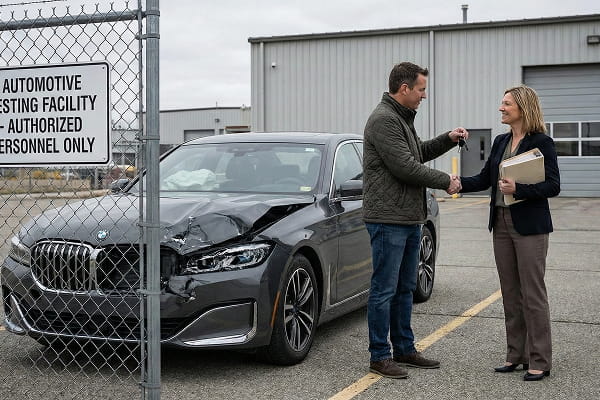
Any transaction with a branded title vehicle requires extra precautions by the seller and buyer.
Sellers
The U.S. Federal Trade Commission's Used Car Rule (16 CFR Part 455) requires dealers to display a window sticker (called the Buyers Guide) disclosing any applicable warranty and addressing state requirements. A dealer must also keep a copy of the Buyer's Guide for at least 12 months after the sale. Further, a retailer can't misrepresent a vehicle's prior use. Dealers that knowingly conceal that a car has a test or manufacturer-use history face civil penalties and other actions.
Buyers
Shoppers considering a car with a verifiable or possible test, experimental, or prototype background need to be cautious and deliberate before purchasing.
-
Obtain a comprehensive vehicle history report from an NMVTIS-approved provider like GoodCar.
-
With a detailed VIN report in hand, look for registration history that traces back to automakers, engineering firms, and other automotive entities.
-
Be alert to title branding with phrases like Manufacturer Vehicle, Experimental Use Only, or Press Fleet Unit.
-
Verify that the vehicle is eligible for insurance and, if needed, financing before signing a sales contract.
-
Have an experienced mechanic conduct a comprehensive pre-purchase inspection. The review should focus on hidden damage, unusual wear, non-standard parts, and safety and emissions compliance.
-
Only proceed if all results check out.
Should You Buy a "Test Vehicle"?
Depending on its history and intended use, a former test or manufacturer vehicle can be either a bargain or a headache. Here's a breakdown of the advantages and disadvantages of purchasing this type of car.
PROS: Potential Benefits |
CONS: Risks and Drawbacks |
|---|---|
Cost Savings: Pricing is lower compared to ordinary used cars. |
Uncertain History: Maintenance and repair records can be difficult to locate. |
Premium Features: Press-fleet and marketing vehicles tend to be fully optioned. |
Limited Protection: Warranties and other regular car protections may not apply. |
Historic Potential: Although less common, early production or prototype examples can be highly collectible. |
Financial Uncertainty: Reduced resale potential and possible financing and insurance challenges. |
Buyer Checklist
Follow these steps before buying a car with a test vehicle or similar history:
-
Obtain a comprehensive vehicle history report to verify the title background and status.
-
If available, review manufacturer documents or auction information confirming safety and emissions compliance.
-
Have an expert technician conduct a detailed pre-purchase inspection that includes verifying safety and emissions compliance.
-
Verify availability of insurance and financing.
How to Check for Title Brands

While a Test Vehicle Title Brand may not appear on a title certificate, there are dozens of title brands to be concerned with. Importantly, you don't want to rely on guesswork when investigating a car's background.
-
Get a detailed vehicle history report with NMVTIS data that shows results from state DMVs, insurers, recyclers, and junkyards.
-
Review the Manufacturer's Certificate of Origin (MCO), which shows a vehicle's first ownership transfer from the factory. Units labeled "For Manufacturer Use Only" or "Not for Retail Sale" indicate non-consumer origins. A copy of the MCO may be available from the manufacturer. MCOs aren't always available for older vehicles or may stay with the dealer or manufacturer.
-
Inspect the VIN for patterns or sequences that differ from standard production. This may identify test vehicles, prototypes, or other manufacturer-used vehicles.
FAQs About the "Test Vehicle" Title Brand
This article offers general information about Test Vehicle title brands. Title laws differ widely among states and can change over time, so always confirm the latest requirements with your state's motor vehicle agency before buying a vehicle with a branded title.
- "Test Vehicle" Title Brand - What It Means for Vehicle Owners
- What Is a "Test Vehicle" Title Brand?
- How Does a Vehicle Get a "Test Vehicle" Title Brand?
- How States Handle "Test" or "Experimental" Vehicles
- Types of "Test Vehicles"
- Impact of a "Test Vehicle" Title Brand
- Buyer and Seller Responsibilities
- Should You Buy a "Test Vehicle"?
- How to Check for Title Brands
- FAQs About the "Test Vehicle" Title Brand
- FREE Vehicle Search
FREE Vehicle Search
- Accidents
- Problem Checks
- Title Records
- Recalls
- Values
- Specs


-
 InfoPay, Inc. (dba GoodCar) is an Approved NMVTIS Data Provider
-

-
