


If you've ever rented a car abroad and felt a jolt of panic pulling out of the lot on the “wrong” side, you're not alone. Around the world, countries split fairly cleanly into two camps: those that drive on the right side of the road, and those that drive on the left. The two systems also come with two different car layouts, left-hand drive (LHD) and right-hand drive (RHD), which trip a lot of people up. Below is a full breakdown of what countries drive on the right side of the road, why the split exists, and what it actually means if you're driving, importing a car, or just curious.
Right-Hand Drive vs Right-Hand Traffic: Clear This Up First
Before diving into the list, it helps to separate two terms that get used interchangeably but mean different things.
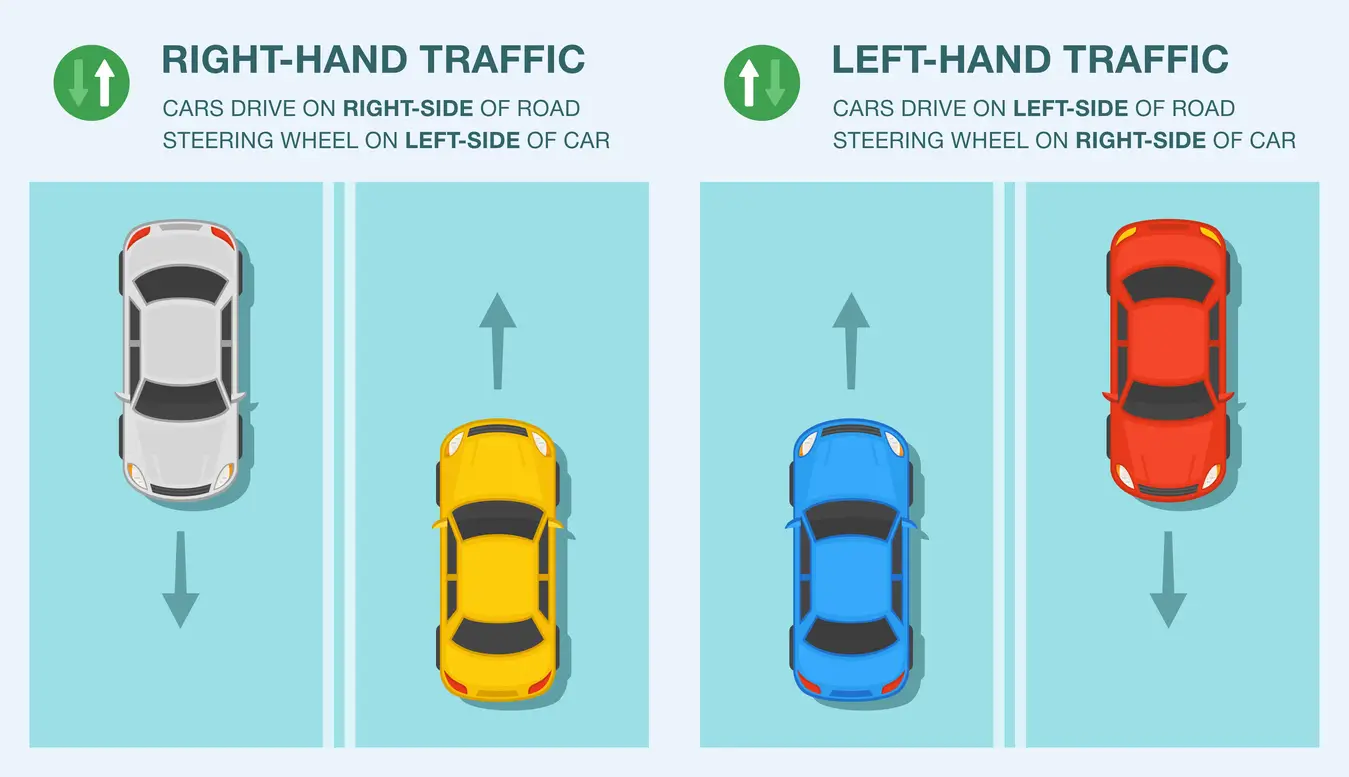
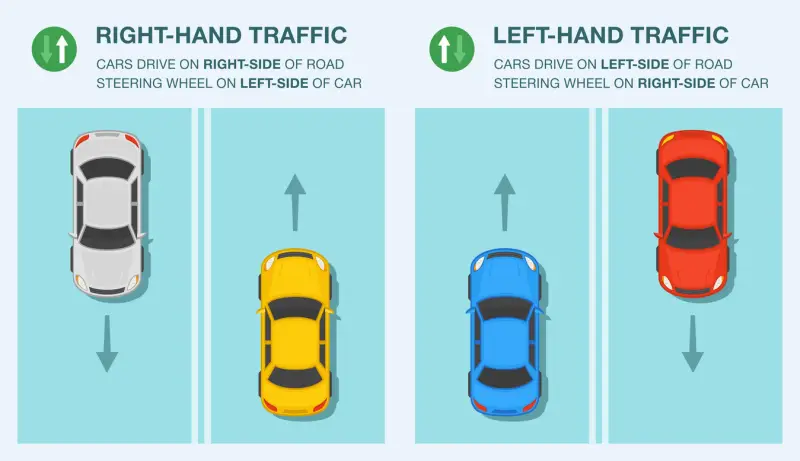
- Right-hand drive (RHD) describes the car. The steering wheel sits on the right side of the vehicle.
- Right-hand traffic (RHT) describes the road. Vehicles travel on the right side of the road.
Here's the part that trips people up: these two things are usually opposites, not matches. Countries with right-hand traffic (like the US, most of Europe, and China) almost always use left hand drive countries' vehicles. Countries with left-hand traffic (like the UK, Japan, and Australia) use right-hand drive cars. So when someone searches for RH drive countries, they're almost always really asking about countries where traffic keeps to the left, since that's where right-hand drive vehicles are standard.
There are a small number of exceptions where a country's traffic side and its typical car layout don't match, usually due to importing large numbers of used vehicles from a neighboring country. Afghanistan and Myanmar are two commonly cited examples of right-hand traffic countries where right-hand drive cars are still common on the road.
Countries That Drive on the Right Side of the Road
Right-side driving, or countries right side driving as it's sometimes searched, is the more common system worldwide. Roughly two-thirds of countries fall into this group, covering about 75% of the world's roadways.
- Europe: France, Germany, Italy, Spain, Netherlands, Poland, Sweden, Norway, Finland, Portugal, Greece, and most of the continent, with the UK, Ireland, Malta, and Cyprus as the main exceptions.
- North and South America: The United States, Canada, Mexico, and nearly every Central and South American country. Guyana and Suriname are the two exceptions on the continent, both driving on the left.
- Asia and the Middle East: China, Russia, South Korea, Vietnam, Cambodia, and most Middle Eastern countries, including Saudi Arabia, the UAE, and Iraq.
- Africa: Most of the continent, including Nigeria, Ghana, Egypt, Morocco, and Ethiopia, drives on the right. This is a common point of confusion since several of these countries are sometimes mislabeled as right-hand drive nations. They aren't. They drive on the right side of the road and use left-hand drive cars, just like the US.
Countries That Drive on the Left Side of the Road
Left-traffic countries make up roughly 30% of the world and about a third of the global population. This group lines up closely with former British territories, plus a handful of others.
|
Europe (4 countries) |
|
|
United Kingdom |
Ireland |
|
Malta |
Cyprus |
|
Asia (13 countries) |
|
|
Japan |
India |
|
Pakistan |
Bangladesh |
|
Sri Lanka |
Thailand |
|
Malaysia |
Singapore |
|
Indonesia |
Nepal |
|
Bhutan |
Hong Kong |
|
Macau |
|
|
Africa (12 countries) |
|
|
South Africa |
Kenya |
|
Tanzania |
Uganda |
|
Zambia |
Zimbabwe |
|
Botswana |
Namibia |
|
Mozambique |
Malawi |
|
Lesotho |
Eswatini |
|
Oceania (4 countries) |
|
|
Australia |
New Zealand |
|
Fiji |
Papua New Guinea |
|
Caribbean and Americas (6 countries) |
|
|
Jamaica |
Barbados |
|
Bahamas |
Trinidad and Tobago |
|
Guyana |
Suriname |
These are the left-hand drive countries' mirror image: nearly all of them use right-hand drive vehicles, since the driver needs to sit on the side closest to the center of the road for a clear view of oncoming traffic.
Why Do Some Countries Drive on the Right and Others on the Left
The split goes back further than cars themselves. Historians point to a few overlapping explanations:
- Horse and carriage era: Wagon drivers in much of Europe and North America sat on the left rear horse so they could control the team with their right hand, which naturally pushed traffic to the right side of the road.
- Britain's Highway Act: Britain formalized keeping to the left through legislation in the 1700s, and this practice spread across the British Empire, which is why so many former colonies still drive on the left today.
- Napoleon's influence: As French forces moved across Europe in the early 1800s, right-hand traffic spread with them, cementing the practice across much of the continent.
- The US and the Ford Model T: Pennsylvania passed one of the first American keep-right laws in 1792. When Henry Ford's Model T went into mass production in 1908 as a left-hand drive car, it helped standardize left-hand drive as the norm across the growing US auto market.
Some older explanations, like the idea that Roman soldiers rode on the left to keep their sword arm free, are popular but not well documented historically. Worth knowing if you want to repeat the fact, but worth flagging as folklore rather than settled history.
Countries That Switched Sides
A handful of countries changed which side of the road they drive on, sometimes fairly recently:
- Sweden switched from left to right traffic in 1967 to align with its mainland European neighbors.
- Iceland followed in 1968 for the same reason.
- Nigeria switched to right-hand traffic in 1972, and Ghana followed in 1974.
- Samoa went the other direction in 2009, switching from right to left so residents could more easily import cheaper used cars from Australia and New Zealand.
Can You Drive a Right-Hand Drive Car in a Left-Traffic Country, or Vice Versa
Driving a “wrong-side” car isn't illegal almost everywhere, but it comes with real visibility and safety trade-offs, especially when overtaking. A few countries take it further and ban same-side vehicles outright, including Armenia, Chile, Saudi Arabia, Sierra Leone, and Taiwan.
In the US, right-hand drive cars are legal to own and drive. The bigger hurdle is importing one. According to the National Highway Traffic Safety Administration, a vehicle must either have been originally certified to meet Federal Motor Vehicle Safety Standards or qualify for a specific import exemption, since NHTSA has found that RHD vehicles don't always perform the same as their left-hand drive counterparts in crash testing. If you're checking the background of a vehicle before buying an import, GoodCar's free VIN decoder can pull the factory specs and origin details, and the recall lookup tool will flag any open safety recalls tied to that VIN.
If you're planning to drive abroad, whichever side of the road you'll be on, the US Department of State and the CDC's Travelers' Health program both note that vehicle crashes are a leading cause of death for US citizens overseas, and both recommend extra caution when driving on the side you're not used to.
FAQ
Which side of the road does the US drive on?
The US drives on the right side of the road and uses left-hand drive vehicles.
Is the UK a right-hand drive or left-hand drive country?
The UK is a right-hand drive country. Cars have the steering wheel on the right, and traffic keeps to the left side of the road.
How many countries drive on the left side of the road?
Around 60 to 65 countries and territories drive on the left, covering roughly 30% of the world's countries and about a third of the global population.
Why does Japan drive on the left?
Japan's left-hand traffic system is generally credited to British influence during the 1800s, when Britain helped build Japan's early railway system using left-hand running.
Can I legally drive a right-hand drive car in the United States?
Yes. RHD vehicles are legal to drive in every US state. The complexity is on the import side, where the vehicle needs to meet US safety standards or qualify for an exemption like the 25-year import rule.