


"Car Vandalism" Title Brand: What It Means for Your Vehicle
- "Car Vandalism" Title Brand: What It Means for Your Vehicle
- What Is a "Car Vandalism" Title Brand?
- How Does a Vehicle Get a "Car Vandalism" Title Brand?
- Sub-Types / Related Title Brands
- Who Assigns the "Car Vandalism" Title Brand & Where It's Recorded?
- How States Handle the "Vandalism" Title Brand
- Impact of a "Car Vandalism" Title Brand
- Can a "Car Vandalism" Title Brand Be Removed?
- Should You Buy a Car with a Vandalism Title Brand?
- Statistics & Market Data
- FAQs About "Car Vandalism" Title Brands
- FREE Vehicle Search
In simple terms, a "title brand" is an official designation that an automobile has been involved in a significant event or specific ownership situation that might affect its value. These notations warn prospective buyers that the vehicle's history may include a major accident or a flood, for example. Some title brands indicate a background that covers the vehicle's use, such as a taxi or police car.
The "Vandalism" Title Brand is among the many designations that can appear on a vehicle title, but it's more unusual. Unlike most classifications that cover vehicle condition or use, this title brand is one of the few that reflects intentional damage. This uncommon notation tells a specific story about the car's past and helps consumers distinguish between ordinary wear, accidental loss, and deliberate destruction.
You're less likely to encounter the Vandalism Title Brand because few states recognize it as a stand-alone classification. Most will add a broader designation, like "Salvage". Nevertheless, a car with a vandalism history will have a permanent mark that shouldn't be ignored.
What Is a "Car Vandalism" Title Brand?
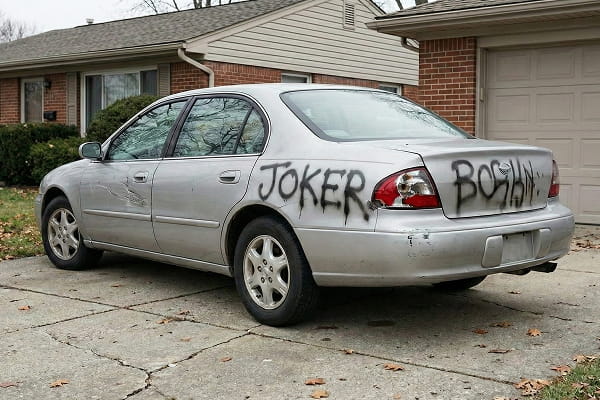
The Vandalism Title Brand means that someone has deliberately damaged the vehicle by scratching paint, breaking glass, smashing mirrors, slashing tires, or destroying the interior. Other forms of destruction could also fall into this category.
Even if the car has since been repaired, the brand stays attached to the vehicle identification number (VIN). There's no legal way to alter this. The branding can be helpful when comparing two used vehicles, one clean, one vandalized, to help explain why one car might be priced lower.
How Does a Vehicle Get a "Car Vandalism" Title Brand?
The Vandalism Title Brand usually starts with an insurance claim and repair costs exceeding the state's total-loss threshold. The calculation compares these expenses against the car's actual cash value. The insurance company must declare the vehicle a total loss if the repairs exceed a specific percentage (often 70-80%).
When this occurs, the insurer submits the details to the appropriate DMV. In states like Iowa that support the Vandalism category, that precise term is applied. In others, such as California or Nevada, the agency assigns an alternate brand, such as Salvage.
At this point, the revised title information is submitted to the National Motor Vehicle Title Information System (NMVTIS), a federally run clearinghouse for title brands. NMVTIS maintains the database and ensures the details are available to other motor vehicle agencies and NMVTIS-approved vehicle history providers.
The importance of reviewing NMVTIS-supplied data can't be overstated. A car vandalized in Iowa could receive the precisely labeled Vandalism Title Brand in the state and then be retitled in another state that doesn't use that designation but classifies the vehicle as Salvage or "Damage". A look at the new title won't show the car's true history, but a report from an NMVTIS-approved provider like GoodCar will. Even if the title brand changes to "Rebuilt" or "Reconstructed" after repairs, the original vandalism note stays part of the record. This is one reason a vehicle history report is essential for a used car purchase.
Remember that title brands and the branding process can vary by state; always confirm the details with the appropriate DMV.
Sub-Types / Related Title Brands
NMVTIS can record more than one brand for a single vehicle, but state title certificates usually display only the primary designation. A vandalism notation may remain in the NMVTIS record even if the title itself lists another brand, such as Salvage or Rebuilt.
-
Vandalism: This label is recognized in NMVTIS (Brand Code 05) and certain state systems.
-
Damage or Salvage: Used where the Vandalism Title Brand isn't supported. In these states, total-loss vandalism cases merge into general Damage or Salvage categories.
-
Theft / Vandalism: Some title records may reflect both brands if the car was stolen and later vandalized.
-
Fire or Flood + Vandalism: It's possible that arson or water intrusion caused the initial damage, but secondary destruction can be traced to vandalism.
-
Rebuilt or Reconstructed: This designation is applied following vandalism-related repairs and passing a state-mandated inspection. The Rebuilt or Reconstructed title may supersede the Vandalism label, but complete records are available through NMVTIS data.
Not all states will use these designations.
Who Assigns the "Car Vandalism" Title Brand & Where It's Recorded?
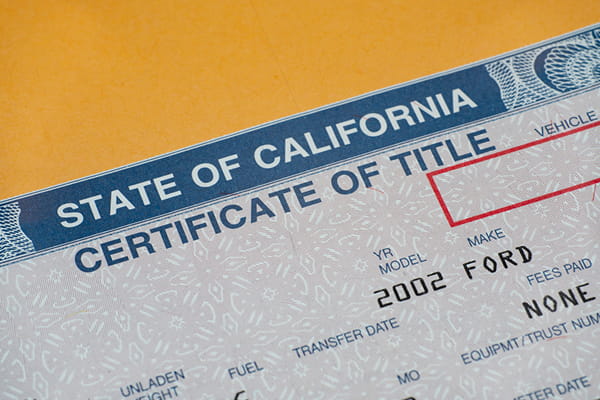
Title branding usually involves insurance companies and state motor vehicle agencies. The insurer determines that the loss was caused by vandalism and declares a total loss under the correct conditions. The DMV responds by issuing a title with the appropriate brand.
The title brand appears in two ways:
-
Title certification (in states that apply the Vandalism Title Brand)
-
NMVTIS and DMV databases; the title brand stays in the records regardless of what else happens with the vehicle.
NMVTIS integrates data from almost every state (Hawaii is currently under development), so buyers who run a GoodCar vehicle history report can see if vandalism records are present even if the current title certification shows otherwise.
How States Handle the "Vandalism" Title Brand
Despite Vandalism (Brand Code 05) being recognized through NMVTIS, only a few states actively use the designation. Here's a look at select jurisdictions.
States That Recognize the "Vandalism" Title Brand
Iowa
Iowa's DMV regulations list "flood, fire, vandalism, or theft" as brands that must appear on Iowa titles when carried from another jurisdiction to ensure continuity.
Florida
Florida recognizes the NMVTIS ‘Vandalism' code in its electronic records, though it doesn't display it on paper titles. However, Florida title certificates won't display the designation; the details are in the state's system and transfer with NMVTIS data. A GoodCar vehicle history report with a current or previous Florida title will reveal a Vandalism classification, if applicable.
States That Classify Vandalism Under Other Title Brands
Although California is the largest U.S car market, the Golden State doesn't issue a separate Vandalism Title Brand. Vehicles totaled from intentional damage are classified as Salvage, which will appear on the paper title and in NMVTIS. Nevada takes a similar approach, also applying a Salvage designation. The state's Salvage Vehicle Guide doesn't mention Vandalism as a distinct category.
Many other states, including Colorado, Illinois, Nebraska, New York, Ohio, Pennsylvania, and Texas, also opt for a Salvage Title Brand over a specific vandalism classification.
Wyoming doesn't offer a printed Vandalism brand but honors NMVTIS data from out-of-state titles. If a prior record shows vandalism, Wyoming may note the classification electronically, though not on the paper document.
Impact of a "Car Vandalism" Title Brand
A branded title is a black mark on a vehicle's record that changes buyers' perceptions. Even with top-notch repairs, uncertainty about dependability and safety remains. These doubts also arise with lenders and insurance companies. An additional challenge comes from the actual title brand, as most states will label a vandalized and totaled car as Salvage. This designation may lead buyers and others assuming the worst, although the damage had nothing to do with mechanical or safety systems.
Resale Value
Kelley Blue Book estimates that a title brand devalues a car by 20-40% more than clean-title equivalents. Despite the lower cost, a vandalized status may also turn off buyers who don't want to take a chance. Fewer buyers further depress prices. Photos of the repair process and documentation may help lessen the stigma, but these extra steps won't fully overcome the title history.
Financing
Cars with Vandalism Title Brands come in all price ranges. If you're considering one requiring financing, you may have to think again or work to find a lender offering loans on high-risk vehicles. Financing, if available, will likely come with higher interest rates and down payment requirements. Loan terms may be shorter, too.
Insurance
Insurance companies are equally risk-averse. There may be too many unknowns about covering a vehicle with a total-loss history. You may be limited to a liability-only policy, and premiums may be more expensive than for a clean-title car.
Registration and Inspection
Most states require any vehicle rebuilt after a total-loss incident to undergo a rigorous inspection process to ensure compliance with safety standards. The car can't be registered and driven on public roads until the process is completed. Often, the inspection includes reviewing detailed repair records.
Can a "Car Vandalism" Title Brand Be Removed?
Generally, there is no legal way to completely remove a Vandalism Title Brand from a car's history. Some states allow a reclassification to Rebuilt or Reconstructed after the car passes inspection, but the original designation remains part of the vehicle's VIN-based history. The same applies if a Vandalism Title Brand car later suffers new damage and is retitled again, perhaps with a Salvage Title Brand; both classifications will appear in NMVTIS records. This transparency ensures that a vehicle's damage-filled history can't be masked with a fresh title.
Should You Buy a Car with a Vandalism Title Brand?
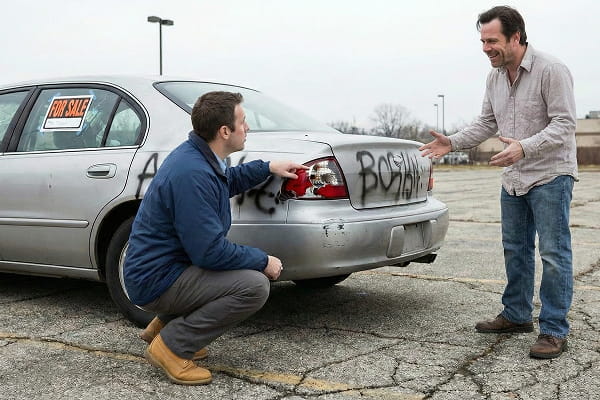
With careful research, a vehicle with a Vandalism Title Brand can be worthwhile. That's not to say that every car with this designation should be on your list. You'll first need to determine the extent of the damage and the quality of repairs. Then, decide if the discount is worth the drawbacks.
Pros
-
Lower Cost: A branded-title vehicle can sell for 20-40% below market value.
-
Cosmetic Only Damage: Vandalism usually targets surfaces and interiors, leaving the engine and frame untouched.
-
Good for Parts: In some cases, a branded-title vehicle may be better-suited as a donor car.
Cons
-
Insurance Limitations: Coverage may be more expensive or restricted.
-
Harder Resale: Reduced appeal of a branded title can lower market or trade-in value.
-
Hidden Issues: A risk of undetected damage surfacing after purchase.
Buyer Checklist
Before signing any paperwork, take a step-by-step approach to determining whether a vehicle with a Vandalism Title Brand is a wise choice.
-
Run a VIN Report: Use an NMVTIS-approved provider like GoodCar to verify the title brand (Vandalism, Damage, or Salvage).
-
Request Documentation: Ask the seller for repair receipts, insurance records, and inspection reports.
-
Check Work Quality: Look for signs of poor or incomplete repair, such as uneven paint, mismatched panels, telltale odors, or electrical faults.
-
Verify Insurance Eligibility: Confirm that insurance is available for the car and the premium cost. Determine if there are any limitations (such as liability-only coverage).
-
Confirm Financing: If you need a loan, check with lenders first; many won't finance vehicles with branded titles.
-
Schedule a Pre-Purchase Inspection: Hire an independent mechanic to evaluate the vehicle's condition, paying particular attention to the repair areas.
-
Retain Records: Save all documentation for your reference and to support a sale or trade-in in the future.
Statistics & Market Data
The Highway Loss Data Institute (HLDI) found that insurance companies handle approximately 1.5 to 2 vandalism claims for every 1,000 insured vehicles annually. That's a small number compared to other comprehensive losses, like theft or hail. In addition, most vandalism claims, such as slashed tires or keyed paint, don't reach the total-loss threshold, which accounts for why few states have a Vandalism Title Brand. HLDI research shows that the average vandalism claim from 2019 to 2023 ranged from about $2,400 to $3,000.
Interestingly, State Farm reported that vandalism against cars increased by 27% on Halloween, compared to other nights in October.
FAQs About "Car Vandalism" Title Brands
This article covers the Vandalism Title Brand. Because title laws and reporting practices vary by state, it's vital to check with your local motor vehicle agency to confirm the most up-to-date rules before buying any vehicle with a branded title.
- "Car Vandalism" Title Brand: What It Means for Your Vehicle
- What Is a "Car Vandalism" Title Brand?
- How Does a Vehicle Get a "Car Vandalism" Title Brand?
- Sub-Types / Related Title Brands
- Who Assigns the "Car Vandalism" Title Brand & Where It's Recorded?
- How States Handle the "Vandalism" Title Brand
- Impact of a "Car Vandalism" Title Brand
- Can a "Car Vandalism" Title Brand Be Removed?
- Should You Buy a Car with a Vandalism Title Brand?
- Statistics & Market Data
- FAQs About "Car Vandalism" Title Brands
- FREE Vehicle Search
FREE Vehicle Search
- Accidents
- Problem Checks
- Title Records
- Recalls
- Values
- Specs


-
 InfoPay, Inc. (dba GoodCar) is an Approved NMVTIS Data Provider
-

-
