


"Vehicle Non-Conformity" Title Brands: Corrected vs. Uncorrected Explained
- "Vehicle Non-Conformity" Title Brands: Corrected vs. Uncorrected Explained
- What Are "Vehicle Non-Conformity" Title Brands?
- "Vehicle Non-Conformity Uncorrected" Title Brand
- "Vehicle Non-Conformity Corrected" Title Brand
- Sub-Types / Related Title Brands
- Who Assigns "Vehicle Non-Conformity" Brands & Where They're Recorded
- How States Handle "Vehicle Non-Conformity" Title Brands
- Impact of "Vehicle Non-Conformity" Title Brands
- Should You Buy a Vehicle with a "Vehicle Non-Conformity" Brand?
- FAQs About "Vehicle Non-Conformity" Title Brands
- FREE Vehicle Search
When used car shoppers think about a vehicle's title, they're often more focused on ownership transfers and registration details. However, there's one aspect that shouldn't be overlooked, the presence of a title brand. It's a designation indicating a significant event in a vehicle's history. This classification may not be visible on the printed title certificate, but it remains a permanent part of the record.
Title brands such as "Salvage", "Rebuilt", or "Flood" are connected to damage, while "Former Rental" or "Prior Taxi" are among the categories that identify prior use. "Vehicle Non-Conformity" title brands are among the lesser-known designations. In this context, its purpose is to identify a vehicle affected by a serious manufacturer-related defect that triggers warranty action or Lemon Law protection.
In simple terms, Vehicle Non-Conformity title brands tell dealers and prospective buyers whether the defect was left unresolved ("Vehicle Non-Conformity Uncorrected" Title Brand) or repaired before resale ("Vehicle Non-Conformity Corrected" Title Brand). Understanding the differences between these two classifications is critical because they have lasting effects on buyers.
What Are "Vehicle Non-Conformity" Title Brands?
A Vehicle Non-Conformity title brand is applied when an automaker repurchases a vehicle due to a defect that prevents it from conforming to the terms of its warranty. The "non-conformity" term originates from Lemon Law statutes, which specify a condition that substantially impairs a car's usability, market value, or safety that can't be corrected within a specific time period or after a certain number of repair attempts.
The ultimate purpose of these brands is to promote transparency in the resale market. Without them, a repurchased vehicle could later be sold to an unsuspecting consumer unaware of the car's defect history. This disclosure provides greater insight into why the vehicle was returned to the manufacturer.
Vehicle Non-Conformity title brands differ from the Manufacturer Buy Back category by providing additional information about repair status. In practical terms, a buyer can determine whether the defect was fixed before resale or remains unresolved.
Vehicle Non-Conformity brands are recorded in the National Motor Vehicle Title Information System (NMVTIS) as well as in state title records. However, as covered later, not all DMVs follow the same approach. The "Vehicle Non-Conformity Uncorrected" Title Brand uses NMVTIS Brand Code 39, while the "Vehicle Non-Conformity Corrected" Title Brand uses NMVTIS Brand Code 40.
"Vehicle Non-Conformity Uncorrected" Title Brand
As the name implies, the Vehicle Non-Conformity Uncorrected Title Brand indicates a repurchased vehicle that was returned to market without repairs to correct the qualifying defect. This outcome could result from several unsuccessful repair attempts or from the manufacturer determining that repairs are impractical.
Even though an uncorrected classification doesn't automatically mean the car is unsafe to drive or has drivability issues, buying this type of vehicle is still very much a roll of the dice. There's a reason the manufacturer didn't fix it. Be prepared for underlying mechanical troubles or other conditions that impact ownership and use. In addition, because the defect hasn't been corrected, future repair costs are difficult to predict.
"Vehicle Non-Conformity Corrected" Title Brand
The Vehicle Non-Conformity Corrected Title Brand is applied to a vehicle that previously had a qualifying defect repaired before resale. In these cases, the manufacturer completed corrective work and documented repairs. In some states, the process must be completed with an inspection or administrative verification before the car can be retitled.
This designation doesn't remove any previous history (such as the Vehicle Non-Conformity Uncorrected Title Brand), but provides transparency that the defect has been fixed. In general, corrected vehicles are less of a purchase and ownership risk than uncorrected ones. However, it's still a vehicle with a branded title.
Sub-Types / Related Title Brands
Vehicle non-conformity is just one way states flag manufacturer defect issues. In Lemon Law and warranty return cases, you'll often see related title brands used to reveal the same kind of disclosure.
-
Vehicle Non-Conformity Uncorrected: The car was returned to the manufacturer due to a serious defect that was never fixed before resale.
-
Vehicle Non-Conformity Corrected: At one point, the vehicle was returned to the manufacturer due to a serious defect that was later repaired before resale.
-
Lemon Law Buyback: A car repurchased by a manufacturer under applicable Lemon Laws. However, there's no indication whether the defect was repaired.
-
Warranty Return: An older category usually associated with manufacturer returns before the implementation of NMVTIS in the mid-1990s.
Because of inconsistencies among state motor vehicle agencies, NMVTIS helps standardize the tracking of defect-related branding across jurisdictions. While the DMV may use different terminology, the vehicle history is still traceable even if the car is retitled in another state.
Who Assigns "Vehicle Non-Conformity" Brands & Where They're Recorded
DMVs, not manufacturers, assign Vehicle Non-Conformity title brands in accordance with respective state rules and regulations. The decision to apply one of these classifications is based on the documentation submitted during the retitling process. The records may include repurchase agreements, repair histories, and, when applicable, certifications that a defect was corrected.
How States Handle "Vehicle Non-Conformity" Title Brands
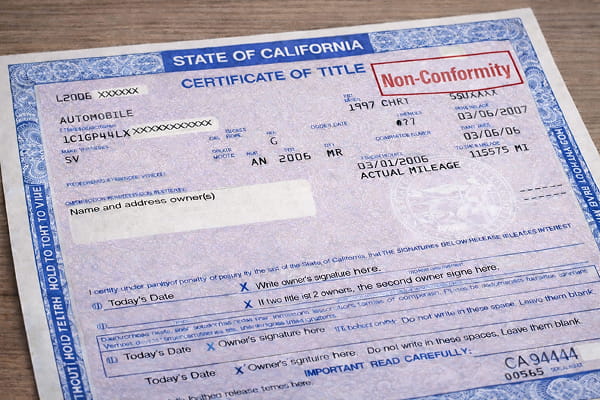
Not every state treats non-conformity the same way. Some print clear wording on the title certificate, while others track it in digital records or translate the details into state-specific labels.
Explicit "Non-Conformity" Title Branding
State |
Title Brand Language Used |
Notes |
|---|---|---|
Maryland |
"Non-conforming vehicle" |
Usually tied to safety or emissions compliance, not warranty repairs. |
Washington |
"Nonconformity corrected" / "Nonconformity uncorrected" |
Explicitly distinguishes corrected and uncorrected non-conformity on the title. |
Operational or Converted Non-Conformity Branding
State |
Branding or Processing Method |
Notes |
|---|---|---|
Nebraska |
Internal non-conformity coding |
Tracks corrected non-conformity cases in the system, even if the exact wording doesn't appear on the title. |
New Jersey |
Lemon Law disclosure |
Requires disclosure that a non-conformity was not corrected. |
Texas |
Brand conversion during intake |
Converts incoming non-conformity records into state-specific branding. |
Utah |
Manufacturer Buyback Nonconforming Vehicle |
Applies non-conformity language through Lemon Law buyback branding. |
Wisconsin |
Lemon Law Manufacturer Buyback |
Defines non-conformity in statute but relies on buyback branding. |
About Other States
While only a small number of states explicitly print "nonconformity corrected" or "nonconformity uncorrected" on the physical title, non-conformity conditions are far more widespread at the NMVTIS reporting level. Through Lemon Laws, nearly all states define "nonconformity" as a warranty defect that substantially impairs the use, value, or safety of the vehicle.
When state motor vehicle agencies report these cases to NMVTIS, the branding may be captured under Codes 39 or 40, even if the state uses different terminology, such as "Manufacturer Buyback" or "Lemon Law Vehicle".
Impact of "Vehicle Non-Conformity" Title Brands
Even if the car appears problem-free and drives fine, a Vehicle Non-Conformity title brand can affect ownership in several ways.
-
Resale Value: Cars with a non-conforming background are worth less than their clean-title counterparts. The reduced resale value is greater if the defect is uncorrected. However, even corrected vehicles carry a stigma that can limit buyer interest.
-
Financing: Lenders may be reluctant to finance any vehicle with a condition that affects its collateral value, including defect-related branding (particularly if the Vehicle Non-Conformity Uncorrected Title Brand is involved). Loans may be available, but with higher interest rates or shorter terms.
-
Insurance: If the vehicle can be registered and legally driven on public roads, insurance coverage is usually available.
-
Buyer Confidence: Buyers have less interest in cars with defect-related title brands. However, vehicles with the Vehicle Non-Conformity Corrected designation are viewed as lower risk than those with the Vehicle Non-Conformity Uncorrected Title Brand.
-
Private-Sale Disclosure Obligations: Depending on the state, sellers may be required to disclose known title or condition issues to private buyers, which can complicate transactions.
-
Extended Warranty Eligibility: Many third-party warranty companies won't cover a vehicle with a defect-related title brand.
Should You Buy a Vehicle with a "Vehicle Non-Conformity" Brand?
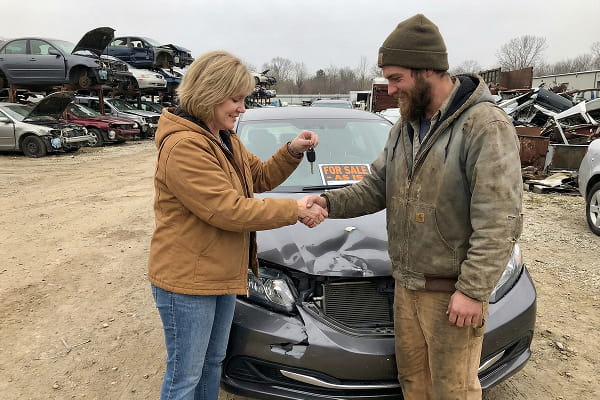
Compared to a clean title car, a car with a defect-related background requires extra scrutiny during the purchase process. It's critical to weigh the advantages and drawbacks, even if the defect has been repaired.
Pros |
Cons |
|---|---|
|
|
Buyer's Checklist
Follow these steps when considering the purchase of a car with a "Vehicle Non-Conformity" title brand:
-
Review the Title Certificate: Check the title document for any wording about non-conformity (corrected or uncorrected status) or a manufacturer buy back history.
-
Obtain a Title Report: Order a title report from the DMV to validate how the title brand is recorded on paper and digitally.
-
Confirm Defect Status: If applicable, look for documentation that verifies the defect was corrected. Don't rely on verbal assurances.
-
Run a VIN History Report: Use an NMVTIS-approved provider, such as GoodCar, to verify title branding, buyback history, and other critical background details.
-
Request Repair Documentation: Review available manufacturer repair records, inspection reports, and any post-repurchase disclosures.
-
Confirm Any Remaining Warranty or Support: Some corrected vehicles may still be eligible for factory warranty protection or other support.
-
Get an Independent Inspection: Have an experienced mechanic conduct a comprehensive pre-purchase inspection with attention given to the defect area.
FAQs About "Vehicle Non-Conformity" Title Brands
Laws that cover Vehicle Non-Conformity title brands and related disclosure requirements vary by state and are subject to change. Always verify the current rules with the applicable DMV before engaging in a transaction with these types of automobiles.
- "Vehicle Non-Conformity" Title Brands: Corrected vs. Uncorrected Explained
- What Are "Vehicle Non-Conformity" Title Brands?
- "Vehicle Non-Conformity Uncorrected" Title Brand
- "Vehicle Non-Conformity Corrected" Title Brand
- Sub-Types / Related Title Brands
- Who Assigns "Vehicle Non-Conformity" Brands & Where They're Recorded
- How States Handle "Vehicle Non-Conformity" Title Brands
- Impact of "Vehicle Non-Conformity" Title Brands
- Should You Buy a Vehicle with a "Vehicle Non-Conformity" Brand?
- FAQs About "Vehicle Non-Conformity" Title Brands
- FREE Vehicle Search
FREE Vehicle Search
- Accidents
- Problem Checks
- Title Records
- Recalls
- Values
- Specs


-
 InfoPay, Inc. (dba GoodCar) is an Approved NMVTIS Data Provider
-

-
