


Street Rod Title Brand: What It Means for Car Owners and Buyers

- Street Rod Title Brand: What It Means for Car Owners and Buyers
- What Is a Street Rod Title Brand?
- How Does a Vehicle Get a Street Rod Title Brand?
- Sub-Types and Related Title Brands
- Who Assigns the Street Rod Title Brand and Where It's Recorded
- How States Handle the Street Rod Title Brand
- States Where Street Rods Are Addressed Within Broader Categories
- Impact of a Street Rod Title Brand
- Should You Buy a Street Rod Vehicle?
- FAQs About Street Rod Title Brand
- FREE Vehicle Search
When a car changes hands, the title makes the transfer of ownership official. Yet this documentation serves another purpose: preserving a record of any classifications that the vehicle has acquired over time. If the car was declared a total loss by an insurer, significantly altered, or placed in a special DMV category, the details may be reflected through a title brand. Notably, a brand stays with the car regardless of ownership changes, offering buyers greater transparency that can affect value, safety, and insurability.
"Salvage" and "Flood" are common title brands, but not all of these designations are about damage. Some describe a vehicle's construction or classification, especially when the car does not fit neatly into standard production categories. One of these designations is the "Street Rod" Title Brand. Keep reading as we explain the meaning behind it, when this brand applies, and how states handle this classification. We'll also highlight what buyers should know before buying these types of cars.
What Is a Street Rod Title Brand?
An automobile with a Street Rod Title Brand can take many forms, but typically represents a vehicle that's been significantly modified or constructed to resemble an early car. Often, the look represents a pre-1949 design, but these vehicles don't qualify as an antique. These "hot rods" blend classic style with contemporary components, including reinforced frames, modern engines, and advanced braking systems. Because they are neither factory originals nor conventional used cars, states create a special classification to distinguish them from other titled vehicles.
Under the National Motor Vehicle Title Information System (NMVTIS), Street Rod corresponds with Brand Code 28, defined as: "The vehicle has been modified to not conform with the manufacturer's specifications, and the modifications adhere to jurisdiction-specific criteria".
This classification provides a way for a DMV to document that an automobile has the look and style of a pre-1949 vehicle but has different construction or is substantially altered from the original. States often set their own definitions and qualifications for these vehicles.
How Does a Vehicle Get a Street Rod Title Brand?
The Street Rod Title Brand is applied after the owner submits an application and the vehicle meets the DMV's applicable requirements. In states that formally recognize this designation, the process typically requires documentation establishing how the car was constructed or modified. The definition is often based on a vehicle manufactured before 1949, or one built later that resembles a pre-1949 automobile. An inspection may also be part of the titling process. The agency may want to confirm the vehicle's identity and compliance with state safety and equipment regulations.
Once approved, the classification becomes part of the vehicle's title record. This doesn't mean the Street Rod Title Brand will be printed on the title certificate (that varies by state), but the designation will appear in the car's digital history. A search of state title records and NMVTIS using the vehicle identification number (VIN) will reveal these details.
Sub-Types and Related Title Brands
Each DMV sets its own guidelines, so title brands aren't consistently applied nationwide. Two similar cars could be classified differently depending on where the title is issued. What counts as a Street Rod in one state could be a Replica in another.
-
Street Rod: This label usually applies to vehicles that have been built or heavily modified to look like older automobiles, but with modern or non-original parts. The emphasis is on how the vehicle is constructed and presented, not whether it's historically authentic.
-
Replica: A looser category that generally covers any automobile built to resemble another, regardless of age or style. Depending on the state, this can include vintage cars, modern performance models, or niche specialty vehicles.
-
Kit Car: These vehicles are defined by how they're assembled rather than by appearance. A kit car is constructed from a manufacturer's kit or a collection of supplied parts. Some may resemble classic or collectible cars, while others are more unique.
-
Antique or Classic: These designations are normally reserved for original vehicles that meet specific age requirements set by individual states. Reproductions, replicas, and reconstructed cars generally don't qualify, even if they closely resemble older designs.
Who Assigns the Street Rod Title Brand and Where It's Recorded
State motor vehicle agencies apply the Street Rod Title Brand, although only a few states do so at the title-history level recognized by NMVTIS. Once issued, the designation is entered into the state's title database and transmitted to NMVTIS to help minimize fraud.
This title brand may appear directly on the printed title document or as part of the electronic title record. It remains associated with the vehicle's VIN and follows the car across state lines during resale or registration transfers.
How States Handle the Street Rod Title Brand
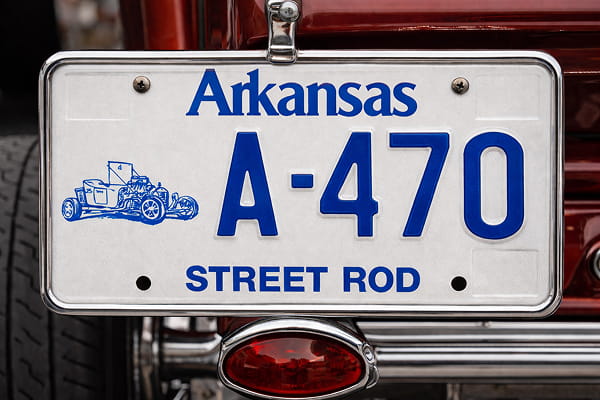
The Street Rod classification process varies widely by state. A few jurisdictions issue the Street Rod Title Brand as part of the title process, while others categorize these vehicles only for registration or specialty license plate purposes.
Florida is in more than one table because the state both defines street rods in law and applies the designation at the title level. Texas also appears more than once because it recognizes the NMVTIS Street Rod designation, but processes these vehicles under its Custom and Replica title categories rather than issuing a separate Street Rod Title Brand.
States That Apply Street Rod Status at the Title Level
These states apply Street Rod status at the title level, not just for registration, making their approach most consistent with NMVTIS Brand Code 28.
State |
How Street Rod Is Applied |
|---|---|
Florida |
Street Rod is defined in statute with specific criteria tied to model year and construction before titling/registration. |
Texas |
Texas Title Check includes "Street Rod" as a brand in its NMVTIS conversion chart, aligning state practice with Brand Code 28. |
States With Formal Street Rod Classifications in Law or DMV Rules
These states define street rods in law or DMV rules for classification and registration purposes, but don't issue a Street Rod Title Brand.
State |
How the Classification is Used |
|---|---|
Arkansas |
Registration and specialty plate classification |
Colorado |
Included within the collector and specialty vehicle classes |
Florida |
Registration and license plate eligibility are established by statute |
Hawaii |
Vehicle classification established in state code |
Illinois |
Recognized for titling and registration purposes |
Maine |
Eligible for specialty registration under state law |
Missouri |
Classification tied to registration and title treatment |
Montana |
Included among constructed vehicles for titling |
Rhode Island |
Special registration provisions established by statute |
Virginia |
Statutorily recognized vehicle class |
Washington |
Registration criteria established by statute |
States Where Street Rods Are Addressed Within Broader Categories
In these states, street rods are acknowledged but processed within larger specialty or reconstructed vehicle frameworks rather than as a distinct, standalone title brand.
State |
Classification Approach |
|---|---|
Pennsylvania |
Processed under reconstructed and specialty vehicle rules |
Texas |
Street rod falls under Custom/Replica title branding practices. |
Impact of a Street Rod Title Brand
The Street Rod Title Brand is more than a label; it's a designation with real-world ownership considerations that don't affect standard passenger vehicles. Here's what you need to be aware of:
Resale Value
For the most part, determining the market value of a regular automobile is straightforward. There are valuation guides and similar models to compare against. This isn't the case with a street rod because each example tends to be distinctive. In addition, the quality of the construction and components can vary. As a result, street rods are marketed to a specialized audience willing to pay for uniqueness. Pinning down resale value can be difficult and is often determined by the vehicle and market conditions.
Insurance
Many mainstream insurers don't write standard policies for cars with Street Rod Title Brand. This has less to do with increased risk than with the vehicle's non-standard nature. Underwriting a one-off car may not be possible. Instead, you'll need to turn to an insurance company that serves the specialty and collector car market.
Financing
Like insurance companies, traditional lenders may be reluctant to finance a Street Rod Title Brand car due to uncertain valuations and other unknowns. Specialty lenders may be an option, but loan availability and terms vary based on valuation and documentation.
Registration and Use
Some states place restrictions on how street rods may be operated, such as limiting them to exhibition or occasional-use vehicles. In contrast, other jurisdictions allow broader use provided the vehicle meets safety and equipment requirements.
Should You Buy a Street Rod Vehicle?
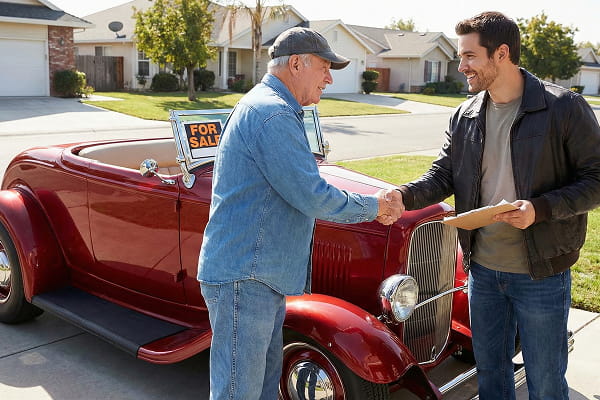
Buying a street rod is not about having a daily driver for commuting, but owning a vehicle that's collectible and distinctive. It's a trip down memory lane that catches the eye and turns heads. However, such a purchase isn't always filled with smiles. Here's a breakdown of the advantages and drawbacks.
Pros |
Cons |
|---|---|
|
|
Buyer Checklist
It's easy to get excited about buying a street rod, but doing your research before handing over any money can reduce the chance of unpleasant surprises later. Here are the steps to follow:
-
Verify the vehicle's title status, examine the title certificate and order a title report from the DMV.
-
Order a comprehensive vehicle history report from an NMVTIS-approved provider, such as GoodCar (which can confirm title history and disclose other reported details).
-
Review build documentation and inspection records.
-
Obtain insurance quotes for the specific vehicle.
-
Verify registration rules and usage limitations in your state.
-
Arrange a pre-purchase inspection through a trusted mechanic with experience in custom-built cars.
FAQs About Street Rod Title Brand
State laws and DMV procedures change over time. Always consult your state motor vehicle agency for the most current requirements when buying, titling, or registering street rods.
- Street Rod Title Brand: What It Means for Car Owners and Buyers
- What Is a Street Rod Title Brand?
- How Does a Vehicle Get a Street Rod Title Brand?
- Sub-Types and Related Title Brands
- Who Assigns the Street Rod Title Brand and Where It's Recorded
- How States Handle the Street Rod Title Brand
- States Where Street Rods Are Addressed Within Broader Categories
- Impact of a Street Rod Title Brand
- Should You Buy a Street Rod Vehicle?
- FAQs About Street Rod Title Brand
- FREE Vehicle Search
FREE Vehicle Search
- Accidents
- Problem Checks
- Title Records
- Recalls
- Values
- Specs


-
 InfoPay, Inc. (dba GoodCar) is an Approved NMVTIS Data Provider
-

-
