

If you've spent any time online in the last few years, you’ve probably stumbled upon the great “wheels vs. doors” controversy. It started as a hilarious and surprisingly compelling question that spawned a viral internet debate: “Are there more wheels or doors in the world?” Millions of people weighed in, sparking memes, polls, and heated discussions about manufacturing, supply chains, and how everyday products are designed.
While we won’t settle that score here, this playful debate highlights something genuinely fascinating: just how many wheels are there? Of course, a true count is impossible. But by looking at global production, transportation, and even our homes, we can make a mind-boggling estimate and also get a perspective on the environmental footprint left in the treads of all these wheels. Let’s roll the numbers.
Estimating How Many Wheels Exist
First, let’s be clear: there’s no global wheel database. No government agency or supercomputer is tracking every skateboard wheel, shopping cart caster, or toy truck axle. Any total we arrive at is a ballpark estimate based on assumptions and global production statistics (manufacturing data, transportation records, and industry reports).
Think of this less as a census and more as a fascinating thought experiment that reveals the sheer scale of our world. And make no mistake: the number is staggering. From cars to toys, wheels are everywhere.
Wheels from Cars and Trucks
The automotive industry is one of the most significant contributors to global wheel production. According to the European Automobile Manufacturers’ Association (ACEA), about 93.9 million motor vehicles are produced worldwide each year. Current estimates place the total number of vehicles in use globally at around 1.644 billion. That includes everything from compact sedans to massive 18-wheelers.
If we multiply that figure by four (the standard for most vehicles), we get over 6.5 billion wheels just from the primary axles of all cars, vans, and trucks. Add spare tires, aftermarket rims, and cars with more than four wheels, like specialized trucks, trailers, and heavy-duty vehicles, and the number easily climbs to 7 - 8 billion wheels from motor vehicles alone.
Wheels from Bikes, Motorcycles, and Scooters
These are another massive contributor to the total number of wheels in the world. Globally, there are well over 1.7 billion bicycles, motorcycles, and scooters. Non‑motorized bicycles dominate, with more than 1 billion produced in modern history and hundreds of millions still in use. Motorcycles, scooters, mopeds, and motorized bikes account for another 700 - 750 million units. Together, this category contributes roughly 3 - 3.5 billion wheels.
Wheels from Non-Vehicle Items
Here’s where things get wild. Most people underestimate how many items contain small wheels, even when they are not vehicles: for every wheel on a vehicle, there are dozens more hidden in everyday life:
- Homes and Offices: Office chairs, vacuum cleaners, dishwashers/fridges (often on rollers), suitcases, laundry carts, baby strollers, toy cars and trucks, skates, skateboards, rollerblades, hand trucks/dollies, lawnmowers, wheelchairs, and mobility devices.
- Commerce and Industry: Shopping carts, warehouse pallet jacks, forklifts, airport luggage carts, food service carts, hospital gurneys, conveyor belt rollers in factories and distribution centers, construction equipment like cement mixers and wheelbarrows, and farming equipment.
- Infrastructure: Airport jet bridges, mobile staircases, and moving walkways.
The total number of these non-vehicle wheels is virtually uncountable. Toys alone are believed to contribute billions (possibly more than all cars and bicycles combined). Office chairs add another 1 – 2 billion wheels, while carts, trolleys, conveyor systems, automated machinery, casters used in manufacturing plants, and robotics generate hundreds of millions to billions more.
Across all categories, we can conservatively estimate that the total number of wheels from non-vehicle items would be around 10 - 20+ billion.
Realistic Total Estimate
So, where does this leave us? Let’s combine all major categories:
- Motor Vehicles: 7 – 8 billion wheels
- Bikes, Motorcycles & Scooters: 3 – 3.5 billion wheels
- Non-Vehicle Items: 10 – 20+ billion wheels
Based on these figures, a realistic, conservative global estimate for the total number of wheels in the world would be somewhere around 20 - 35 billion. And it could easily be higher. The exact number is impossible to pin down because new wheels are constantly being produced by thousands of industries across every country, and many of them are on products that are not tracked globally (furniture, toys, industrial equipment). Many wheels are also reused, recycled, or discarded without record.
Therefore, any attempt to count how many wheels are on Earth will always remain an estimate.
Why So Many Wheels?
Wheels are one of humanity’s oldest and arguably greatest inventions, dating back over 5,000 years. There are so many of them because they remain the most efficient device ever created for reducing friction and transferring load across a surface, a function that is essential in nearly every aspect of modern life:
- Universal Functionality: Wheels make it easier to move heavy loads and travel long distances.
- Supply Chains: Factories, warehouses, and distribution centers depend on wheels to move goods internally and externally.
- Transportation Systems: Cars, trucks, bicycles, trains, motorcycles, and scooters form the backbone of global transportation systems. None of these can function without wheels.
- Manufacturing Efficiency: Countless machines rely on wheels, rollers, or rotating components for precision movement.
- Everyday Convenience: Rolling furniture, trolleys, luggage, office chairs, baby strollers, and a lot more everyday items all use wheels to make daily life easier and more efficient.
Simply put, wheels are everywhere because they’re practical, efficient, and versatile. From the suitcase that glides through an airport to the truck delivering goods to a store, they are the silent, rolling foundation of how our world operates.
Environmental Impact: The “Bad Effects” of So Many Wheels
With tens of billions of wheels in circulation, the environmental impact is substantial. Wheels themselves aren’t inherently harmful, but the scale of their production and disposal creates significant challenges. Most wheels are made from rubber, plastic, steel, or aluminum, materials that require energy-intensive production and pose disposal problems.

Rubber and Plastic Waste
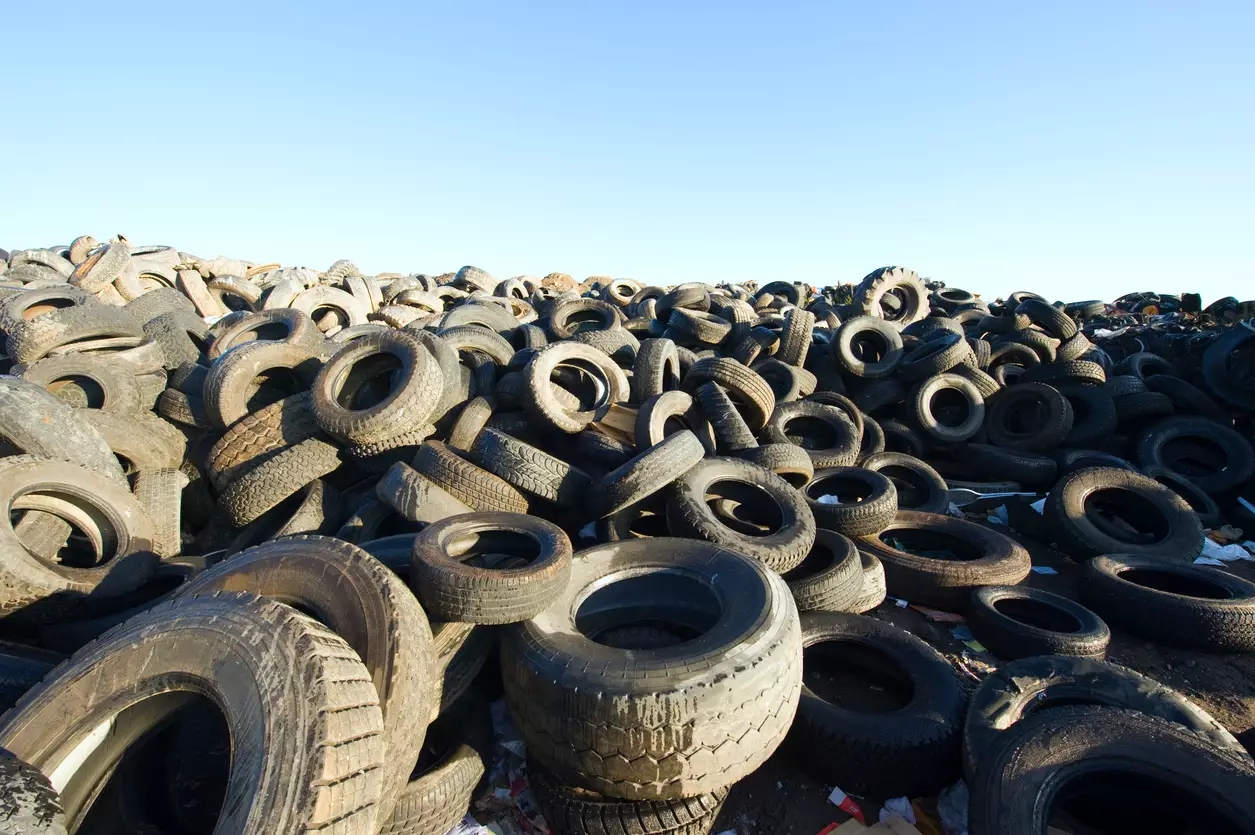
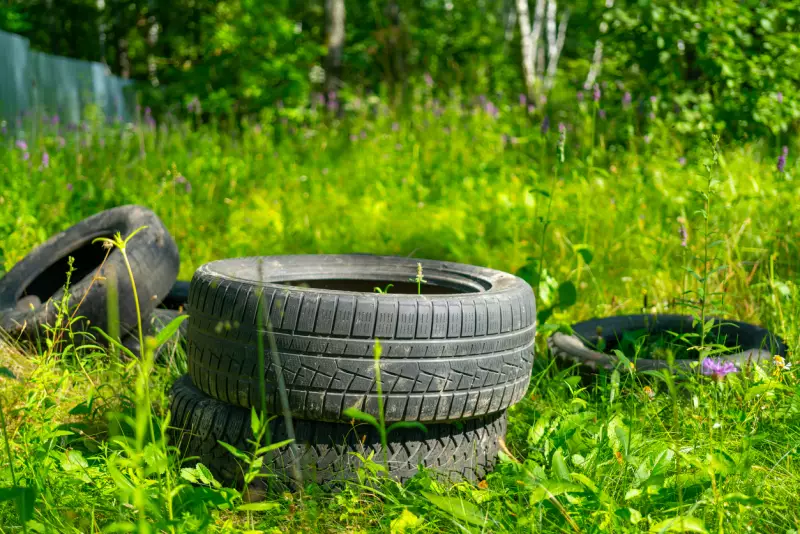
Car tires are the biggest issue. Each year, millions of tons of used tires end up in landfills or stockpiles. They are bulky, hard to compact, and can release toxic chemicals if dumped illegally. Stockpiled tires also pose fire hazards and attract pests. Similarly, smaller plastic wheels (from toys, luggage, furniture, etc.) also add to landfill growth when discarded. They degrade slowly, often breaking down into microplastics, and because many of these products are mass‑produced and short-lived, the waste volume keeps rising.
Carbon Emissions from Production
Creating a wheel is an energy- and resource-intensive process:
- Producing synthetic rubber, processing carbon black, and vulcanizing tires all rely heavily on fossil fuels.
- Forging steel or aluminum rims (for the tires) and molding plastic wheels generate significant emissions.
- Raw materials and finished wheels themselves are shipped globally, adding more transportation emissions to their lifecycle.
Together, these processes create a heavy carbon footprint that contributes to global climate concerns.
End-of-Life Challenges
Disposing of wheels, especially tires, is another big hurdle. Tire recycling (often called “crumb rubber” production) is complex. Tires can be repurposed into playground surfaces, asphalt, or fuel, but many still pile up. Rubber is durable by design, making it hard to break down, and even though recycled rubber can be downcycled into lower-value products like playground mulch or asphalt mix, markets for this material are quite limited.
In regions without robust waste management systems, old tires frequently end up in massive illegal stockpiles due to the cost and complexity of proper recycling, contributing heavily to pollution. Plastic wheels are even harder to recycle (or not recyclable at all), and many discarded machinery parts often end up as industrial waste.
Can Wheels Be Made More Sustainable?
The good news is that innovation is happening. Companies and researchers are actively exploring ways to make wheels more eco-friendly:
- Better Tire Recycling and Retreading: For truck and airplane tires, retreading (bonding new tread to a used tire casing) is a fantastic way to extend life. Advances in material separation are also making tire recycling more efficient, turning old tires into raw materials for new products. Recycled tire material is already being used in playgrounds, sports fields, and road surfaces.
- Eco-Friendly Materials: Manufacturers are experimenting with sustainable alternatives. This includes tires made with natural rubber from responsibly managed forests, orange oil, or even dandelion rubber. For plastic wheels, there is a push towards using recycled plastics or more easily biodegradable bioplastics where applicable to reduce reliance on petroleum-based materials.
- Energy-Efficient Manufacturing: Many companies are beginning to incorporate lower-emission production equipment, improved material recovery systems, and optimized global supply chains into their processes to reduce their carbon footprint.
- Extended Lifespan and Design: The simplest solution is making wheels that last longer. Durable compounds, better manufacturing, and designs that are easier to repair (like patchable bike tires) all reduce the rate at which wheels become waste.
Although challenges remain, sustainability is becoming a central focus as wheel production continues to grow. The goal isn’t to have fewer wheels but to create a more circular lifecycle for them that minimizes waste and maximizes reuse.
FAQs
Is There a Real Count of All Wheels in the World?
No, there isn’t. Realistically, it’s impossible to maintain a global database that tracks wheel production across every industry. Wheels are produced in enormous numbers across countless sectors, so only estimates exist.
Do Wheels Outnumber Doors?
It’s debated, but most likely, yes. There’s no official scorekeeper, but just think about it: the sheer number of vehicles, toy wheels, industrial machinery, office chairs, bicycles, and carts makes a strong case that wheels far exceed doors worldwide.
Can Tires Be Recycled?
Yes. Tires can be retreaded to extend their life, shredded into rubber for playgrounds and athletic tracks, used in asphalt mixes, repurposed in construction materials, and even used as fuel in certain industrial processes (like cement kilns). However, recycling rates can vary widely depending on the country and available infrastructure.
If you would like to contribute new automotive articles for our blog, visit our write for us page for more details.