


Most American drivers have never seriously considered liquefied petroleum gas as a vehicle fuel, and for understandable reasons. The refueling infrastructure is sparse compared to gasoline, the conversion process carries regulatory hurdles, and the technology sits outside the mainstream conversation about alternative fuels, which tends to focus on electric vehicles and hydrogen.
That said, LPG-powered vehicles are a legitimate, well-established technology with a real operational record in fleet and commercial applications. In parts of Europe, Australia, and Asia, LPG cars are common enough to be unremarkable.
Understanding how LPG vehicles work, what the real trade-offs are, and where the technology makes sense in the US market is a useful context. That applies whether you are evaluating a converted vehicle, researching fleet fuel options, or simply trying to understand what LPG means when you encounter it.
What Is an LPG Car?
An LPG car is a vehicle that runs on liquefied petroleum gas, a fuel composed primarily of propane and butane that is stored as a liquid under moderate pressure. The terms "LPG" and "propane autogas" are often used interchangeably in the US context, where propane is the dominant blend used for vehicle fuel. LPG is a byproduct of natural gas processing and crude oil refining, making it a domestically produced fuel in the United States.
LPG vehicles come in two main configurations. Factory-built LPG vehicles are purpose-built to run on the fuel from the ground up, with LPG-optimized engines, integrated fuel systems, and purpose-designed tanks. These are most commonly found in commercial and fleet applications in the US, including school buses, delivery vehicles, and forklifts. Converted LPG vehicles start life as conventional gasoline-powered cars or trucks and are retrofitted with an LPG fuel system while retaining the original gasoline system as a backup. Bi-fuel operation, the ability to run on either LPG or gasoline depending on availability, is one of the practical advantages that has made conversions appealing in markets where LPG infrastructure is strong.
In the United States, the fuel is most commonly referred to as "propane autogas" in fleet and commercial contexts, while "LPG" is the more internationally recognized term. They refer to the same basic fuel, though the specific propane-to-butane ratio can vary by region and season.
How an LPG Car Works
The fundamental operating principle of an LPG vehicle is similar to that of a gasoline vehicle. The fuel is combusted in the engine to generate mechanical power, which drives the vehicle through a conventional transmission and drivetrain. The differences lie in how the fuel is stored, conditioned, and delivered to the engine.
LPG is stored in a pressurized tank, typically at 100-200 psi, depending on temperature and fuel composition. In this pressurized state, the gas exists as a liquid, which is why it is called liquefied petroleum gas. At room temperature and atmospheric pressure, it would be a gas, but the pressure keeps it in liquid form, which dramatically increases the energy that can be stored in a given volume. When the engine requires fuel, LPG flows from the tank through fuel lines to a pressure regulator and vaporizer. This component reduces the pressure and allows the liquid LPG to convert to its gaseous state, warming it using engine coolant to ensure consistent vaporization. From there, the vaporized fuel is delivered to the engine's intake system.
Older systems use a simple mixer that blends LPG vapor with incoming air. Modern systems use sequential gas injectors, which meter fuel precisely for each cylinder, the same way electronic fuel injection works on a gasoline engine. In bi-fuel vehicles, the engine management system monitors which fuel is in use and adjusts ignition timing, fuel delivery, and other parameters accordingly. Switching between fuels is typically handled automatically based on LPG availability, or manually by the driver via a dashboard switch. Most bi-fuel vehicles are programmed to start on gasoline for cold starts and switch to LPG once the engine reaches operating temperature.
Main Components of an LPG System
An LPG fuel system adds a parallel fuel circuit to the vehicle alongside the existing gasoline system in a conversion, or replaces it in a dedicated LPG vehicle. The key components are as follows.
LPG Storage Tank
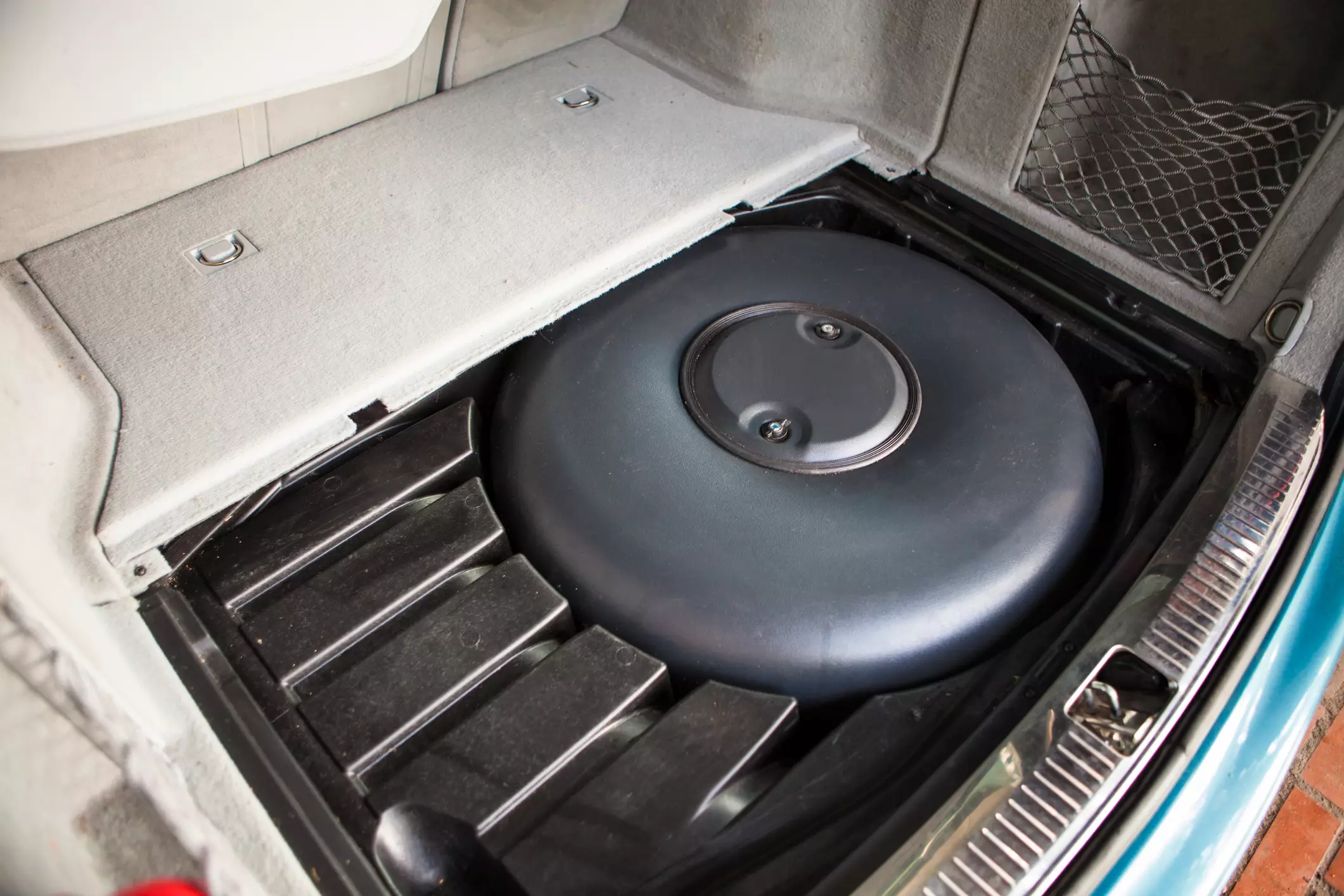
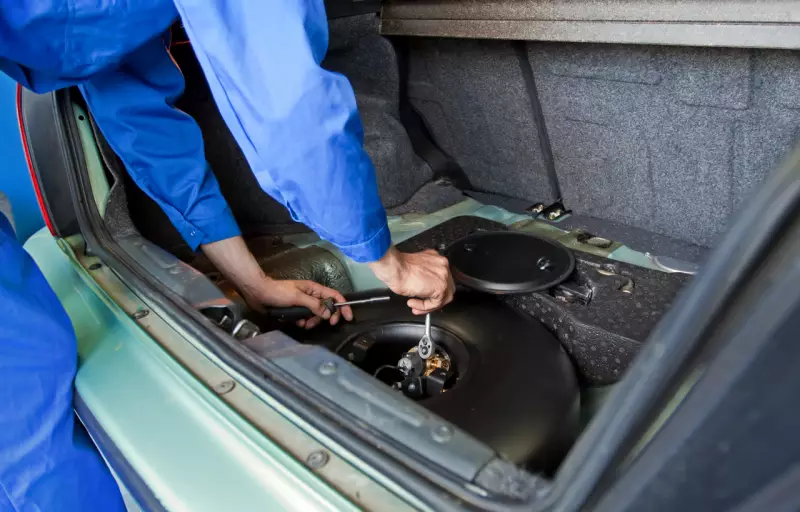
A cylindrical or toroidal (donut-shaped) pressure vessel, typically made from steel or aluminum, designed to hold LPG at operating pressures. Toroidal tanks are commonly installed in the spare tire well of the trunk, which minimizes cargo space loss. Cylindrical tanks are mounted in the trunk or under the vehicle, depending on the configuration. All LPG tanks used in vehicles are subject to pressure vessel safety standards and require periodic inspection and recertification.
Fill Valve and Check Valve
The external fill point where LPG is dispensed is equipped with a check valve that prevents backflow. In the US, LPG vehicle fill connectors follow the ACME or quick-connect standard used at propane autogas stations.
Fuel Lines
High-pressure steel or stainless braided hoses that carry liquid LPG from the tank to the regulator, rated for the operating pressures of the system.
Pressure Regulator and Vaporizer
The heart of the LPG system. This component reduces tank pressure, converts liquid LPG to vapor using heat from the engine coolant circuit, and ensures a consistent supply of gaseous fuel to the injection or mixing system. The regulator also incorporates a solenoid valve that shuts off LPG flow when the engine is not running, as a safety measure.
Injectors or Gas Mixer
Modern sequential LPG injection systems use gas-phase injectors mounted on the intake manifold, one per cylinder, to deliver precisely metered fuel. Older venturi-style systems use a mixer installed in the intake tract that blends LPG vapor with incoming air. Sequential injection offers better fuel economy, lower emissions, and more precise control, particularly at partial throttle.
Electronic Control Unit (ECU)
The LPG system's dedicated controller manages injector timing, fuel quantity, and the interaction with the vehicle's original engine management system. In modern installations, the LPG ECU communicates with the factory ECU via the OBD-II interface to maintain closed-loop control and ensure the fuel switch is transparent to the original emissions and diagnostic systems.
Fuel Selector Switch and Level Gauge
A dashboard-mounted switch allows manual fuel selection in bi-fuel vehicles, and a separate LPG level gauge displays remaining tank capacity. Some systems integrate these into a single display.
Benefits of LPG Cars
LPG offers a set of genuine advantages over conventional fuels, most of which are most pronounced in high-mileage fleet and commercial applications rather than typical passenger car use.
Lower Fuel Cost per Mile
This is the primary driver of LPG adoption in fleet applications. Propane autogas in the United States has historically sold at a significant discount to gasoline on a per-gallon basis. Because LPG has lower energy density than gasoline (roughly 74% by volume), fuel economy on LPG is typically 10 to 15% lower than on gasoline.
Even accounting for this, the cost-per-mile advantage is meaningful for high-mileage operators. Fleet operators running vehicles 50,000 or more miles per year can accumulate substantial fuel savings over the life of a vehicle.
Reduced Emissions
LPG combustion produces roughly 15 to 20% less carbon dioxide per mile than gasoline, along with significantly lower levels of fine particulate matter and reactive hydrocarbons. It produces virtually no sulfur dioxide. These properties have made propane autogas a preferred fuel for school buses and other fleet vehicles operating in areas with air quality concerns.
LPG does not produce the soot and particulate emissions associated with diesel, which is a meaningful distinction for vehicles operating in urban environments or in proximity to children and sensitive populations.
Cleaner Combustion and Potential Engine Longevity
LPG burns cleanly and does not leave the carbon deposits that gasoline combustion produces in the intake manifold, on valve faces, and in the combustion chamber.
Over time, this cleaner combustion can reduce maintenance requirements and extend engine component life, particularly in high-mileage applications. Engine oil also stays cleaner longer on LPG, since the fuel does not contaminate the oil the way gasoline can during rich cold-start operation.
Domestic Fuel Supply
The United States is among the world's largest producers of propane, primarily as a byproduct of natural gas processing in shale formations. Propane autogas is a domestically produced fuel with a stable supply chain, which is a relevant consideration for fleet operators managing fuel budget risk.
Established Safety Record
LPG has been used as a vehicle fuel for decades, with a well-documented safety profile. Modern LPG tank systems are built to withstand impacts and include automatic shutoff valves. LPG vapor is denser than air, which means leaks tend to dissipate at ground level rather than accumulate in enclosed spaces, as natural gas can at ceiling level. That said, any pressurized flammable fuel system requires proper installation and inspection.
Drawbacks and Limitations of LPG Cars
The benefits of LPG are real, but so are the practical limitations, and for most American drivers, the limitations outweigh the advantages.
Limited Refueling Infrastructure in the US
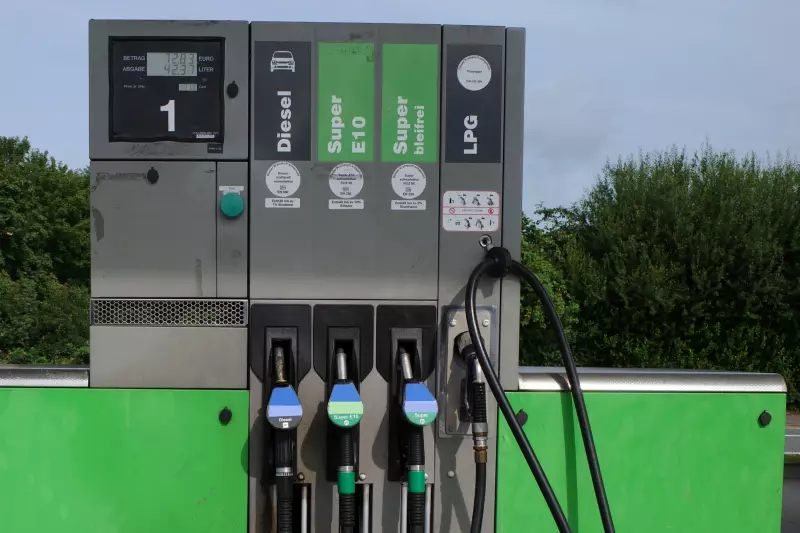
This is the most significant practical barrier for American consumers. While propane is widely available for home heating and agricultural use, propane autogas stations with the correct vehicle fill connector are relatively rare compared to gasoline stations.
The US Department of Energy's Alternative Fuels Station Locator lists a few thousand propane autogas stations nationwide, concentrated in fleet-service areas, truck stops, and some rural locations. For a private passenger car driver who cannot predict refueling availability, this is a real constraint.
Reduced Trunk or Cargo Space
The LPG tank occupies space that would otherwise be available for cargo. Toroidal tanks in the spare tire well preserve trunk space better than cylindrical tanks, but they also eliminate the spare tire entirely. For some vehicle types and use cases, the space trade-off is acceptable; for others, it is not.
Lower Energy Density than Gasoline
LPG contains approximately 74% of the energy of gasoline by volume. This means a full LPG tank provides less range than an equivalent-sized gasoline tank. In bi-fuel vehicles, the gasoline tank serves as a range extender, but in dedicated LPG vehicles, range planning requires more attention than with gasoline.
Cold-Weather Performance
LPG vaporization is temperature-dependent. At very low temperatures (below approximately 15 to 20 degrees Fahrenheit), propane's vapor pressure drops significantly, which can make starting on LPG difficult or impossible. Most bi-fuel vehicles address this by starting on gasoline and switching to LPG once the engine is warm. Dedicated LPG vehicles in cold climates require block heaters or other cold-start provisions.
Conversion Cost and Regulatory Requirements
In the United States, converting a vehicle to run on LPG requires an EPA-certified aftermarket conversion system. The certification process is rigorous, and certified conversion kits are available only for specific vehicle makes and models.
A professional conversion, including parts and installation, typically runs $5,000 to $10,000 or more, depending on the vehicle. The payback period from fuel savings depends entirely on how many miles the vehicle covers annually.
Resale Market
In the US, LPG conversion is not well understood by most used car buyers. A converted vehicle may face buyer hesitation, which can affect resale value in the private market. Fleet-to-fleet sales are a different matter, as commercial buyers are more likely to understand and value the conversion.
LPG vs. Gasoline and Diesel Cars
|
Factor |
LPG |
Gasoline |
Diesel |
|
Fuel cost per equivalent mile |
Generally, 30-50% lower than gasoline |
Baseline |
Comparable to or slightly above gasoline |
|
CO2 emissions |
About 15-20% lower than gasoline |
Baseline |
Similar to gasoline, higher NOx and particulates |
|
Energy density per gallon |
About 74% of gasoline |
Baseline |
About 113% of gasoline |
|
Refueling infrastructure (US) |
Very limited; primarily fleet and industrial |
Extensive nationwide |
Good coverage, especially on highways |
|
Engine wear |
Generally cleaner combustion, potentially less wear |
Baseline |
Higher compression; robust but heavier components |
|
Cold-weather starting |
Can be challenging below freezing |
Reliable across a wide temperature range |
Can be slow in extreme cold without a block heater |
|
Conversion availability (US) |
Available but limited; EPA certification required |
N/A |
N/A |
Note: Figures are general approximations. Actual values vary by vehicle type, driving conditions, fuel blend, and geographic region.
The table tells a consistent story. LPG is genuinely cost-competitive per mile in markets where it is available and competitively priced. Its emissions profile is meaningfully better than gasoline for CO2 and substantially better for particulates. The trade-off is infrastructure and energy density, both of which are less favorable than either gasoline or diesel in the US context.
Compared to diesel specifically, LPG offers a significant advantage in particulate and NOx emissions, which is why transit agencies, school districts, and municipalities have been among its largest adopters in the US fleet market. Diesel's energy density advantage and torque characteristics still make it the preferred choice for heavy-duty towing and long-haul applications where LPG infrastructure is inadequate.
Is an LPG Car Right for You?
The honest answer for most American passenger car drivers is: probably not, at least not right now. The infrastructure gap in the US is a real barrier. Electric vehicle drivers can charge at home, which offsets the lack of public charging in many areas. LPG has no equivalent workaround because residential propane tanks use a different fill connector and pressure rating than propane autogas vehicle systems.
LPG makes the most practical sense in the following US scenarios:
- High-mileage fleet operations. School buses, shuttle vehicles, delivery vans, and municipal fleets that operate from a central depot with dedicated refueling infrastructure are the sweet spot. These operators run enough miles per year to realize significant fuel cost savings, can install dedicated dispensing equipment at their facility, and have maintenance staff familiar with the technology.
- Forklift and industrial applications. Propane is the dominant fuel for indoor forklifts in US warehouses and manufacturing facilities. This is one of the largest LPG vehicle markets in the country, valued for its combination of low indoor emissions, fast refueling, and consistent performance.
- Agricultural and rural operators. In rural areas where propane is already stored on-site for heating or grain drying, adding a vehicle dispensing point can be relatively straightforward. Farm trucks and utility vehicles operated primarily on private property are also subject to fewer regulatory constraints on conversion.
- Drivers in regions with established LPG infrastructure. In a handful of US metro areas and along certain interstate corridors, propane autogas stations are accessible enough to make passenger car use feasible. Checking the DOE Alternative Fuels Station Locator for your specific geography before committing to a conversion is essential.
For drivers primarily focused on reducing fuel costs and emissions, battery electric vehicles and plug-in hybrids are the more practical choice in the current US market. They offer broader refueling infrastructure, federal tax incentives, and a much wider range of available vehicles than LPG.
LPG's strongest case in the US remains in commercial fleet applications where the economics and infrastructure align.
FAQs About LPG Cars
Is LPG safe for cars?
Yes, when the system is properly installed, inspected, and maintained. LPG vehicle systems are built to pressure vessel safety standards, include automatic shutoff solenoids that cut fuel supply when the engine is not running, and have been in use for decades in commercial fleets worldwide.
Are LPG cars cheaper to run?
Generally, yes, for drivers who cover enough miles annually to offset any conversion cost and can reliably access LPG fuel. Propane autogas in the US has historically cost 30 to 50% less per gallon than gasoline. While the lower energy density of LPG means fuel economy is somewhat reduced (typically 10 to 15% fewer miles per gallon), the cost-per-mile advantage is real for high-mileage users.
Can any car be converted to LPG?
Not freely, in the United States. Federal law requires aftermarket LPG conversion systems to be certified by the EPA for the specific vehicle make, model, and engine on which they are installed.
Certified conversion kits are available for many popular light-duty trucks and vans, particularly those commonly used in fleet applications, but coverage is not universal. Older vehicles, niche models, and newer vehicles with advanced direct-injection engines may have limited or no certified conversion options available.
Installing a non-certified conversion on a vehicle registered for on-road use is illegal under the Clean Air Act and can result in significant fines. Before pursuing a conversion, verify that a certified kit exists for your specific vehicle.
Does LPG affect engine performance?
In most cases, the performance difference is modest and acceptable. LPG has a higher octane rating than regular gasoline (approximately 104 to 112 RON compared to 87 to 93 for pump gasoline), which actually reduces the risk of engine knock and can allow slightly more aggressive ignition timing.
However, because LPG is delivered as a vapor rather than a liquid, it does not provide the intake charge cooling effect that liquid gasoline evaporation creates, which slightly reduces the volumetric efficiency of the engine. The net result is typically a 5 to 10% reduction in peak power output on LPG compared to gasoline. In everyday driving, this is rarely noticeable; at wide-open throttle, the difference is more perceptible.
Is LPG environmentally friendly?
More so than gasoline or diesel, but it is still a fossil fuel. LPG combustion produces approximately 15 to 20% less COâ‚‚ per mile than gasoline and significantly lower levels of particulate matter and reactive hydrocarbons. It produces virtually no sulfur dioxide or soot. These properties have led to its adoption in applications where air quality is a specific concern, including school buses and urban fleet vehicles.