



Most drivers have received a traffic ticket at some point and paid it without giving much thought to the wider system it represents. A traffic violation is a specific legal category with real consequences that extend far beyond the fine stated on the citation. These consequences can include penalty points on your licence, higher insurance premiums, potential licence suspension and, in serious cases, a criminal record.
Knowing what counts as a traffic violation, how violations are categorised, and what the consequences are can help you make better decisions while driving and respond more effectively when something goes wrong. This article provides a comprehensive overview, covering everything from minor infractions to criminal charges and the state laws that govern them.
What Is a Traffic Violation?
A traffic violation is any breach of the traffic laws governing the operation of vehicles on public roads. These laws cover an enormous range of behavior, including
- How fast can you drive
- When you must stop
- How do you signal a turn
- Where can you park
- Whether your vehicle meets safety and registration requirements, and much more
The term covers everything from a parking ticket to a DUI. Most traffic violations are minor infractions that result in a fine and, depending on the offense, points on your driving record. Others are criminal offenses that can lead to arrest, court appearances, and jail time. Where a given violation falls on that spectrum depends on the nature of the offense, the circumstances, and the laws of the state where it occurred.
Traffic violations are distinct from other categories of driving-related offenses, such as vehicular manslaughter or hit-and-run, which are prosecuted under broader criminal statutes rather than traffic codes. The violations covered here are primarily governed by state and local traffic laws.
Types of Traffic Violations
Traffic violations fall into several distinct categories - and the differences between them are more than technical. The category a violation belongs to determines whether it's handled administratively or through the criminal court system, what fines or penalties you face, and whether the offense shows up on your driving record, your criminal record, or both.
Moving Violations
A moving violation is any traffic infraction that occurs while the vehicle is in motion. Because they involve active driving behavior, they carry a higher risk of accidents and injuries than other violation types — and the legal system treats them accordingly.
Common moving violations include:
- Speeding
- Running a red light or stop sign
- Illegal lane changes or failure to signal
- Following too closely (tailgating)
- Failure to yield
- Reckless or aggressive driving
- Driving under the influence of alcohol or drugs
- Distracted driving, including texting while driving
Some of these, particularly DUI and reckless driving, can cross from a civil infraction into a criminal offense depending on the circumstances.
Moving violations are the category most likely to result in points on your driving record. Those points compound over time, raising your insurance rates and, if they accumulate past a threshold, putting your license at risk.
Non-Moving Violations
Non-moving violations cover offenses that occur when the vehicle is stationary, or that relate to the vehicle's condition - its equipment, registration, and compliance - rather than to how it's being driven.
Common non-moving violations include:
- Parking violations (expired meter, fire hydrant, no-parking zone)
- Expired vehicle registration or tags
- Broken or missing equipment (headlights, taillights, mirrors)
- Window tint violations
- Overloaded or improperly secured cargo
Unlike moving violations, these offenses typically result in a fine only - no points are added to your driving record, and they carry no risk to your license status. For equipment-related violations, many states issue "fix-it" tickets, which can be dismissed once you correct the problem and provide documentation. In those cases, you may pay little to nothing at all.
Civil Traffic Violations
Civil traffic violations are the less serious end of the spectrum, handled administratively rather than through the criminal court system. When you receive a citation, you pay a fine and the matter is resolved — no criminal charge, no conviction, nothing that follows you beyond your driving record.
The vast majority of traffic violations fall into this category: speeding tickets, failure to signal, rolling stops, parking tickets, and similar infractions. They may still add points to your driving record and nudge your insurance rates up, but they do not create a criminal record.
In many states, a civil violation isn't necessarily the final word. Drivers can contest the ticket in traffic court, attend a defensive driving course to have points waived, or negotiate a reduced fine — options worth knowing about before you simply pay and move on.
Criminal Traffic Violations
Criminal traffic violations are the more serious end of the spectrum. They are prosecuted through the criminal court system, meaning a conviction creates a criminal record, not just a driving record entry.
Offenses typically classified as criminal traffic violations include:
- Driving under the influence (DUI) or driving while intoxicated (DWI)
- Reckless driving (defined as willful or wanton disregard for the safety of persons or property)
- Driving with a suspended or revoked license
- Vehicular assault or road rage incidents
- Leaving the scene of an accident (hit-and-run)
- Racing on public roads
Depending on the state and the severity of the offense, criminal traffic violations can be charged as misdemeanors or felonies. Consequences can include substantial fines, probation, mandatory treatment programs, license revocation, and incarceration.
The line between a civil and a criminal traffic violation is often defined by severity and intent. Exceeding the speed limit by 10 mph is typically a civil infraction. Driving 90 mph in a school zone during dismissal time could be charged as reckless driving, a criminal offense, in many states.
Traffic Laws That Govern Violations
Traffic violations in the United States are primarily governed by state law, not federal law. Each state has its own traffic code, which is a comprehensive set of statutes covering driving behavior, vehicle requirements, road markings, signal requirements, and more. Local jurisdictions (cities and counties) can add additional regulations on top of state law, particularly for parking and speed limits in specific zones.
This state-by-state structure means that the same behavior can have different legal consequences depending on where you are. The speed limit on an interstate may differ from state to state. A right turn on red is legal in most of the country but prohibited in specific intersections or under certain local ordinances. DUI blood alcohol thresholds, point systems, and license suspension triggers all vary by state.
A few areas where federal law does intersect with traffic enforcement include commercial vehicle regulations (governed by the Federal Motor Carrier Safety Administration), vehicle safety standards (governed by NHTSA), and highway funding requirements that create pressure on states to adopt certain standards.
For most drivers, the relevant law is the vehicle code of the state where they are driving. States publish their traffic codes, and many are available online through the state legislature or DMV website. When driving in an unfamiliar state, it is worth checking whether any rules differ significantly from those in your home state, particularly for speed limits, cell phone use, and right-of-way rules.
The Uniform Vehicle Code, maintained by the National Committee on Uniform Traffic Laws and Ordinances, provides a model framework that many states have used as a starting point for their traffic laws. But states are free to deviate from it, and many do.
Common Examples of Traffic Violations
The following are among the most frequently cited traffic violations across the United States:
- Speeding. The most common moving violation in the country. Speeding tickets can be issued for exceeding the posted speed limit, for driving too fast for conditions even below the speed limit, or for driving above an absolute speed limit (California and a few other states use absolute limits in certain zones). Fines and points scale with how far above the limit you were traveling.
- Running a red light or stop sign. Failing to stop at a traffic signal or stop sign is both a common citation and a significant cause of intersection crashes. Many jurisdictions now use automated red-light cameras, which issue citations by mail based on photographic evidence. These citations are treated as civil violations in most states, though the rules on contesting them vary.
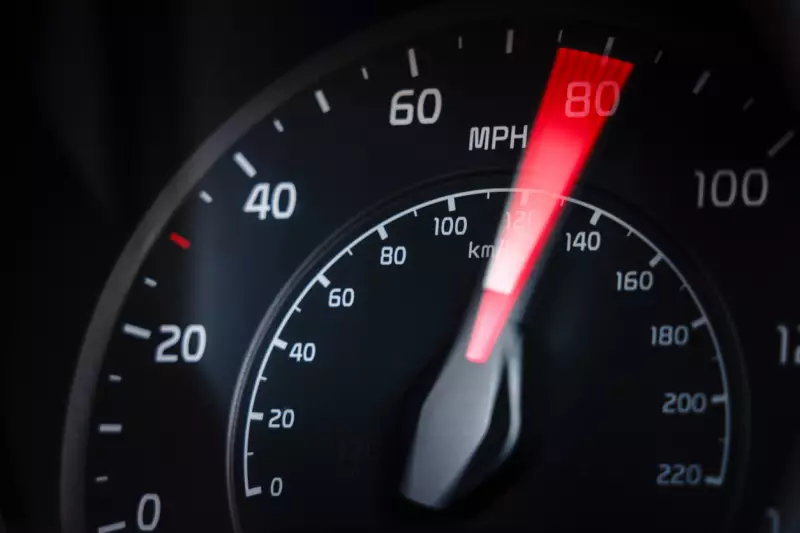
- Reckless driving. This is a more serious charge than speeding or a standard moving violation. Reckless driving typically requires a showing of willful or wanton disregard for others' safety, which goes beyond mere carelessness. In many states, driving above a certain speed threshold (often 80 or 85 mph) automatically qualifies as reckless driving regardless of road conditions or traffic.
- DUI and DWI. Driving under the influence of alcohol or drugs is a criminal offense in all 50 states. The legal blood alcohol concentration (BAC) limit is 0.08% for most drivers, and 0.04% for commercial drivers. Utah has set the threshold at 0.05%. First-offense DUIs typically result in license suspension, mandatory treatment or education programs, fines, and, in some states, jail time. Subsequent offenses carry significantly higher penalties.
- Distracted driving. Texting while driving is prohibited in 48 states plus the District of Columbia. Handheld phone use while driving is banned in a growing number of states as well. Fines and penalties for distracted driving have increased substantially over the past decade as data on its danger has become clearer.
- Failure to yield. Failure to yield at an intersection, to pedestrians in a crosswalk, or to emergency vehicles is a moving violation in every state. It is also a leading cause of intersection collisions and pedestrian fatalities.
- Expired registration. Driving with expired registration or plates is a non-moving violation that is easy to overlook but straightforward to resolve. Most states issue fix-it tickets that can be dismissed once registration is renewed and documented with the court.
Penalties for Traffic Violations
The consequences for a traffic violation range from a modest fine to a felony conviction, depending on the offense. Here is an overview of the most common penalty types and how they apply.
|
Violation Type |
Typical Fine |
Points Added |
Other Consequences |
|
Minor speeding (1-10 mph over) |
$50-$150 |
1-2 |
Insurance rate increase |
|
Excessive speeding (20+ mph over) |
$200-$500+ |
3-4 |
Possible license suspension |
|
Running a red light |
$100-$500 |
2-3 |
Insurance surcharge |
|
Reckless driving |
$500-$2,500+ |
4-6 |
Criminal charge, possible jail time |
|
DUI / DWI |
$1,000-$10,000+ |
Varies by state |
License revocation, jail, criminal record |
|
Expired registration |
$25-$200 |
0 (non-moving) |
Fix-it ticket in some states |
|
Parking violation |
$25-$100+ |
0 |
Boot or tow for repeat offenses |
Note: Fine ranges and point values are approximate and vary significantly by state and local jurisdiction. Actual penalties depend on the specific violation, prior record, and circumstances of the offense.
Fines
The most immediate consequence of most traffic violations. Fine amounts vary by state, by the nature of the offense, and sometimes by the driver's income or the location (fines in school zones or construction zones are frequently doubled). Unpaid fines can result in additional penalties, including license suspension in some states.
Points on Your Driving Record
Most states use a point system to track violations. Moving violations add points; non-moving violations typically do not. Points accumulate, and reaching a threshold triggers automatic consequences such as mandatory hearings, required driver improvement courses, or license suspension. The specific point values and thresholds vary by state.
Insurance Rate Increases
Insurance companies access your driving record when setting or renewing your premium. A single moving violation can increase your rate, and multiple violations or a serious offense like a DUI can result in a dramatic rate increase or policy cancellation. The rate impact typically lasts three to five years, depending on the violation and the insurer.
License Suspension or Revocation
Serious violations or accumulated points can trigger suspension (temporary loss of driving privileges) or revocation (permanent loss, requiring reapplication). DUI convictions almost always result in at least a temporary suspension. Driving on a suspended license is itself a criminal offense in most states.
Criminal Charges
For violations classified as criminal offenses, consequences can include arraignment, court appearances, probation, mandatory programs, and incarceration. A criminal traffic conviction stays on your record and can affect employment, housing applications, and professional licensing.
How Traffic Violations Affect Your Driving Record
Your driving record is a state-maintained document that tracks your license status, violations, accidents, and suspensions. Insurance companies, employers, and courts all use it to evaluate your history behind the wheel.
When you receive a moving violation, and it is processed by the court, it is typically reported to your state DMV, which adds the corresponding points to your record. The violation itself also appears on your record regardless of points. Non-moving violations, such as parking tickets, generally do not appear on your driving record and do not affect your insurance.
How long violations stay on your record depends on the state and the severity of the offense. Minor infractions typically remain for three to five years. More serious offenses, including DUI, reckless driving, and driving on a suspended license, can remain on your record for seven to ten years or longer. Some states maintain a permanent record for the most serious offenses.
A few things worth knowing about managing your driving record:
- Defensive driving courses: Many states allow drivers to complete a state-approved defensive driving or traffic school course to have points removed or a violation dismissed. These programs are typically available once per year or once every few years.
- Record review: You can request a copy of your driving record from your state DMV, usually for a small fee. Reviewing it periodically lets you catch errors and understand what insurers see when they pull your record.
- Point thresholds: Most states have a tiered system. Accumulating a certain number of points within a defined period triggers progressively serious consequences, from a warning letter to mandatory hearings to suspension. Knowing your state's threshold helps you understand how much margin you have.
- Interstate reporting: States share driving records through the Driver License Compact and similar agreements. A violation committed out of state is typically reported back to your home state and applied to your home record.
FAQs About Traffic Violations
Is a speeding ticket a traffic violation?
Yes. A speeding ticket is one of the most common traffic violations in the United States. It is a moving violation issued when a driver is cited for exceeding the posted speed limit or, in some cases, for driving at a speed that is unsafe for current road conditions, even if below the posted limit. Most speeding tickets are civil infractions, but excessively high speeds can cross into reckless driving territory, which is a criminal offense in most states.
Are traffic violations criminal offenses?
Most traffic violations are civil infractions, not criminal offenses. They result in fines and possibly points on your record, but not a criminal conviction. However, a subset of traffic violations is classified as criminal offenses. These include DUI, reckless driving, driving with a suspended or revoked license, hit-and-run, and street racing, among others. The distinction matters because a criminal conviction stays on your permanent record, not just your driving record, and carries broader consequences.
What is the difference between a moving violation and a traffic violation?
A traffic violation is the broader category: any breach of traffic law, whether the vehicle is moving or not. A moving violation is a specific type of traffic violation that occurs while the vehicle is in motion. So all moving violations are traffic violations, but not all traffic violations are moving violations. Parking tickets and expired registration citations are traffic violations but not moving violations, and they do not typically add points to your driving record.
Do traffic violations affect insurance rates?
Yes, moving violations can significantly affect your insurance rates. Insurers pull your driving record at renewal and when you apply for a new policy. A single minor violation, such as a low-speed speeding ticket, may result in a modest rate increase.
Multiple violations or a serious offense, such as a DUI, can result in a substantial premium increase or, in some cases, a non-renewal notice. The impact typically lasts three to five years. Non-moving violations, such as parking tickets, generally do not affect insurance rates because they do not appear on your driving record