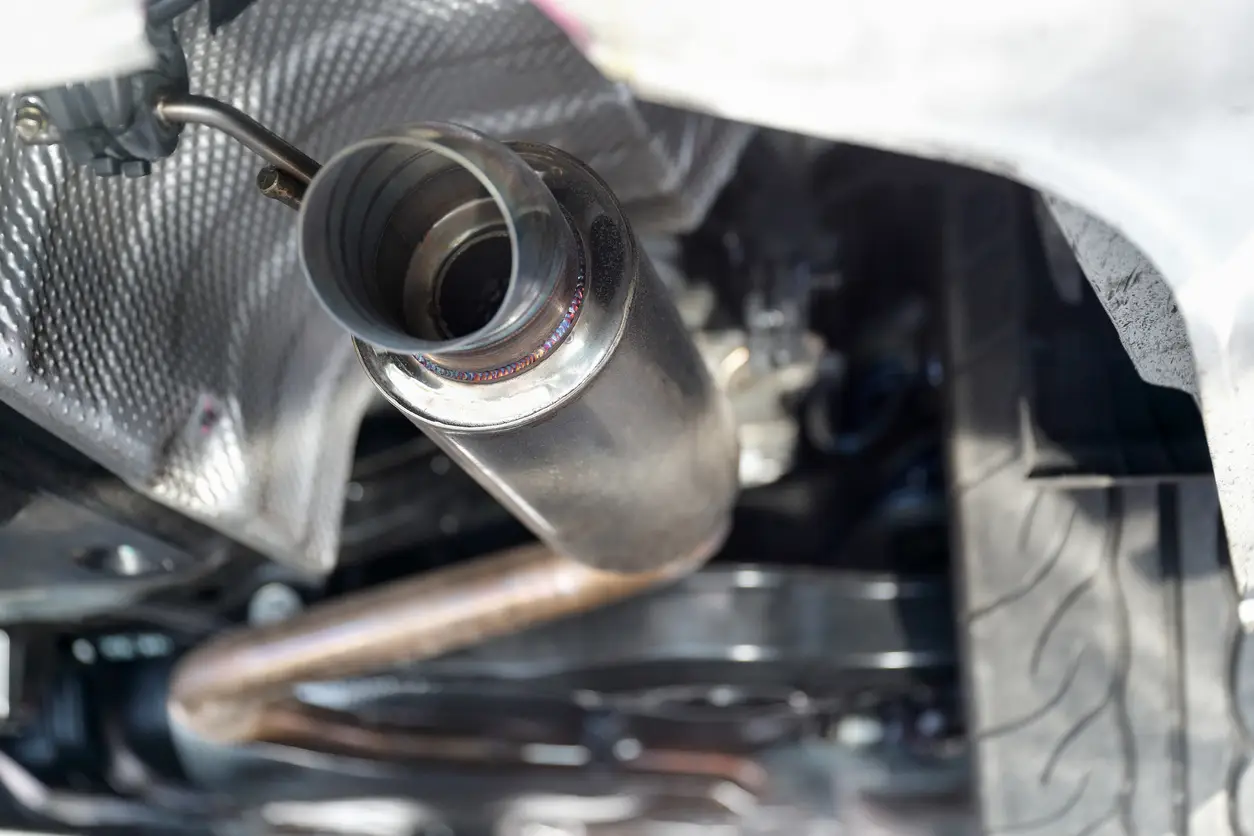


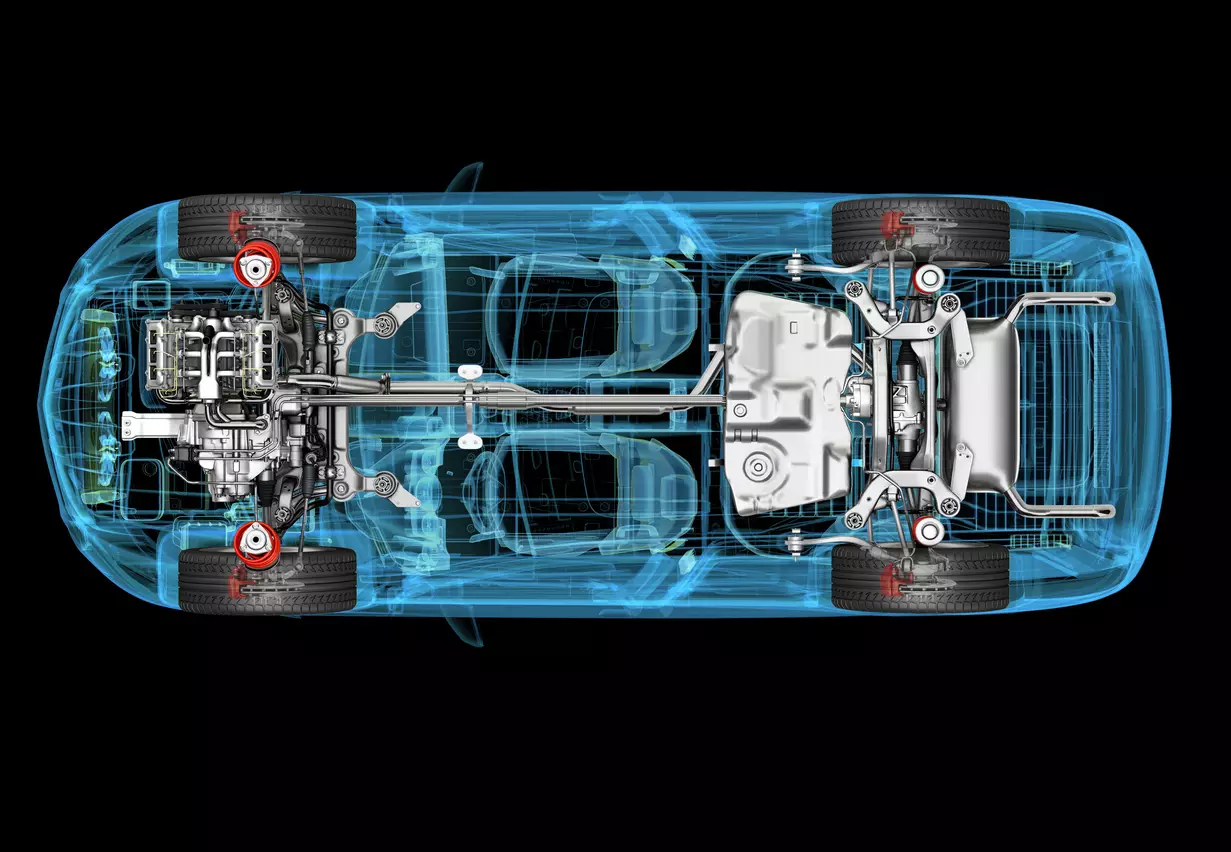

The powertrain is the collection of components that are responsible for moving your vehicle. Everything from the combustion in the engine to the rotation of the wheels runs through it. When something in that system fails, the consequences range from a rough idle and a warning light to a vehicle that will not move at all.
Powertrain repairs are among the most expensive in automotive maintenance. A transmission rebuild can run $2,500 to $5,000. An engine replacement can exceed $10,000. Most of those bills, however, are not random events. They are the predictable result of deferred maintenance, ignored warning signs, or driving habits that put unnecessary stress on components that were designed to last.
Understanding how the powertrain works, what can go wrong, and how to catch problems early is how you avoid the expensive version of this conversation.
What Is a Powertrain?
The powertrain encompasses every component involved in generating power and delivering it to the wheels. In a conventional internal combustion vehicle, that means the engine, transmission, driveshaft, differential, and axles, collectively referred to as the drivetrain. In a hybrid or electric vehicle, the powertrain also includes electric motors, battery systems, and power electronics.
Here is a brief overview of the main components:
- Engine. The source of power. It converts fuel into mechanical energy through a series of controlled combustions. The engine's health affects everything downstream: if it is not producing power efficiently, no other component can compensate.
- Transmission. Transfers engine power to the driveshaft while managing gear ratios to match engine output to vehicle speed. Transmissions are either automatic or manual, and increasingly, continuously variable (CVT) or dual-clutch (DCT) in design. They are the component most often associated with costly powertrain failures.
- Driveshaft. Carries torque from the transmission to the differential. In front-wheel drive vehicles, this function is performed by the halfshafts. In rear-wheel and all-wheel drive vehicles, a central driveshaft transmits power rearward.
- Differential. Splits power between the driven wheels, allowing them to rotate at different speeds during turns. Front-wheel drive vehicles have a front differential integrated into the transaxle. Rear-wheel drive and all-wheel drive vehicles have a rear differential and sometimes a center differential or transfer case as well.
- Axles. Connect the differential to the wheels and transmit the final rotation. Constant velocity (CV) joints at each end of the axle allow for steering movement and suspension travel while maintaining power delivery.
Manufacturer powertrain warranties typically cover the engine, transmission, and drivetrain components for 5 years or 60,000 miles on most new vehicles, though some brands extend this to 10 years or 100,000 miles. Understanding what is and is not covered before purchasing a vehicle is worth the time.
Common Powertrain Problems to Watch For
Powertrain problems rarely appear without warning. Most develop gradually, giving observant drivers a window to address them before they escalate.
Engine Misfires
A misfire occurs when one or more engine cylinders fail to combust properly. The causes range from worn spark plugs and fouled fuel injectors to failing ignition coils or a more serious issue like a blown head gasket. Misfires trigger the check engine light, often cause rough idling or vibration, and if left unaddressed, can damage the catalytic converter.
Transmission Slipping
Slipping occurs when the transmission shifts unexpectedly, hesitates between gears, or the engine revs without a corresponding increase in vehicle speed. It is one of the clearest signs that the transmission is under stress, whether from low or degraded fluid, worn clutch packs, or internal mechanical damage.
Fluid Leaks
Engine oil, transmission fluid, coolant, differential fluid, and power steering fluid all flow through powertrain components. A leak in any of these systems does not just create a spot in the driveway; it progressively deprives components of the lubrication and cooling they require. Dark brown or black stains indicate engine oil. Red or brown stains may be transmission fluid. Bright green, orange, or pink fluid is typically coolant.
Overheating
The engine operates within a specific temperature range, maintained by the cooling system. When the cooling system fails, whether due to a leak, a failing water pump, a clogged radiator, or a bad thermostat, temperatures rise beyond the engine's tolerance. Sustained overheating can warp cylinder heads, damage head gaskets, and in severe cases, destroy the engine block entirely.
CV Joint Failure
The constant velocity joints on the axles are protected by rubber boots filled with grease. When those boots crack or tear, the grease is lost, and the joint begins to wear. The classic symptom is a clicking or popping sound during turns. If ignored long enough, the joint can fail completely, leaving the vehicle unable to transfer power to the wheel.
Timing Belt or Chain Failure
The timing belt or chain synchronizes the rotation of the engine's crankshaft and camshaft. In interference engines, a timing belt failure causes the pistons and valves to collide, resulting in catastrophic internal damage. Timing chains are more durable but are not immune to stretching and wear over high mileage.
Differential Problems
Worn or contaminated differential fluid leads to gear wear, whining or humming noises under load, and eventually, differential failure. This is particularly relevant for all-wheel drive and four-wheel drive vehicles, where differentials work harder and fluid degradation can accelerate.
Signs Your Powertrain May Be Failing
The earlier a powertrain problem is identified, the more options you have and the lower the repair cost typically runs. Learning to interpret dashboard warning lights and alerts helps you recognize these issues sooner. These are the warning signs worth taking seriously.
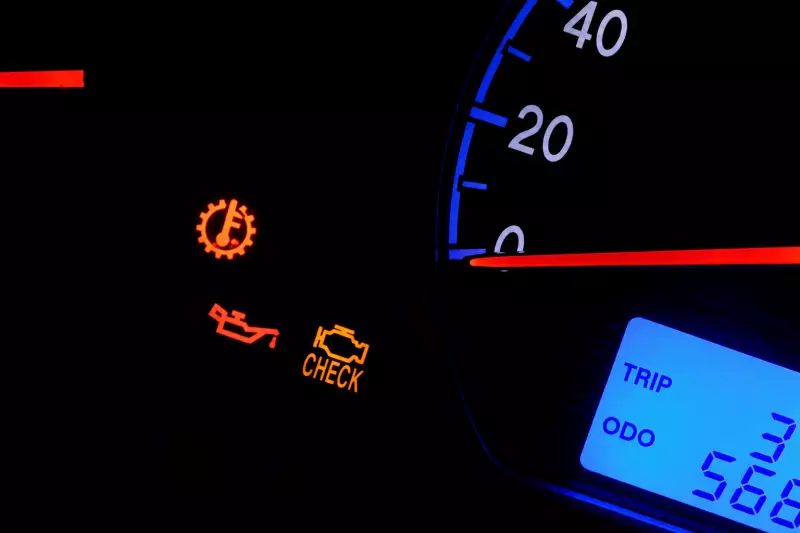
- Warning lights. The check engine light, transmission temperature warning, and oil pressure warning light are the most directly relevant. A check engine light alone covers hundreds of possible codes, but when combined with performance changes, it narrows the field considerably. A "Powertrain Fault" message on vehicles with driver information displays signals a broader system issue that warrants immediate diagnosis.
- Reduced power or acceleration. If the vehicle feels sluggish, hesitates under throttle, or struggles to reach highway speeds with normal effort, something in the powertrain is not performing as it should, and a variety of common causes of poor acceleration in a car may be involved. This can reflect engine issues, transmission problems, or drivetrain restrictions.
- Rough shifting or gear hunting. An automatic transmission that shifts harshly, delays engaging a gear, or repeatedly cycles between gears (hunting) is showing signs of wear or fluid problems. Manual transmissions may feel notchy or difficult to engage cleanly.
- Unusual noises. Knocking from the engine often indicates low oil pressure or worn rod bearings, and persistent rod knock from worn connecting rod bearings is especially serious. Whining that changes with vehicle speed can point to differential or bearing issues, while a brake pedal that suddenly sinks to the floor points to a separate but equally urgent brake system problem that should not be ignored. Clunking during acceleration or deceleration may indicate loose drivetrain components or worn U-joints. Clicking during turns is the CV joint signature.
- Vibration. Vibration felt through the seat or floor at highway speeds can indicate a driveshaft imbalance, worn U-joints, or a damaged CV axle. Vibration that correlates with engine RPM rather than vehicle speed often points to engine misfires or mount failures.
- Fluid on the ground or a burning smell. Spots or puddles under a parked vehicle are always worth investigating. A burning smell while driving, particularly if it has a sweet or acrid quality, can indicate coolant or oil contacting hot engine components.
- Worsening fuel economy. A meaningful drop in fuel efficiency without an obvious explanation (different driving conditions, seasonal fuel blend changes) can indicate that the engine is working harder than it should due to misfires, transmission inefficiency, or drivetrain drag.
Some vehicles display a specific "Powertrain Fault" or "Service Powertrain" warning in the instrument cluster. This is a broad alert that should not be ignored or assumed to resolve on its own. Have it diagnosed at a shop with a professional scan tool as soon as reasonably possible.
What Causes Powertrain Problems?
Most powertrain failures have identifiable root causes. Understanding them helps contextualize both the prevention steps and the diagnosis conversation with a mechanic.
Deferred Maintenance
This is the leading cause of premature powertrain wear. Engine oil that goes too long between changes forms sludge that restricts flow and accelerates wear on bearings, rings, and valve train components. Transmission fluid that is never changed degrades, loses its lubricating and heat-transfer properties, and leaves behind deposits that affect shift quality and internal tolerances.
Low or Contaminated Fluids
Running an engine low on oil, a transmission low on fluid, or a cooling system low on coolant forces components to operate outside their design parameters. Even a quart low on oil can significantly increase wear on high-load components. Contaminated fluid, whether from moisture ingress, combustion byproducts, or degraded additives, compounds the problem.
Overheating
Both the engine and the transmission have maximum operating temperature thresholds. Sustained operation above those thresholds accelerates wear, damages seals, and can cause permanent structural damage, and some vehicles will even enter a reduced-power limp mode to protect the engine and transmission when overheating or other serious faults are detected. Overheating the engine repeatedly, even without full failure, shortens its useful life significantly and increases the risk that the car will shut off unexpectedly while driving due to heat-related damage or sensor failures.
Aggressive Driving Habits
Repeated hard acceleration from a cold start, towing beyond the vehicle's rated capacity, racing the engine before it reaches operating temperature, and aggressive use of low gears all add cumulative stress to powertrain components. This does not mean spirited driving is prohibited, but doing it consistently with a cold engine or without adequate maintenance creates predictable wear patterns.
Worn or Neglected Components
Spark plugs, belts, hoses, and sensors all have service intervals for a reason. A worn spark plug causes misfires that stress the catalytic converter and reduce combustion efficiency. A cracked coolant hose can cause sudden, catastrophic overheating. Deferred replacement of wear items creates compounding failures downstream.
Manufacturing Defects or Design Limitations
Some powertrain problems are not the driver's fault. Certain engines and transmission designs have documented reliability issues, and manufacturer technical service bulletins (TSBs) sometimes acknowledge and address them. Researching the known reliability profile of a vehicle before purchasing it is a reasonable due diligence step.
How to Prevent Powertrain Problems
Consistent maintenance is the most effective powertrain protection available. The table below summarizes the key services, their recommended intervals, and the cost of skipping them.
|
Service |
Recommended Interval |
Component Protected |
Skipping It Risks |
|
Engine oil and filter change |
Every 5,000-7,500 miles (synthetic); 3,000-5,000 miles (conventional) |
Engine |
Sludge buildup, accelerated wear, and engine failure |
|
Transmission fluid change |
Every 30,000-60,000 miles (check owner's manual) |
Transmission |
Slipping, overheating, premature failure |
|
Coolant flush |
Every 30,000-50,000 miles or every 2-5 years |
Engine, radiator |
Overheating, corrosion, and head gasket damage |
|
Differential fluid change |
Every 30,000-60,000 miles (AWD/4WD more frequently) |
Drivetrain |
Gear wear, axle damage, costly repairs |
|
Spark plug replacement |
Every 30,000 miles (standard); up to 100,000 miles (iridium/platinum) |
Engine |
Misfires, rough idle, reduced fuel economy |
|
Drive belt inspection and replacement |
Inspect every 60,000 miles; replace per manufacturer spec |
Engine accessories |
Sudden belt failure, engine damage, stranded vehicle |
Note: Intervals listed are general guidelines. Always consult your vehicle's owner's manual for manufacturer-specific recommendations, which take priority.
Beyond the scheduled service items, a few habits meaningfully extend powertrain life:
- Warm up the engine before demanding it. Modern fuel-injected engines do not need long warm-up periods, but giving the engine 30 to 60 seconds before driving and avoiding hard acceleration until the temperature gauge begins to move reduces cold-start wear substantially.
- Check fluid levels monthly. A five-minute check of engine oil, coolant, and transmission fluid (where accessible) can catch a developing leak before it becomes a component failure. If any fluid is consistently low between service intervals, that is a sign of a leak that needs investigation.
- Address small problems before they become large ones. A minor oil leak that costs $200 to fix becomes a seized engine if ignored for 20,000 miles. A transmission service at $150 deferred long enough becomes a $4,000 rebuild. The math on early intervention is consistently favorable.
- Use the correct fluids. Engine oil viscosity, transmission fluid specification, and coolant type all matter. Using the wrong specification, particularly in modern engines and automatic transmissions with tight tolerances, can accelerate wear or void warranty coverage. The owner's manual specifies the correct fluids.
- Avoid overloading and exceeding tow ratings. Every vehicle has rated tow and payload capacities. Consistently exceeding them stresses the transmission, differential, cooling system, and frame in ways that compound over time and are typically not covered under warranty.
When to Get Your Vehicle Checked
Some situations call for prompt professional diagnosis rather than a wait-and-see approach.
- Any warning light combined with a performance change. A check engine light alone, with no other symptoms, can sometimes wait for a scheduled appointment. A check engine light combined with rough running, power loss, or unusual smells should be diagnosed within days, not weeks.
- A "Powertrain Fault" or "Service Powertrain" message. This is a system-level alert that something in the powertrain is operating outside expected parameters. It may be triggered by a sensor, a software issue, or a real mechanical problem. Without a proper scan, there is no way to know which, and the consequences of guessing wrong on a real mechanical issue are significant.
- Visible fluid leaks. If you see fluid consistently accumulating under your vehicle, get it identified and addressed. The source, the fluid type, and the leak rate all matter, and a shop can assess all three in a short inspection.
- Overheating. If the temperature gauge climbs toward the red zone or the high-temperature warning light activates, pull over safely and shut off the engine. Do not continue driving to a destination. Continued operation of an overheating engine is how a manageable repair becomes an engine replacement. Call for a tow and have the cooling system inspected before driving the vehicle again.
- Any new noise that persists. Knocking, clunking, whining, or clicking that appears suddenly and does not go away warrants a professional assessment. Noises from powertrain components rarely resolve on their own.
- Unusual shifting behavior. Hard shifts, delayed engagement, slipping, or a transmission that seems to be searching for a gear are not normal and should not be attributed to the cold or a quirk of the vehicle. These behaviors indicate that something in the transmission requires attention.
Before any major powertrain repair, it is worth getting a second opinion and a written estimate. Transmission and engine work are areas where repair shops vary widely in both price and approach. A detailed written estimate protects you and helps you compare assessments accurately.
FAQs About Powertrain Problems
What is included in a powertrain?
The powertrain includes every component involved in generating power and delivering it to the wheels. In a conventional internal combustion vehicle, that covers the engine, transmission, driveshaft, differential, and axles. In hybrid and electric vehicles, it also includes the electric motor or motors, battery pack, and associated power electronics.
Manufacturer powertrain warranties use a specific definition of covered components, so it is worth reviewing the terms of any warranty rather than assuming all related components are included.
What are the most common powertrain issues?
The most frequently encountered powertrain problems include engine misfires (often caused by worn spark plugs, failing ignition coils, or clogged fuel injectors), transmission slipping or rough shifting (typically due to degraded fluid or worn internal components), fluid leaks from the engine or transmission, engine overheating from cooling system failures, and CV joint wear on the axles.
In higher-mileage vehicles, timing chain stretch and differential wear also become more common. The majority of these issues are preventable with consistent maintenance.
Can powertrain problems be prevented?
Most powertrain problems can be significantly delayed or prevented entirely through regular maintenance. Changing engine oil and transmission fluid on schedule, monitoring coolant levels, replacing spark plugs and belts at manufacturer-recommended intervals, and avoiding consistent hard driving during cold starts all reduce wear on critical components.
No maintenance program eliminates all risk, since some failures are caused by manufacturing defects or component fatigue at high mileage, but the majority of costly powertrain repairs seen in shops are traceable to deferred service.
Is it expensive to repair a powertrain?
Powertrain repairs span a wide range. Replacing spark plugs or a sensor is typically under $300. A transmission fluid service runs $100 to $200. A transmission rebuild or replacement, on the other hand, commonly costs $2,500 to $5,000 or more, depending on the vehicle and the extent of the damage.
Engine replacements can range from $4,000 to over $10,000. The repair cost is generally proportional to how long a problem was allowed to progress, which is the strongest argument for catching issues early.
Does a warranty cover powertrain problems?
New vehicles typically come with a powertrain warranty that covers the engine, transmission, and drivetrain components for a defined period, commonly 5 years or 60,000 miles, though some manufacturers offer 10-year or 100,000-mile coverage. However, powertrain warranties typically exclude damage caused by lack of maintenance, misuse, or modifications.
Used vehicles may be sold with an extended powertrain warranty from the manufacturer or a third-party provider, which varies significantly in what is covered and what is excluded. Reading the exclusions in any warranty, not just the headline coverage term, is essential before relying on it.