



How many owners does a car have on average? GoodCar’s research found that vehicles between 10 and 20 years old average 4.9 owners. GoodCar analyzed more than 10,000 unique vehicle records to examine the average number of previous owners by vehicle age and type. The study, which included 139 makes and almost 2,000 models, examined how often vehicles changed hands.
The findings also uncovered that the frequency of ownership transfers varies significantly by vehicle age and type. Sports cars were more likely to be sold than any other category.
Given the size of the U.S. used car market, these ownership patterns affect millions of buyers. According to Cox Automotive, an estimated 1.44 million used vehicles were sold at retail in July 2026, with sales edging higher from the previous month despite the typical seasonal slowdown.
How Many Owners Does a Car Have, By Age?
For the most part, car ownership by age follows a predictable pattern. Newer vehicles tend to change hands fewer times, while cars on the road for a decade or two see the most purchasing activity.
|
Vehicle age |
Average owners |
|
0–10 years |
≈3.3 |
|
10–20 years |
≈4.9 |
|
30+ years |
≈3.8 |
There’s logic behind these numbers, especially when considering how long people keep their cars. A vehicle that’s less than 10 years old simply hasn’t been around long enough to change hands as often as one that’s twice as old. As a car ages, it has more opportunities to be traded in, sold, auctioned, or transferred to another owner. As a result, the average number of owners increases to 4.9 from 3.3.
There’s another significant benchmark to consider at the 10-year mark. At this point, vehicles are twice as likely to break down and leave drivers stranded as newer vehicles, AAA reports. Owners may simply want a more reliable ride.
Yet, the pattern changes after 30 years, when the average drops to 3.8 owners. A survivor effect may be at work here, as vehicles of this age are more likely to have become classics or collectibles instead of daily drivers. Think of that neighbor who only takes out an old pickup or convertible on nice weekends.
There’s another trend to consider in all of this: America’s vehicle fleet is getting older. S&P Global Mobility reports that the average car on U.S. roads is now 12.8 years old, up from 12.6 years a year earlier.
However, age isn’t everything. The GoodCar study identified one unusual outlier: the 2020 Honda CBR500R. This model averaged 10 owners, an unusually high number for a relatively new vehicle. One explanation: the CBR500R is an entry-level motorcycle, which likely changes hands once a rider reaches a certain level of proficiency and wants a more engaging bike.
Which Cars Change Hands the Most?
When GoodCar looked at ownership cycles across categories, turnover timing differed substantially.
|
Category |
Average owners |
|
Sports Cars |
5.17 |
|
Luxury Sports Cars |
≈4.6 |
|
Luxury Vehicles |
4.17 |
|
Standard Passenger Vehicles |
≈3.95–4.00 |
|
Trucks (Pickup Trucks) |
3.95 |
|
Motorcycles and Scooters |
≈3.8 |
|
Minivans |
≈3.75 |
|
SUVs |
≈3.55–3.6 |
|
Electric Vehicles (EVs) |
3.36 |
|
Commercial Vehicles |
≈3.25 |
|
Hybrid Vehicles |
≈3.15 |
A glance at these numbers reveals an obvious pattern: a vehicle’s function affects the ownership cycle. Clearly, automobiles purchased for mostly discretionary purposes are more likely to change hands more frequently. With an average of 5.17 owners, sports cars have the most ownership transfers, followed by luxury sports cars at 4.6. Luxury vehicles, overall, sit above the curve, with 4.17 owners.
Meanwhile, pickups have a transaction pace that’s not too far behind at 3.95. These owners may replace their trucks more frequently out of need or preference. Regular cars (standard passenger vehicles) have a similar ownership cycle.
The pace of ownership changes generally slows among vehicles purchased with a particular use in mind. Motorcycles and scooters are often less expensive to buy and operate, while minivans and SUVs are ideal for transporting people and goods.
Electric and hybrid vehicles see the most stable ownership. These drivers may focus more on lower operating costs or the environment than on swapping in something newer. With an average of about 3.25 owners, commercial vehicles have ownership statistics similar to electrified automobiles, but for different reasons. Businesses just want these vehicles to get the job done, whether supporting services or delivering products.
These differences don’t necessarily indicate vehicle quality or reliability. Instead, these numbers reinforce that someone purchasing transportation primarily for work or everyday use may approach ownership differently from someone buying a sports car as a weekend vehicle.
Sports Cars Resold the Most
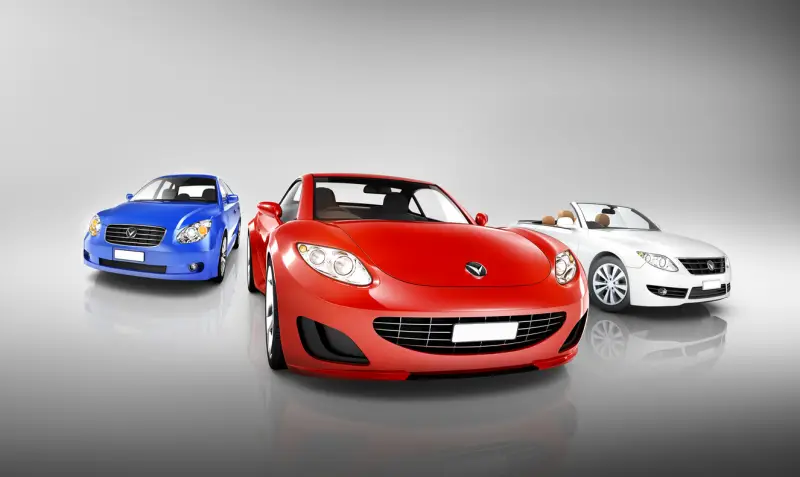
GoodCar’s data shows that sports cars are resold more than any other vehicle type, with the average example having 5.17 owners. That finding comes from the 166 sports cars in the study.
For many owners, sports cars serve a different role than the typical automobile. These are often enthusiast vehicles that get driven sporadically, perhaps on weekends or special occasions. While some certainly get used as daily drivers, these vehicles are less practical for hauling people or bulky items. As interests, priorities, and finances change, so may the need for something sleek in the driveway.
One example that surfaced in GoodCar’s research is the 1997 Mitsubishi Eclipse Spyder, a convertible that averaged 18 owners. While this is an extreme case, it shows how often enthusiast vehicles can cycle through the second-hand market. This matters because a sports car with multiple owners may scare away buyers concerned about reliability, when the previous owner's real issue is a need for more practical transportation.
Lower depreciation may also encourage more frequent ownership changes with sports cars. According to iSeeCars, the Porsche 718 Cayman, Porsche 911, Chevrolet Corvette, Subaru BRZ, Ford Mustang, and Mazda MX-5 Miata are among the top vehicles (of any kind) for retained value. As a result, for some owners, trading in sports cars may not carry the same financial penalty as other vehicles outside this category.
The Most Frequently Resold Vehicles We Found
Averages provide a big-picture perspective, but exploring the data in detail can reveal intriguing exceptions. In particular, three vehicles have remarkable ownership counts.
|
Vehicle |
Model year |
Owners |
|
Isuzu Trooper |
1997 |
28 |
|
Mitsubishi Eclipse Spyder |
1997 |
18 |
|
Audi A5 |
2008 |
18 |
Although we covered the 1997 Mitsubishi Eclipse Spyder earlier, the research shows that outlier status doesn’t belong exclusively to sports cars. The 1997 Isuzu Trooper SUV has the distinction of being the most resold vehicle in the study, with an average of 28 owners. The Eclipse Spyder and 2008 Audi A5 followed with 18 owners each. As part of the first-generation A5, the 2008 edition was a two-door coupe configured more as a grand tourer than a sports car.
Don’t automatically think of high owner turnover as a sign of reliability issues. While some vehicles may be less dependable, a transfer to a different owner could be due to many circumstances, such as short-term interest in a particular model or the need to switch to another vehicle type altogether.
The number of previous owners is useful information, but it isn’t a condition report or a substitute for examining the rest of the vehicle’s history.
Are Newer Cars and EVs Any Different?
Comparing different model years of the same vehicle can show how much age influences ownership count. Let’s look at what GoodCar’s data says about the Acura Integra:
|
Acura Integra Model Year |
Owners |
|
1997 |
8.0 |
|
1991 |
4.4 |
|
2025 |
1.25 |
The findings don’t necessarily mean owners of newer Integras are more loyal; they likely reflect that newer vehicles haven’t had enough time to accumulate multiple owners. Notably, the latest Integra generation didn’t enter the market until 2023, after a production gap that began after the 2001 model year.
The same issue affects the ownership statistics of electrified vehicles. EVs averaged 3.36 owners in GoodCar’s study, while hybrids were lowest among the categories at approximately 3.15. Assuming EV and hybrid owners keep their cars longer may not be correct simply because these vehicles are relatively new in the marketplace.
While hybrids have been available for over a quarter of a century, they didn’t gain widespread acceptance until this decade. Similarly, the first mainstream EVs like the Tesla Model S and Nissan Leaf didn’t reach the market until 15 years ago, with popularity and more model choice expanding only in recent years.
S&P Global Mobility’s fleet-age data highlights the differences. The overall U.S. light-vehicle fleet averages 12.8 years, compared with 3.7 years for EVs and 6.4 years for hybrids. In other words, electrified vehicles haven’t been around long enough to accurately assess ownership turnover.
How Many Previous Owners Is Too Many?
There isn’t a single number that defines a used car as having too many previous owners. The timing and circumstances behind these ownership transfers matter more.
For example, a 15-year-old vehicle with five owners may seem reasonable. However, if four of those owners signed over the past 18 months, then closer scrutiny is necessary. Rapid turnover leads to the obvious question: Why does each owner keep selling the car?
The explanations may be logical. Perhaps the vehicle is an enthusiast model that tends to change hands more regularly, or a previous owner simply discovered that the car wasn’t a good fit for their needs.
At the same time, multiple owners can make it harder to track down service history. The more people involved, the less likely maintenance documents will be forwarded with the car. These information gaps can also call into question whether the vehicle received sufficient servicing. Always ask for all available maintenance records, regardless of how many owners are listed.
You shouldn’t automatically rule out a vehicle with a multi-owner background. Instead, consider its age, type, mileage, condition, accident history, title status, and available service documents. Before buying, you can use GoodCar to check how many owners a car has had as part of its vehicle history report.
Methodology: How We Built This Data Study
In 2026, GoodCar reviewed 10,571 unique vehicle records covering 139 makes and 1,956 models. The data spans model years from the early 1980s through 2026.
For this study, “average ownership count” refers to the average number of owners, based on recorded title changes, for a particular vehicle model and model year. The findings describe the vehicles represented in the analyzed data set.
GoodCar can provide additional information about the data set and methodology upon request.
Frequently Asked Questions
Is 5 owners a lot for a used car?
Not necessarily. Five owners over 15 years can be a normal ownership history, while five owners over a much shorter period could be a cause for concern. Keep in mind that the vehicle type can also affect ownership patterns. GoodCar’s research found that sports cars averaged 5.17 owners, compared to 3.15 for hybrid vehicles.
How many previous owners is too many for a used car?
There isn’t a benchmark number that signals a vehicle has had too many owners. Instead, be cautious with multiple transfers over short periods. There’s more to be worried about with a car that’s had three owners in 18 months than the same number of owners over 10 years. In addition to examining ownership duration, review maintenance records, mileage, accident and title history, and the vehicle’s overall condition for a more complete picture before buying.
Do sports cars really have more owners than other cars?
Yes, GoodCar’s research shows that sports cars have more owners than any other vehicle type, averaging 5.17 owners. Luxury sports cars (4.6 owners) and luxury vehicles (4.17 owners) follow.
How can I check how many owners my car has had?
You can enter the vehicle’s VIN into GoodCar’s vehicle-history tools to review available ownership information. You can see title history that includes ownership transfers, along with reported accidents, title conditions, odometer readings, and recall status.