
Whether you’re in the middle of a car transaction or watching a movie, you may come across the term vehicle pink slip. It’s slang for an automobile’s certificate of title, the state-issued document that establishes ownership.
Hearing this nickname doesn’t lessen the importance of the paperwork that’s vital when a car changes hands. Keep reading as we cover what's usually on a pink slip, how it differs from registration or a bill of sale, and what’s involved in getting one. You’ll learn about electronic titles and what to do if the pink slip is lost or the paperwork doesn’t seem quite right.
What Is a Pink Slip for a Car?
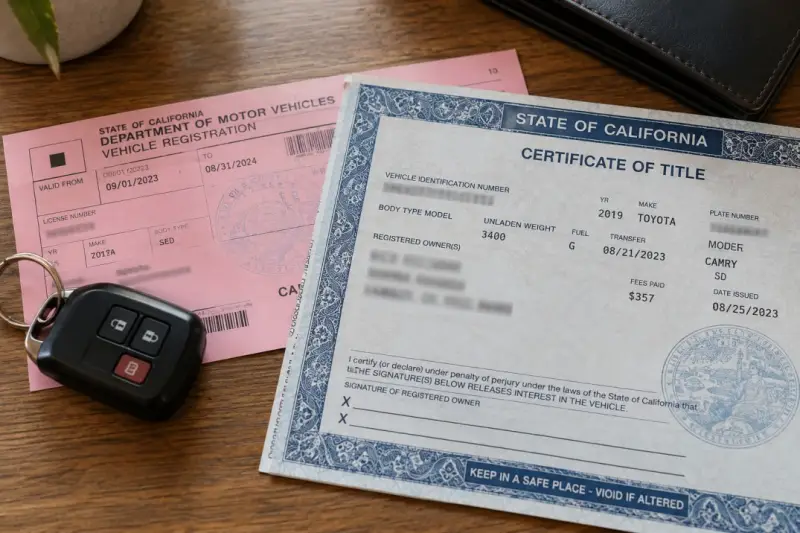
A pink slip is a vehicle’s official certificate of title, issued by a state motor vehicle agency to record ownership. This document identifies the vehicle by its VIN and works much like a deed to a house: both establish ownership and can show whether a lender has a financial interest (a lien on the property).
Today’s pink slips feature a vehicle identification number (VIN) that helps track ownership status and other conditions throughout a car’s history. A title certificate is similar to a house deed; both verify property ownership and can indicate whether a lender has a financial interest.
Why Is It Called a Pink Slip?
The pink slip moniker comes from California’s older ownership documents, which were printed on blush-colored certificates. Thanks to movies and TV shows, California car culture is part of everyday life. The 1978 movie Grease mentions wagering “pink slips” before a drag race scene. In 2001’s The Fast and the Furious, Paul Walker, as Brian O’Conner, says, “I don’t have any cash, but I do have the pink slip to my car.” Even though “racing for pinks” rarely happens in real life, it’s easy to see how an automobile pink slip works its way into car-related conversations.
Are Car Titles Still Pink Today?
Each state determines the design of its title certificates. In California, some title documents still reflect elements of the pink slip days. In 2003, the Golden State updated the format to have a pink front with a blue border, accented with a white opaque state seal. The back is blue. Other DMVs use their own layouts and colors, and many states now handle ownership records electronically.
Title certificates aren’t ordinary printed documents; most states include watermarks, microprinting, and embedded security features. Special paper often prevents unauthorized alterations.
Regardless of the design, a title number also identifies the title document or record. It serves a different purpose than the VIN, which identifies and tracks the vehicle.
Pink Slip vs. Car Title: Is There a Difference?
While “pink slip” may mean something different in other countries or in a non-automotive context (we’ll cover that later), in the U.S. it’s an informal reference to a vehicle’s certificate of title. Any searches for “pink slip car title” or “pink slip title car” will all lead to the same ownership document. A registration, a bill of sale, and an insurance card have different purposes and aren’t proof of ownership, like a title. For instance, a registration card confirms that the vehicle is legal to drive on public roads, but doesn’t prove who owns the vehicle.
Pink Slip vs. Registration vs. Bill of Sale
If you’re new to buying or selling a car, the paperwork can be confusing. Understanding the differences between registration and a car title can matter, regardless of which side of the transaction you’re on. Let’s compare the documentation.
|
Document |
What it establishes |
Who issues or prepares it |
Does it expire? |
Where to keep it |
|
Pink slip/title certificate |
Recorded ownership and listed liens |
State titling agency |
Generally no routine expiration; replace or update when required |
Secure location outside the vehicle |
|
Registration |
Current registration status |
State registration agency |
Usually requires periodic renewal |
Accessible as state law requires |
|
Bill of sale |
Transaction details |
Buyer, seller, or dealership |
Generally no routine expiration |
With purchase and tax records |
State requirements differ, and some older vehicles may be exempt from title requirements. Understanding the differences between a car title and registration explains why one document may not replace the other.
What Information Is on a Pink Slip?
A title certificate combines many information points, including:
- VIN: The 17-character identifier that must match the paperwork and the vehicle
- Vehicle description: Make, model year, body style, and other identifying details
- Owner information: The name and address of the registered owner and, where applicable, the legal owner, such as a lienholder
- Lienholder: A lender or other party with a recorded security interest
- Title number and issue date: Information identifying the ownership document
- Odometer information: Mileage recorded for a particular transaction
- Title brands: Designations that cover a vehicle’s prior use, recorded history, or other significant event; title brands may affect a car’s value, safety, and drivability
- Transfer sections: Spaces for signatures and transaction information.
What Does a Pink Slip Look Like?
Printed titles are official certificates, but states don’t follow a uniform standard. Vehicle information and ownership usually appear on the front. Transfer, reassignment, and odometer fields may appear on either side.
Format differences may be puzzling if you’re unfamiliar with a title certificate from another state, but that shouldn’t automatically make you suspicious. Read both sides carefully before entering any information or signing the document. Incorrect details or crossed-out writing can create transfer complications.
When Do You Need Your Pink Slip?
Paperwork involving the title certificate is necessary when there’s a change in ownership or a third party’s financial interest:
- Selling or trading in the car
- Giving the vehicle to a family member
- Applying for a new title after moving to another state
- Adding or removing a co-owner
- Recording or releasing a lender’s lien
- Selling the car to a junkyard or dismantler
- Donating the vehicle
Each state DMV determines which documents are required for a transaction, but you usually need a pink slip or title certificate in these situations.
How to Get a Pink Slip for Your Car
Who you bought the car from and how you paid determine how the title is provided. State procedures also play a role.
Buying From a Dealership
In most cases, buying through a retailer means the dealer handles titling and registration for the customer. In many states, a dealer can issue temporary registration and provide temporary or permanent plates, depending on state rules.
For outright purchases without financing, the new owner may receive a paper title in states that don’t require electronic titling. In some states, you may have the option to choose between a paper title and an electronic one. If a lender has an interest in the car, the paper title may go to the financial institution, or the lien may be recorded electronically. Before leaving the dealership, verify the title process, what information is being recorded, and how you’ll receive confirmation.
Buying From a Private Seller
If the buyer is paying cash, the seller signs the ownership transfer, and the buyer submits the title application to the state, along with any fees and required documents. Some DMVs may require car title transfers to include a bill of sale or notarized forms. Mileage disclosures are usually part of the process, often made on the title certificate. States may also have required title-transfer deadlines, which you should check. It’s a good idea to learn about the correct titling steps before exchanging payment.
After Paying Off a Car Loan
Once you pay off a loan, the lender must issue a lien release. Often there’s a state-mandated deadline. What happens next depends on the state. You may receive a paper title certificate indicating “no lien,” or the payoff may be recorded electronically in the state’s records.
Electronic Titles: When There Is No Paper Pink Slip
According to Kelley Blue Book, about 30 states use electronic lien and title (ELT) systems. For lenders and agencies, the process is faster and less expensive. As a result, some owners may not receive a paper title after paying off the loan. This isn’t unusual, but it requires extra due diligence from the prospective purchaser.
As the buyer in a private sale, you’ll want to know whether the loan has been paid off and the lien released. Ask for verification from the lender, such as a letter or other documents. Don’t rely on verbal statements or screenshots. If the lien is still outstanding, determine when the seller will make the final payoff and when the lender will release the title. You should also contact your state’s DMV to see what’s involved in transferring vehicle ownership with an electronic title.
How to Fill Out a Pink Slip When Selling a Car
Learning how to fill out a pink slip when selling a car doesn’t have to be overwhelming, but the process requires accuracy and can vary by state. We’ll use California as an example; the steps may differ elsewhere.
Before entering information or signing anything, review the document’s instructions and make sure you have access to all requested details. Avoid erasing, crossing out, or using correction fluid to fix any errors. In these cases, California may require a Statement of Error or Erasure, which is part of Form REG 101. Other states may require additional paperwork or a replacement title to correct an error.
Where to Sign the Pink Slip
On a California title, look for the registered-owner release section, which the seller must sign. The buyer then completes the new-owner and mileage-acknowledgment areas. For a title with a lien, the lienholder must indicate on the title that this financial interest is released or provide separate lien-release documentation.
California co-owners must pay particular attention to signature requirements. An “and” usually means all owners must sign, while an “or” or “and/or” means only one signature is required. A slash is the same as and (all owners must sign). Signatures should match the printed owner names on the certificate.
Odometer Disclosure and Sale Details
Carefully enter the mileage, sale date, and price in the designated section of the title or any accompanying forms. Accuracy is critical here to avoid any problems for the buyer. The information should also be consistent across all the paperwork. Complete the required seller certification and buyer acknowledgment areas.
Federal odometer disclosure requirements changed in 2021. Most passenger vehicles from the 2011 model year and onward require an odometer disclosure until the 20-year exemption applies. Older vehicles are exempt under federal rules, but some states may still require the information.
An exemption isn’t an excuse for false mileage claims. You must still disclose an inaccurate reading or an odometer that has exceeded its mechanical limits. Odometer title brands can reveal mileage problems, while earlier mileage records can help you check the current reading for discrepancies.
Release of Liability: Don't Skip This Step
In California, sellers must submit a Notice of Transfer and Release of Liability within five calendar days after a vehicle transaction. Other states may have similar requirements. This step protects the seller from responsibility if the buyer subsequently gets into an accident or receives a ticket. In addition to saving a copy of the transfer notice and sale records, take a photo of the completed title in case ownership questions arise.
What to Check on a Pink Slip Before Buying a Used Car
Don’t take a title certificate at face value. A few extra steps can catch errors or uncover title washing that can hide a salvage title and other problems.
- Compare the VIN on the title certificate with the VIN on the car (check the dashboard plate under the windshield and the certificate on the driver’s door jamb).
- For private sales, check that the information on the seller’s identification matches what’s on the title certificate. Any differences can signal curbstoning or other illegal practices.
- If the title shows a lien, verify how the lien release will be handled.
- Examine the title for any brands, signs of alteration, or mileage discrepancies.
A GoodCar title check can provide additional information that may not be apparent from an inspection of the title certificate.
What If You Lose Your Pink Slip?
Replacing a lost title is straightforward in most states, and a good idea before trying to sell a car. Buyers should ensure the seller has the title in hand before completing a transaction. However, some circumstances allow you to sell a vehicle without a title. Obtaining a substitute title in California requires owners to complete Form REG 227, Application for Replacement or Transfer of Title, and pay a $28 fee. Other states use a similar process.
Other Meanings of “Pink Slip”
If you’re searching online for pink slips, it helps to know the term has other meanings besides being another name for a title certificate. In the automotive realm, a pink slip refers to a vehicle’s liability insurance card used in Ontario, Canada. In New South Wales, Australia, a pink slip means a safety inspection report that’s required before older cars can be renewed for registration. And, finally, a pink slip may mean a job-termination notice.