
The question “How long do brake pads last?” has a wide range of answers, from 30,000 to 80,000 miles. It all depends on the pad material and your driving habits. Someone who drives mostly on the highway will find their car’s brake pads last longer than those on a car that spends most of its time in stop-and-go traffic.
Determining when brake pads need replacement goes beyond mileage and driving habits. Unusual noises when stopping and changes in braking responsiveness also provide clues. We’ll cover these warning signs, along with typical pad lifespans, thickness measurements, and replacement costs. You’ll also learn how to check the brakes before buying a used car.
How Long Do Brake Pads Last?
Brake pads typically last 30,000 to 80,000 miles, or about two to six years for the average American driver. Keep in mind that these are averages. Your car’s owner’s manual may say something different.
How Long Do Front vs. Rear Brake Pads Last?
During braking, a car’s weight shifts forward. As a result, the front brakes usually handle more of the stopping work, and those pads wear faster. Rear pads may last longer, but that isn’t true for every car. So don’t assume the rear brakes are in better condition. Check these components regularly, along with the front brakes.
How Long Do Brake Pads Last in Years?
As mentioned, brake pads can last two to six years on a typical car. However, pad longevity isn’t necessarily extended with low-mileage or low-use vehicles. Under these conditions, brake pads can degrade from other factors. Time, moisture, and road salt can cause deterioration. In some cases, the pads may bind to their brackets in seldom-driven cars. Meanwhile, rust can develop on the rotors, which can wear down the pads even sooner. In short, don’t rely only on a calendar or an odometer when deciding whether the brakes need attention.
What Affects How Long Brake Pads Last?
“How many miles do brake pads last?” The answer depends on several variables, including:
- Driving style: Sudden, jerky braking creates more heat on the pads than slow, predictable stopping.
- Traffic and terrain: Urban traffic and steep descents require more braking than continuous highway driving.
- Weight and towing: Larger vehicles, heavier cargo, and trailers put extra strain on the brakes.
- Pad material: Compounds have different wear rates and costs depending on the material (organic, semi-metallic, or ceramic).
- Rotor condition: Rough, damaged, or uneven surfaces can accelerate pad wear.
- Previous service: Incorrect installation, binding hardware, or neglected caliper slides can shorten a new brake pad’s life.
How Long Do Different Types of Brake Pads Last?
Not all brake pads are created equal. Differences can include the compound type, cost, and suitability for specific uses.
|
Pad Type |
Lifespan Tendency |
Pros |
Cons, Noise, and Relative Price |
Best For |
|
Organic |
Usually shorter wearing |
Quiet operation; generally gentle on rotors |
Lower price; more frequent replacement; less suited to sustained heat |
Light-duty everyday driving where specified |
|
Semi- |
Durable, but use-dependent |
Good heat handling and strong braking performance |
Moderate price; potentially more noise, dust, and rotor wear |
Vehicles needing the specified compound for heavier demands |
|
Ceramic |
Often longer wearing in normal street use |
Quiet; low visible dust; good durability |
Generally higher price; not automatically suitable for every vehicle |
Compatible passenger cars used for ordinary commuting |
How Long Do Ceramic Brake Pads Last?
Ceramic brake pads tend to last longer because the compound is designed to resist wear better than ordinary pads. According to automotive parts supplier JEGS, ceramic brake pads can offer about 25,000 more miles of service than metallic ones. As with regular pads, longevity can vary depending on driving conditions. Ceramic pads also offer quieter braking and cleaner wheels (less brake dust).
Do Brake Pads Last Longer on Hybrids and EVs?
On hybrids and EVs with regenerative braking, the electric motors can slow the vehicle down. This technology significantly reduces brake wear. WIRED reported that regenerative braking can double the life of brake pads and rotors on electric vehicles. One SAE study suggests an eightfold increase in brake pad life is possible.
That’s the good news. Unfortunately, less brake use can mean corrosion builds up on the rotors and other hardware, especially on vehicles exposed to road salt. Keep in mind that regenerative braking use can vary depending on battery charge and vehicle settings. So, follow the manufacturer’s recommendations for braking system inspections and maintenance. Longer pad life doesn’t eliminate the need for regular braking service.
Signs Your Brake Pads Need Replacing
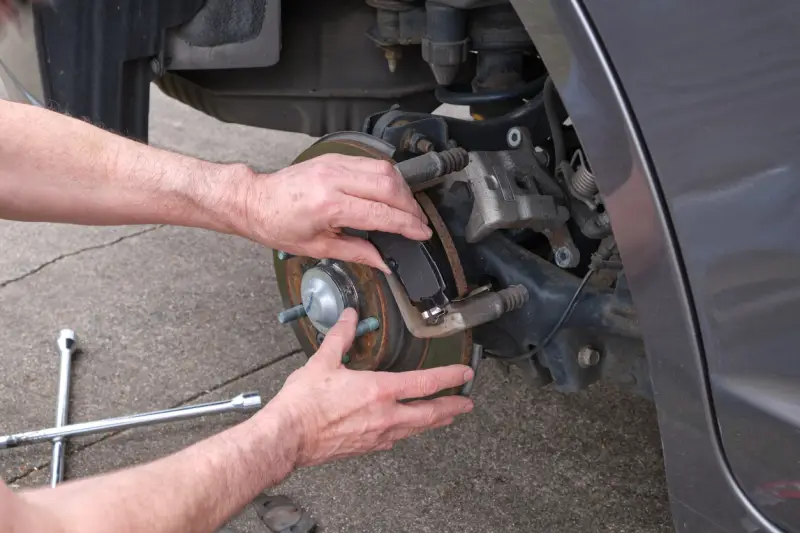
Knowing when to replace brake pads can prevent more extensive damage. Watch for warning signs, but keep in mind that some pads wear quietly.
Squealing or Squeaking
Most manufacturers build in a metal brake pad wear indicator that makes a high-pitched warning sound when the pad wears thin enough for the indicator to contact the rotor. These squeaky brakes require attention, particularly if the sound doesn’t go away. Some squeaking is normal after a light buildup of surface rust or dust on the rotors, or after exposure to moisture.
Grinding Noise
A sharp, grinding sound during braking requires immediate action. This can happen if the pad has worn down to the point where the metal backing scrapes the rotor. Stopping power can be compromised, and the rotor can be damaged. Stop driving and have the problem checked right away. Towing to a shop may be best if braking performance is compromised.
Brake Warning Light
Some vehicles, like certain BMW and Mercedes-Benz models, use electronic sensors that trigger a dashboard warning light when brake pads wear down. However, this feature is less common. A warning light for the anti-lock brake system (ABS) or general brake function may indicate a different brake problem. Check the owner’s manual for any brake-related warning light.
Longer Stopping Distance or Soft Pedal
If the car takes longer to stop or pressing the brake requires more effort, stop driving and have the problem checked immediately. Worn pads may not be the only cause. The car may be experiencing brake fade due to overheating pads and rotors. A sinking pedal can indicate a hydraulic problem or trapped air that requires brake bleeding or another repair.
Vibration or Pulling to One Side
A pulsing sensation during braking usually relates to a rotor issue caused by a warped or uneven rotor surface. Debris buildup can also be to blame. Meanwhile, uneven pad wear or a sticking brake caliper can cause the car to pull to one side during stopping. Tire and suspension issues can also be part of the problem.
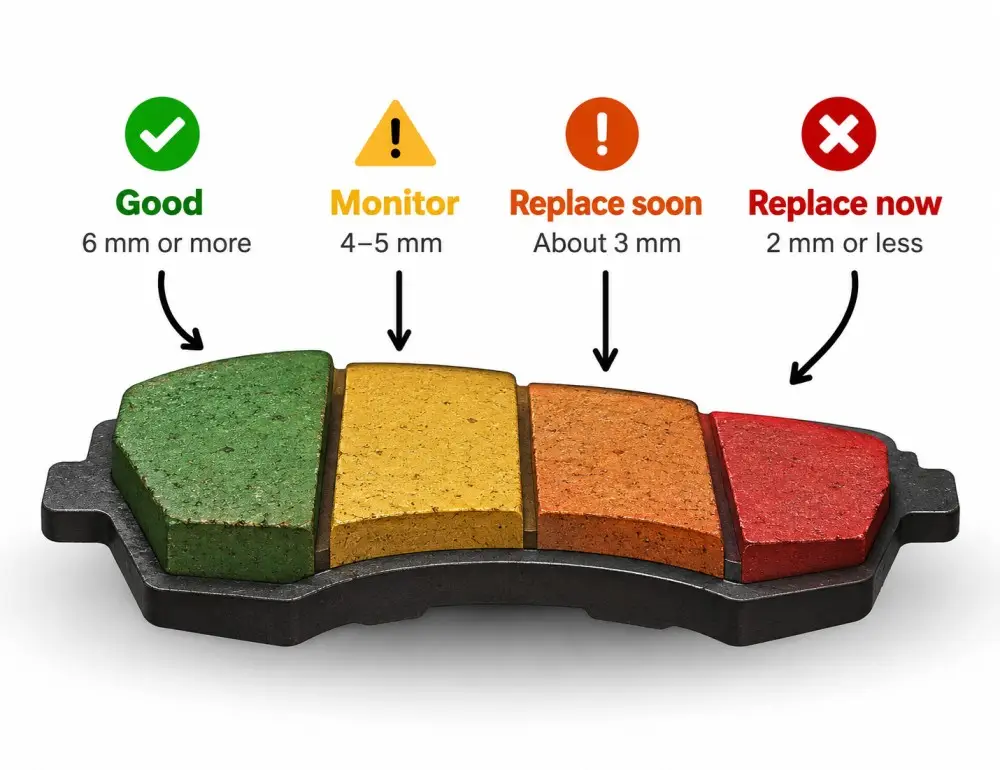
Brake Pad Thickness Chart: When to Replace
Brake pad thickness may mean little to the average driver, but understanding these measurements can let you know if brake work is in the car's future.
|
Status |
Remaining Friction Material |
Approximate Inches |
Action |
|
GREEN: substantial material |
6 mm or more |
0.24 in or more |
Continue scheduled inspections if condition is otherwise satisfactory |
|
YELLOW: monitor and plan |
4–5 mm |
0.16–0.20 in |
Track wear and budget for replacement |
|
ORANGE: |
About 3 mm |
0.12 in |
Arrange replacement promptly |
|
RED: |
2 mm or less |
0.08 in or less |
Replace now; inspect for related damage |
New pads typically start at 10–12 mm thick, excluding the metal backing plate. Actual starting thickness can vary, depending on vehicle specifications.
What Is the Minimum Brake Pad Thickness?
Two factors determine minimum brake pad thickness: vehicle specifications and legal requirements. Although the automaker or brake pad manufacturer doesn't always set it, 3 mm is usually the point at which you should replace the pads. However, a pad that’s damaged or unevenly worn may need replacing sooner. Among states that mandate safety inspections, a brake pad thickness below 2/32 of an inch (about 1.6 mm) can cause a vehicle to fail.
How long will 2/3/4/5mm brake pads last?
Remaining pad thickness can help estimate how many miles you have before replacement. These rough estimates vary with your vehicle, driving habits, and pad material:
- 5 mm: About 6,700–8,300 miles before reaching 3 mm.
- 4 mm: About 3,300–5,400 miles before reaching 3 mm.
- 3 mm: At the usual replacement benchmark; schedule replacement.
- 2 mm: Below that benchmark; replace promptly.
Not every driver will have the same results. A mechanic can use your car’s service history to estimate brake pad longevity. Check all pads at the same time, as wear may occur unevenly.
How to Check Your Brake Pads
DIYers can do a quick visual check by shining a flashlight through the wheel spokes. While disc brakes have a pad on each side of the rotor, you’ll usually be viewing the outer pad (the one closest to the rim).
- Park on a flat surface with safe surroundings.
- Set the parking brake and let the brakes cool.
- Locate the rotor (the flat metal disc behind the wheel) and the brake caliper that clamps around it.
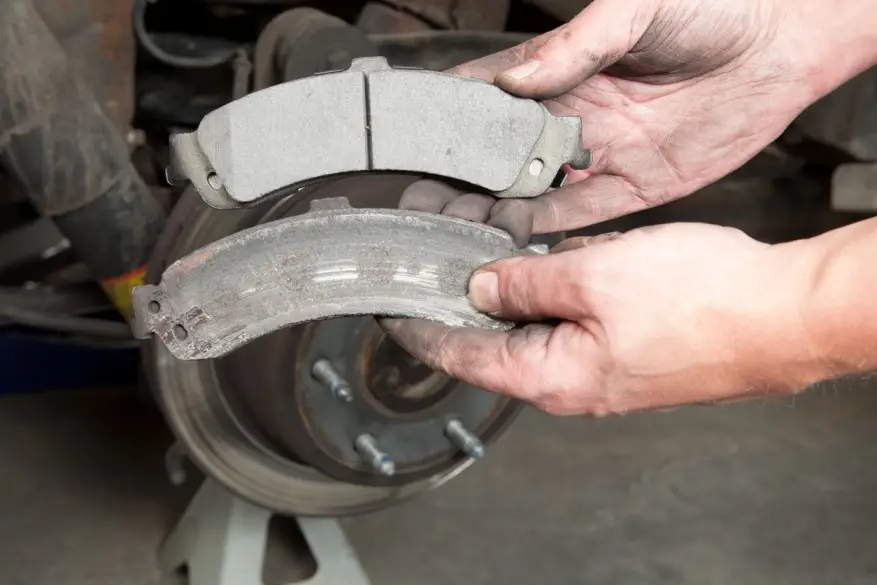
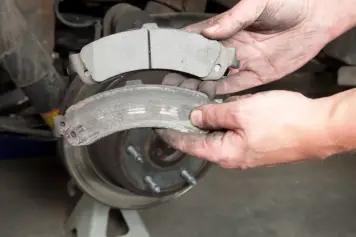
- Look at the friction material (the brake pad); it’s the layer between the rotor and the metal backing plate.
- Ignoring the backing plate, estimate the remaining pad thickness. Two stacked pennies are about 3 mm thick, which is when you should replace the pads. A small ruler or inexpensive brake pad gauge can provide a more exact reading, if access allows.
- Have a mechanic check the inner pad, which may be more worn than the visible outer pad.
Some wheel and caliper designs make checking brake pads difficult without removing the wheels. In these situations, have a mechanic measure pad thickness. Never crawl underneath a vehicle supported only by a jack.
How Long Do Brake Pads and Rotors Last?
AutoZone says that brake rotors typically last for about 60,000 miles. But that’s a guideline, not a standard. Hard driving, frequent stopping, corrosion, heat damage, and poor brake maintenance can accelerate the need to replace the rotors.
In some cases, you may need to swap out the rotors when installing new pads. There’s no set-in-stone rule about replacing the rotors with every other brake pad job. The technician will compare each rotor’s condition and thickness with the manufacturer’s specifications and look for damage. Resurfacing may be possible, but the costs may be close to the price of new rotors.
It can be tempting to save money by installing new pads against worn rotors, but the result is often excess noise, uneven wear, and inconsistent braking performance.
How to Make Your Brake Pads Last Longer
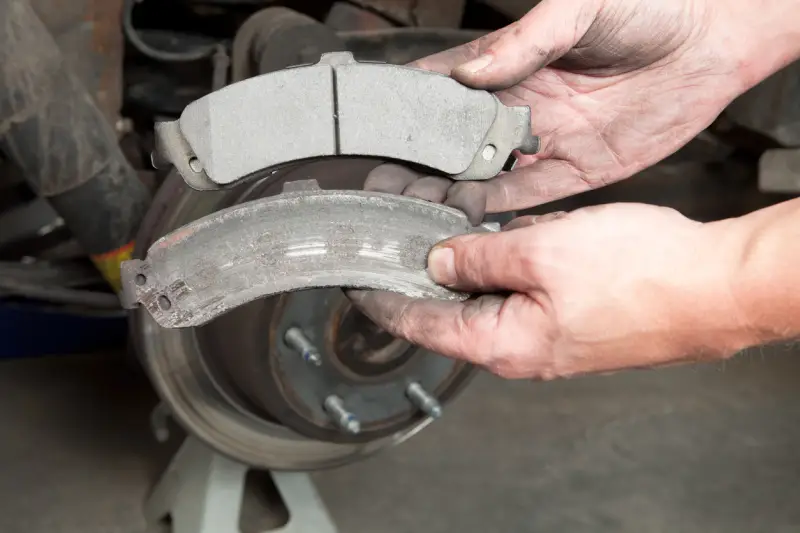
Maximum brake pad life can save money and time. A few driving-style changes can help.
- Leave enough following distance to brake gradually instead of stopping suddenly.
- On long hill declines, use a lower gear to slow the car and minimize the brake load (never coast downhill in neutral)—check the owner’s manual before attempting.
- Reduce vehicle weight by removing unnecessary cargo or accessories.
- Don’t tow beyond the vehicle’s limits.
- Avoid resting your foot on the brake pedal.
- Use quality brake parts that are installed correctly.
- Follow the manufacturer’s bedding-in procedures (break-in steps) after replacing brake components.
Brake Pad Replacement Cost
Brake pad replacement costs vary significantly by vehicle, component quality, and labor rates. AAA estimates that owners can expect to pay $150–$350 per axle if only the pads need replacing. The cost rises to $250–$500 per axle if pads and rotors are included. Axle refers to the brakes for both front wheels or both rear wheels.
Before approving any brake work, ask the shop for pad measurements. If rotor replacement is involved, ask to see the surfaces and for an explanation of why replacement is recommended.
Checking Brakes Before Buying a Used Car
A test drive can help identify a car with brake problems. Listen for any unusual noise while stopping. Also watch for any vibration or pulling. The pedal should feel firm and responsive, and the vehicle should stop smoothly. Emergency-stop testing can help, but avoid doing it on public roads.
Review service records showing mileage, dates, and parts replaced for any brake work. A GoodCar vehicle history report can show title status, ownership activity, reported accidents, and odometer readings.
If your initial findings look good, it’s time to hire a professional mechanic for a pre-purchase inspection. In addition to thoroughly examining the vehicle, this technician can measure brake pad thickness and assess the condition of the brake rotors.