
Cars can make all sorts of weird noises, with some requiring urgent attention. A faulty wheel bearing is among them. Wheel bearing noise often starts with a subtle humming or droning sound that gets louder at higher speeds. This warning can easily be mistaken for a tire issue.
As the bearing continues to degrade, you may hear a rumbling, growling, or grinding noise. However, that sound shouldn’t be your only worry. A bad wheel bearing can compromise handling and safety. In some cases, other components can be damaged, and the wheel could even separate from the vehicle.
We explain the basics of wheel bearings, then cover the sounds and other symptoms that can signal a problem with this often-overlooked component. You’ll also learn what to do if you suspect a bad wheel bearing and how much repairs might cost.
What Is a Wheel Bearing?
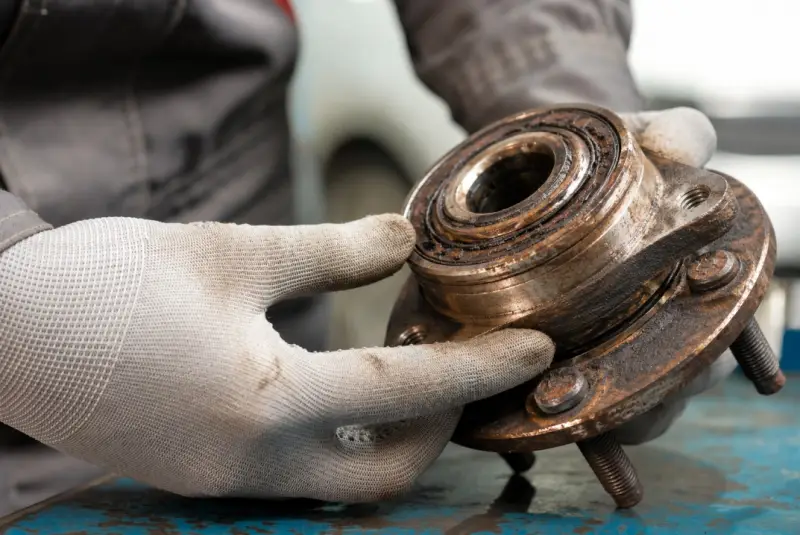
A wheel bearing doesn’t get much attention because it sits behind the wheel, embedded in the hub. The bearing lets the wheel spin with minimal resistance while supporting the car’s weight and handling forces from acceleration, braking, and cornering.
Wheel bearings come in different designs. Some vehicles have a bearing pressed into the steering knuckle. However, newer cars often use a sealed bearing that’s integrated into a bolt-on hub assembly. These components often have a wheel-speed sensor used in anti-lock braking and traction-control systems. Each wheel has a bearing, although the front and rear designs may differ.
What Does a Bad Wheel Bearing Sound Like?
A bad wheel bearing often makes a humming, growling, or rumbling sound that gets louder with vehicle speed rather than engine RPM. The sound may also change as the vehicle’s weight shifts to one side during cornering.
Humming or Droning
A steady hum or drone that sounds like a distant helicopter is often an early sign of wheel bearing wear. The noise may become more noticeable at highway speeds. However, this symptom is easy to confuse with noise from an aggressive tire tread, so a hum can come from different sources.
Growling or Rumbling
If you’ve ignored or missed the earlier warning signs, wheel bearing damage will often progress to a deeper, more constant sound. Growling or rumbling may also develop at higher speeds. Watch for volume changes as the vehicle load shifts during cornering or lane changes.
Grinding
Advanced bearing failure may come with a grinding sound. In this situation, the internal components have degraded to the point where friction and heat increase, creating a potential safety hazard as the parts start to loosen. The vehicle should be inspected immediately. Towing the vehicle is advised.
Clicking or Knocking
Clicking, knocking, or clunking sounds can also indicate a defective wheel bearing. However, clicking during turns can also indicate a worn CV joint, especially on front-wheel-drive and all-wheel-drive vehicles. An experienced mechanic should diagnose the cause.
How Wheel Bearing Noise Changes as It Gets Worse
Wheel bearing noise can change as the damage gets worse. .
|
Stage |
Symptoms |
Action |
|
Early |
A faint humming or droning develops, often becoming easier to hear at highway speeds. |
Schedule an inspection if the sound persists. |
|
Worsening |
The noise may turn into a more noticeable growl or rumble and change during turns. |
Have the bearing inspected promptly. |
|
Critical |
Grinding, clunking, significant wheel looseness, severe vibration, or handling problems can indicate substantial damage. |
Stop driving and arrange for repairs or towing. |
Delaying repairs won’t make the problem go away. In fact, waiting may increase repair costs because a faulty wheel bearing can damage the hub, wheel-speed sensor, tires, brakes, and nearby suspension components.
Signs of a Bad Wheel Bearing Beyond the Noise
Unusual sounds aren’t the only red flags of a bad wheel bearing. Watch for other symptoms that affect how the vehicle operates.
Steering Wheel Vibration
Vibration through the steering wheel may indicate a front wheel bearing problem, with symptoms becoming more prominent at higher speeds or when turning. Rear wheel bearing issues can show up as vibrations felt through the seats or floor. Keep in mind that vibrations may also come from trouble with the tires, brakes, or suspension.
Wheel Play or Looseness
A wheel that wobbles or has excessive looseness can be harder to diagnose, but a mechanic can check it on a lift. The technician can rock the wheel back and forth and look for unusual movement. A clunking noise may also be noticeable. Worn ball joints, tie rods, and other suspension parts can also cause excess wheel movement.
Uneven Tire Wear
If you don't catch a bad wheel bearing soon enough, it can cause irregular tire wear. However, a tire alignment problem, worn suspension components, or incorrect tire pressure can cause the same issue. If one tire has unusual tread wear, check the alignment, suspension, wheel bearing, and tire pressure to identify the cause.
Car Pulling to One Side
A worn wheel bearing can create extra friction or looseness on the affected wheel, causing the car to pull to one side. This symptom can also point to an issue with wheel alignment, the suspension, brakes, or tire pressure, requiring a thorough inspection.
ABS Warning Light
The anti-lock braking system (ABS) and stability control feature in modern cars rely on wheel-speed sensors built into the wheel hub. A damaged wheel bearing or excessive wheel movement can interfere with the sensor signal and trigger an ABS warning light. Investigate the issue; an illuminated ABS light doesn’t always mean a bad wheel bearing.
How to Tell Which Wheel Bearing Is Bad
Suspecting a faulty wheel bearing is one thing, but identifying which corner is the problem is another. A few techniques can help. Sometimes a simple road test is all that’s needed, while raising the vehicle and rotating each wheel by hand can reveal roughness or excessive movement. In more stubborn cases, specialized listening equipment can help isolate unusual noise.
Wheel Bearing Noise When Turning Left vs. Right
During a turn, the vehicle’s weight naturally transfers to the side opposite the curve, placing the greatest strain on the outer wheels. To diagnose a bad wheel bearing, a gentle left turn may cause the right-side bearing to act up. Likewise, a right turn accompanied by any humming, rumbling, or other symptom may point to an issue with a left-side bearing. The results may not be definitive, but can be enough to continue investigating.
Front vs. Rear Wheel Bearing Noise
If you have a clue which side may have a bad wheel bearing, it’s time to isolate whether the front or the rear has the problem. A bad front wheel bearing may send vibrations through the steering wheel, while a faulty rear bearing may seem louder through the seat, floor, or cargo area. However, it’s not unusual for the vehicle’s body to transmit bearing noise to other corners, making a professional diagnosis essential before ordering parts.
Wheel Bearing Noise vs. Tire Noise vs. Other Sounds
Some vehicle problems can sound like a bad wheel bearing but are actually caused by other issues. For example, a humming or roaring sound that increases with road speed may be tire noise from cupped or uneven tread. Meanwhile, faulty CV joints, brakes, and differentials can create their own noises that mimic wheel bearing symptoms.
|
Sound |
When You May Hear It |
Likely Cause |
Quick Check |
|
Humming or droning |
Increases with road speed |
Wheel bearing or tire wear |
Bearing noise may change during turns |
|
Rhythmic roar |
Changes with pavement or speed |
Cupped or uneven tire tread |
Inspect tread for irregular wear |
|
Clicking |
Usually during turns |
CV joint |
Often louder while accelerating through a turn |
|
Grinding |
During driving or braking |
Wheel bearing or brake problem |
Stop and inspect promptly |
|
Whine or howl |
Changes with acceleration or deceleration |
Differential or drivetrain |
Often responds more to throttle than steering |
What Causes a Wheel Bearing to Go Bad?
Wheel bearings wear down over time, even with normal driving. Component failure can be accelerated by:
- Potholes, curbs, and other hard impacts to the wheels
- Water or dirt getting past the bearing seal
- Road salt and corrosion
- Improper bearing installation
- Incorrect axle-nut or bearing torque
- Oversized wheels and tires that increase loads
- Frequent operation on rough roads
- Heavy loads
- High mileage
How Long Can You Drive on a Bad Wheel Bearing?
You shouldn’t keep driving on a wheel bearing you think is failing. There’s no reliable way to know how much life the bearing has left.
Just because you only hear a faint humming sound doesn’t mean you can delay a trip to the mechanic. A badly damaged bearing can overheat, lock up, damage the hub or suspension, and, in an extreme failure, cause the wheel to separate from the vehicle.
That risk requires immediate attention. If the symptoms are minor, driving a short distance to the repair shop is usually best. If you have any doubts, or if the warning signs are more significant, it’s safer to have the car towed.
How to Check a Wheel Bearing at Home
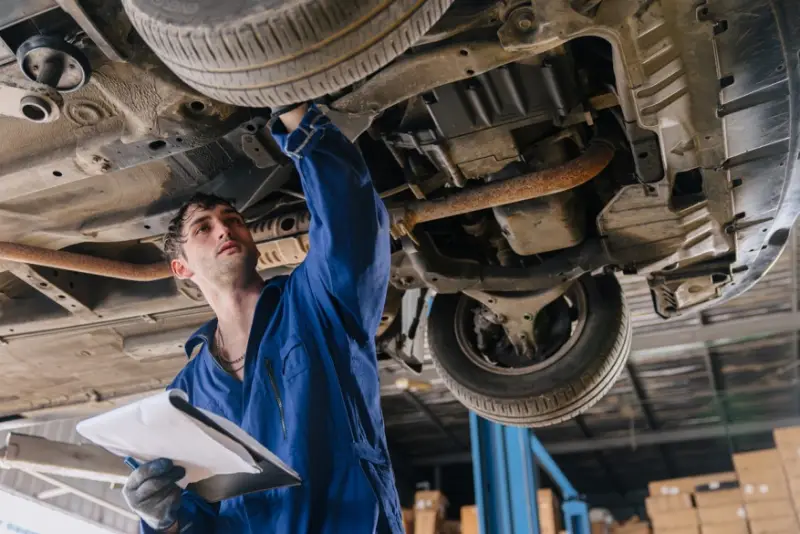
A DIY wheel bearing check may be worth the effort. You just need the right equipment. Never crawl underneath or work around a car supported only by a jack.
- Park on level ground in a safe area.
- Set the parking brake and turn off the engine.
- Review the owner’s manual for the recommended jacking point for the suspected wheel.
- Using an appropriate jack, lift the corner of the car.
- Support the vehicle with a properly positioned jack stand.
- Grasp the tire and gently rock it back and forth to check for excessive movement.
- Spin the wheel by hand and listen or feel for grinding, roughness, or resistance.
- Compare the movement and sound with another wheel, if possible.
Wheel play can also come from defective tie rods, ball joints, or other suspension components. Similarly, brake issues can make a wheel difficult to spin. If your check doesn’t give a clear answer, have a mechanic diagnose it.
Wheel Bearing Replacement Cost
Wheel bearing replacement costs vary by bearing type and vehicle. AutoZone estimates a professional repair at about $300–$500 per wheel, with labor typically running $100–$300 or more. RepairPal has similar pricing: $346–$504 per wheel.
Here’s a cost breakdown based on AutoZone’s estimates:
|
Repair Type |
Typical Cost |
|
Front bearing, shop |
$250–$500 per wheel |
|
Rear bearing, shop |
$350–$500 per wheel |
|
Bearing only, parts |
$50–$150 |
|
Hub assembly, parts |
$200+ |
|
DIY repair |
$50–$250 |
Front and rear costs can differ because suspension designs and labor requirements vary. Labor rates also vary. Bolt-on hub assemblies combine the hub and bearing and are generally easier to replace. Press-in bearings may cost less as parts but require more labor and specialized equipment, something that limits DIY repairs.
How Long Do Wheel Bearings Last?
Unlike some vehicle components, wheel bearings generally don’t have a recommended replacement schedule. They don’t get swapped out until a problem develops.
Auto parts retailer NAPA says wheel bearings are designed to last about 75,000 to 100,000 miles, but it’s not unusual for these parts to last longer. Road conditions, vehicle weight, bearing quality, contaminants, and improper installation can shorten their lifespan.
Checking for Wheel Bearing Noise When Buying a Used Car
It’s easy to overlook a bad wheel bearing when checking out a used car. You might mistake a humming noise for the tires, or think a vibrating steering wheel has something to do with the suspension. A defective wheel bearing doesn’t mean you should walk away from the car, but knowing about it can put you in a better position to decide and negotiate.
Here’s what to look for:
- Listen during the test drive: Turn off the audio system and listen for humming, growling, or rumbling at different speeds, especially on the highway. Make gradual left and right turns to see if the noise changes.
- Watch for other symptoms: Note vibration through the steering wheel, seat, or floor. Clicking during tight turns may point to a CV joint rather than a bearing.
- Check tires and records: Look for uneven tire wear and review maintenance records for previous bearing or hub repairs.
- Review vehicle history: Accident damage can affect hubs and suspension components, while flood exposure can contribute to bearing corrosion. A GoodCar Vehicle History Report can identify reported accidents, title issues, odometer discrepancies, and unusual ownership activity.
- Get suspicious noises inspected: An independent mechanic can determine whether the problem involves a wheel bearing, tire, CV joint, brake, or differential before you negotiate the price or walk away.