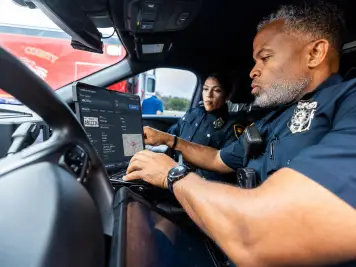


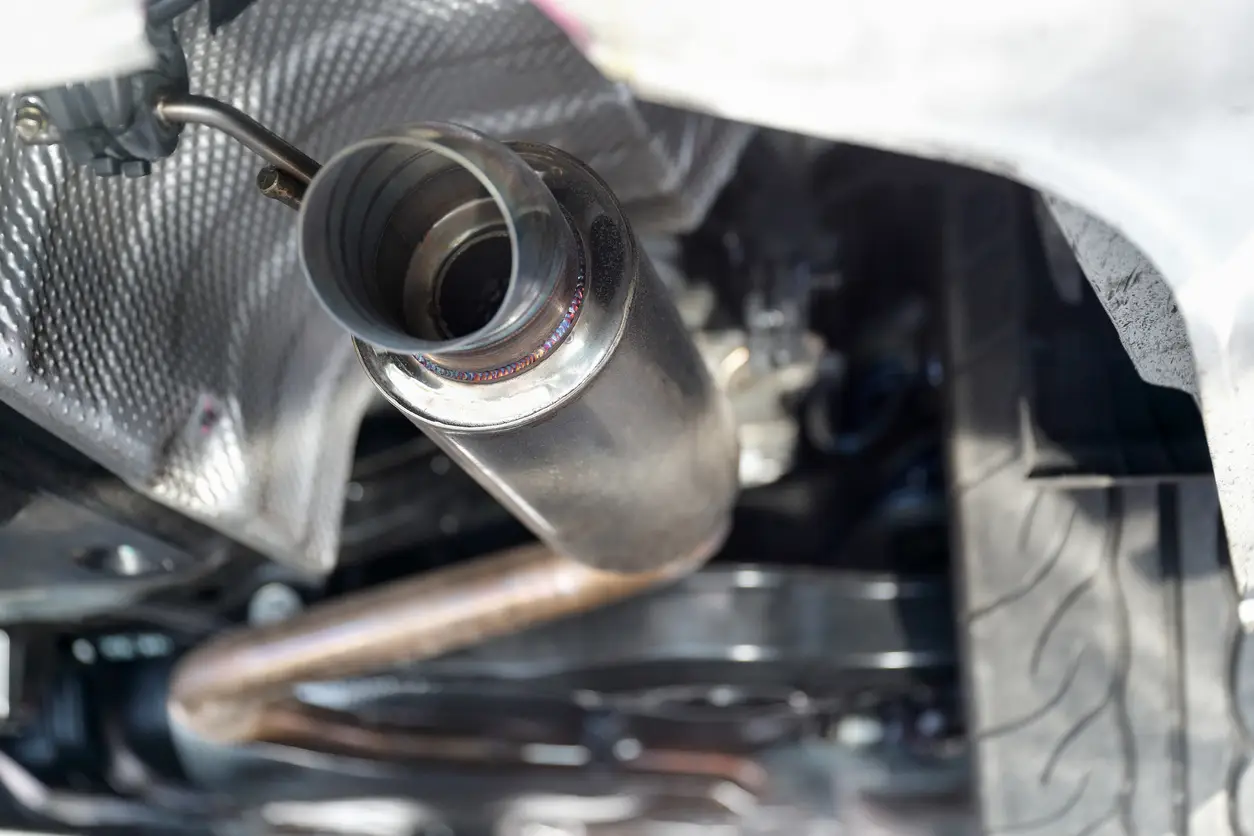

Some owners turn to aftermarket exhaust systems to give their cars a unique character and a distinctive “voice.” As innocent as this might sound, doing so can lead to a traffic stop if the equipment violates state law. Asking, “Is it illegal to modify your exhaust?” is reasonable. Whether a modification is legal depends on the hardware you choose and whether it complies with your state’s requirements. Comply with your state’s noise, muffler, and emissions laws, and your driving should be uneventful.
The challenge is that every state regulates vehicle exhaust noise, but these regulations can vary widely by jurisdiction. It’s a reality that SEMA, a trade group for the aftermarket industry, calls a “50-state patchwork.” These efforts range from fixed decibel limits to broadly worded bans on “excessive or unusual noise.” We’ll explain what this means for car owners, whether you’ve already modified your car’s exhaust or are thinking about it. You’ll learn about the legal framework behind these regulations, typical testing methods, prohibited modifications, penalties, and the rules in all 50 states and Washington, D.C.
What Makes an Exhaust or Muffler Illegal?
At their most basic, exhaust and muffler laws exist to prevent excessive or unusual noise in street-legal vehicles. In some states, owners may face additional regulations that prohibit muffler cutouts, bypasses, or equipment that allows exhaust gases to avoid the muffler.
Even without published noise (decibel) limits, an exhaust may still be illegal if the vehicle:
- Has no functioning muffler
- Produces excessive or unusual noise
- Uses a cutout, bypass, or similar device
- Has an altered exhaust that makes the vehicle louder than permitted
- Includes modifications that remove or disable emissions equipment
California’s statute is a good example. These regulations require an adequate, continuously operating muffler and that “no muffler or exhaust system shall be equipped with a cutout, bypass, or similar device.”
At the same time, exhaust modifications can’t remove or disable emissions-control systems, such as the catalytic converter. In addition, the Federal Clean Air Act prohibits tampering with emission controls and the manufacture, sale, or installation of parts intended to defeat them.
How States Measure Exhaust Noise
States typically regulate exhaust noise using either broadly worded noise standards, objective sound limits, or both.
Subjective Noise Standards
Many states prohibit exhaust noise that’s deemed excessive, unusual, or unnecessary without establishing a decibel figure that creates a baseline for a violation. In these jurisdictions, a law enforcement officer may determine whether a violation occurred by comparing the vehicle's sound to that of ordinary traffic or similar vehicles.
Instead of relying on a sound meter, enforcement is primarily based on an officer’s observations and judgment. SEMA notes that many state laws rely on this type of subjective, “overly vague” wording without defining exactly what “too loud” means.
Objective Decibel Limits
Several states rely on measurable sound limits to identify illegally loud exhaust systems. These thresholds can vary by vehicle, speed, and testing method, but the legal range is usually capped at 80–95 dBA.
One widely used testing procedure, known as SAE J1169, measures a vehicle's exhaust noise while it's parked, with the engine running at a specified speed under controlled conditions. This standardized method helps ensure consistent results from one test to another and equal application of the law.
Common Exhaust Modifications That Are Illegal Almost Everywhere
Car owners don’t have to wonder what states allow modified exhaust systems; most allow some aftermarket modifications as long as the changes remain compliant with applicable noise and emissions limits.
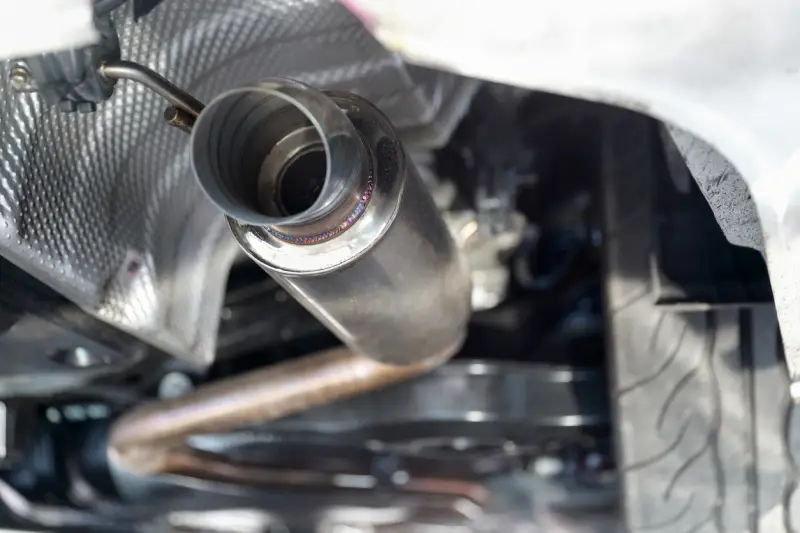
Problems can surface if the modifications are designed to bypass the muffler or amplify noise without restriction. In general, the modifications to avoid include:
- Muffler cutouts: Valves or openings that route exhaust around the muffler.
- Exhaust bypasses: Plumbing that allows exhaust gases to avoid part or all of the muffling system.
- Muffler removal: Operating a vehicle with no effective muffler.
- Straight pipes: Exhaust systems with little or no sound suppression.
- Gutted mufflers: Mufflers with internal sound-deadening material removed.
- Catalytic-converter removal: Illegal under federal emissions law, regardless of the intended sound change.
Keep in mind that a product marketed as “street legal” may not comply with every state’s regulations.
States With Strict Decibel Limits and Testing
California has a well-defined, measurable noise standard that doesn’t rely on an officer’s perception. For passenger vehicles and light trucks with a gross vehicle weight of 6,000 pounds or less, an aftermarket exhaust is permissible if the noise output doesn’t exceed 95 dBA. The measurement must be obtained using an applicable stationary test, and the apparatus must otherwise comply with state law.
The state’s Referee Program allows drivers cited for excessive exhaust noise to have their vehicles inspected. During the inspection, trained technicians measure the vehicle's exhaust noise using a standardized test to determine whether it complies with the 95-dBA limit.
Other states that rely on objective noise testing include Washington, which generally limits most passenger vehicles manufactured after 1975 to 95 dBA. Oregon also has measurable sound limits for passenger vehicles, although the permissible decibel level varies by model year.
States That Rely on Subjective “Excessive Noise” Standards
Most states don’t specify a single passenger-car decibel limit. Instead, these jurisdictions apply a more general standard requiring a muffler that prevents excessive or unusual noise.
These laws give law enforcement more discretion because the violation is based on an observed sound rather than a measurable standard. As a result, a driver can be cited for an exhaust noise violation without an official roadside decibel measurement.
State-by-State Exhaust Noise Law Reference
The table below summarizes each state's general approach to regulating passenger-vehicle exhaust noise. Nearly every jurisdiction requires a functioning muffler and prohibits cutouts, bypasses, or similar devices. The biggest differences are how each state defines excessive exhaust noise and whether its laws include objective sound limits, subjective standards, or both.
Drivers researching exhaust systems Hawaii, California, or other states should remember that the applicable rules depend on where the vehicle is registered and operated, not where the exhaust system was purchased. Regulations may change; always verify what’s applicable in your state by contacting the appropriate authority.
|
State |
General Statewide Rule |
Objective dBA Standard? |
|
Alabama |
Working muffler required; excessive or unusual noise and cutouts prohibited |
No single statewide passenger-car limit |
|
Alaska |
Effective muffler or noise-suppressing system required; excessive or unusual noise prohibited |
No single statewide passenger-car limit |
|
Arizona |
Working muffler required; excessive or unusual noise and cutouts prohibited |
No |
|
Arkansas |
Factory-installed muffler or equivalent required; excessive noise and cutouts prohibited |
No |
|
California |
Working muffler required; modifications cannot exceed the applicable noise limit |
Yes: 95 dBA for most vehicles under 6,000 pounds when tested under SAE J1169 |
|
Colorado |
Working muffler required; exhaust cannot be modified to make the vehicle louder than its original muffler |
No |
|
Connecticut |
Muffler required; excessive, unusual, or unnecessary noise and noise-amplifying modifications prohibited |
State regulations contain sound limits, but officers can enforce the general noise rule without roadside metering |
|
Delaware |
Muffler must meet manufacturer specifications and prevent excessive or unusual noise; cutouts prohibited |
No single statewide passenger-car limit |
|
District of Columbia |
District noise regulations apply to motor vehicles, with separate measurement and property-line standards |
No simple exhaust-only 95-dBA rule |
|
Florida |
Working exhaust system required; excessive or unusual noise and noise-increasing modifications prohibited |
Yes: State law includes vehicle- and speed-specific standards |
|
Georgia |
Complete, working exhaust system required; excessive or unusual noise and cutouts prohibited |
No |
|
Hawaii |
A replacement or modified muffler cannot make the vehicle noticeably louder than its factory equipment |
No statewide 95-dBA passenger-car rule |
|
Idaho |
Working muffler required; excessive noise, cutouts, and modifications above factory sound levels prohibited |
No single limit |
|
Illinois |
Working muffler required; excessive noise, cutouts, and modifications above the original sound level prohibited |
No single limit |
|
Indiana |
Working muffler or noise-dissipating device required; cutouts and bypasses prohibited |
No |
|
Iowa |
Working muffler required; excessive or unusual noise and cutouts prohibited |
No |
|
Kansas |
Effective noise-suppressing system required; excessive or unusual noise and cutouts prohibited |
No |
|
Kentucky |
Efficient muffler required; exhaust cannot be modified to make the vehicle louder than originally equipped |
No |
|
Louisiana |
Working muffler required; excessive noise, cutouts, and modifications above the original sound level prohibited |
No |
|
Maine |
Working muffler required; noise noticeably louder than similar nearby vehicles can qualify as excessive |
No single dBA limit |
|
Maryland |
Working muffler required; excessive or unusual noise prohibited |
Yes: Vehicle-, speed-, and test-specific limits appear in state regulations |
|
Massachusetts |
Working muffler required to prevent excessive or unnecessary noise; cutouts and bypasses prohibited |
No single statutory passenger-car limit |
|
Michigan |
Vehicles cannot exceed maximum sound levels based on vehicle category, speed, model year, and test method |
Yes: Multiple limits, including moving and stationary tests |
|
Minnesota |
Working muffler required; excessive or unusual noise and sharp popping or crackling prohibited |
No single exhaust-specific limit in §169.69 |
|
Mississippi |
Working muffler required; excessive or unusual noise and cutouts prohibited |
No |
|
Missouri |
Proper muffler required; unnecessary noise and usable cutouts prohibited |
No |
|
Montana |
Exhaust systems cannot exceed the state limit under the specified stationary test |
Yes: 95 dBA under SAE J1169 |
|
Nebraska |
Effective muffler required; excessive noise and modifications above the vehicle’s original level prohibited |
No single passenger-car limit |
|
Nevada |
Working muffler required; cutouts and bypasses prohibited |
No single exhaust-noise limit in the cited muffler statute |
|
New Hampshire |
Working muffler required; excessive noise, cutouts, bypasses, and straight pipes prohibited |
No |
|
New Jersey |
Working muffler required; excessive or unusual noise and cutouts prohibited |
No |
|
New Mexico |
Working muffler required; excessive or unusual noise and cutouts prohibited |
No |
|
New York |
Working muffler required; excessive noise and modifications that increase sound above original equipment prohibited |
No single statewide passenger-car dBA limit |
|
North Carolina |
Factory-type exhaust or equivalent required; excessive or unusual noise and cutouts prohibited |
No |
|
North Dakota |
Working muffler required; excessive or unusual noise and cutouts prohibited |
No |
|
Ohio |
Working muffler required; excessive or unusual noise and cutouts prohibited |
No |
|
Oklahoma |
Effective muffler required; excessive noise and modifications above the original sound level prohibited |
No |
|
Oregon |
Exhaust must meet model-year and vehicle-category noise standards |
Yes: Generally 88 dBA for 1976-and-newer passenger vehicles and 92 dBA for older ones under the specified stationary test |
|
Pennsylvania |
Vehicles must meet regulatory sound limits and retain an effective muffler; cutouts prohibited |
Yes: Limits vary by vehicle type, speed, and testing conditions |
|
Rhode Island |
Working muffler required; excessive noise and modifications louder than original equipment prohibited |
No single dBA limit |
|
South Carolina |
Working muffler required; excessive or unusual noise and cutouts prohibited |
No |
|
South Dakota |
Working exhaust and muffler required; excessive or unusual noise and cutouts prohibited |
No |
|
Tennessee |
Working muffler required; excessive or unusual noise and cutouts prohibited |
No |
|
Texas |
Working muffler required; excessive or unusual noise, cutouts, and bypasses prohibited |
No statewide passenger-car dBA limit |
|
Utah |
Effective noise-suppressing system required; excessive or unusual noise and cutouts prohibited |
No statewide 95-dBA passenger-car rule in the cited statute |
|
Vermont |
Vehicles must be properly equipped and pass applicable equipment-inspection requirements |
No established statewide passenger-car dBA limit in the cited statute |
|
Virginia |
Exhaust must be comparable to factory equipment and cannot allow more noise than standard factory systems |
No single dBA limit |
|
Washington |
Working muffler required; factory-noise increases prohibited; separate regulations establish sound limits |
Yes: Includes 95 dBA for certain passenger-vehicle exhaust systems under the stationary test |
|
West Virginia |
Original or equivalent muffler required; excessive noise and cutouts prohibited |
No |
|
Wisconsin |
Working muffler required; excessive noise, cutouts, and modifications above original sound levels prohibited |
No |
|
Wyoming |
Effective noise-suppressing system required; excessive or unusual noise and cutouts prohibited |
No |
Noise Cameras and Automated Enforcement
Some jurisdictions are testing automated enforcement. These efforts include:
- New York City has set up roadside sound cameras that measure vehicle noise and photograph vehicles exceeding the legal threshold.
- Virginia has authorized local pilot programs to use automated noise-abatement monitoring systems to detect vehicles with exhaust systems exceeding 95 dBA.
Penalties for Illegal Exhaust Noise
How exhaust noise violators are handled depends on the jurisdiction and the nature of the offense. The consequences may include:
- Fix-it tickets—drivers can present proof of correction to have the penalty reduced or waived.
- Civil fines, which may increase for repeat offenders.
- State safety inspection failures if the illegal exhaust system isn't repaired.
- Mandatory reinspection or referee testing in states with formal sound-testing programs, such as California.
Can You Get Pulled Over Just for a Loud Exhaust?
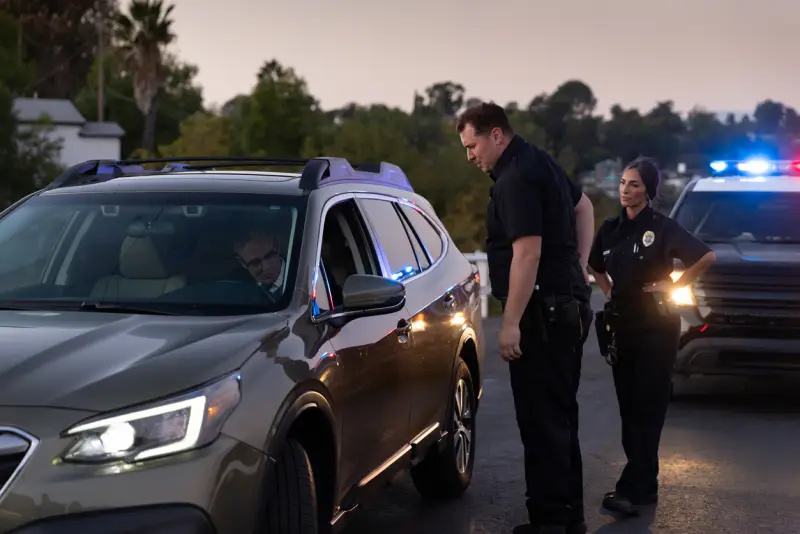
In most states, a loud exhaust alone is sufficient to justify a traffic stop if an officer believes the vehicle violates applicable law. No other traffic violation is required. As mentioned, some jurisdictions are testing automated noise cameras, which can identify violators without the need for a traditional traffic stop.
Tips for Staying Compliant with Aftermarket Exhaust Systems
An aftermarket exhaust isn’t necessarily illegal. The trick to avoiding problems is to ensure your vehicle remains compliant with your state’s equipment, noise, and emissions requirements. If you do decide to modify the stock system, keep these suggestions in mind:
- Verify your state's specific law. Noise standards vary between states. In addition, some local jurisdictions may have additional noise regulations.
- Avoid cutouts, bypasses, and straight pipes. These modifications are prohibited or heavily restricted in almost every state.
- Keep the catalytic converter and other emissions equipment intact. Tampering with emissions-control equipment is a violation of federal law.
- Verify the exhaust's sound level. Consider checking the vehicle’s noise output with a quality sound meter if your state has a measurable decibel standard.
- Don't assume “street legal” means your vehicle is compliant. Advertising claims may not be valid in all states. Confirm the new hardware is compatible with your state’s regulations.
Sources:
Alabama—Ala. Code §32-5-216
https://law.justia.com/codes/alabama/title-32/chapter-5/article-9/division-1/section-32-5-216/
Alaska—13 AAC 04.215
https://www.law.cornell.edu/regulations/alaska/13-AAC-04.215
Arizona—A.R.S. §28-955
https://www.azleg.gov/ars/28/00955.htm
Arkansas—Ark. Code §27-37-601
https://codes.findlaw.com/ar/title-27-transportation/ar-code-sect-27-37-601/
California—Vehicle Code §27151
https://leginfo.legislature.ca.gov/faces/codes_displaySection.xhtml?lawCode=VEH§ionNum=27151
Colorado—C.R.S. §42-4-225
https://law.justia.com/codes/colorado/title-42/regulation-of-vehicles-and-traffic/article-4/part-2/section-42-4-225/
Connecticut—Conn. Gen. Stat. §14-80
https://law.justia.com/codes/connecticut/title-14/chapter-246/section-14-80/
Delaware—21 Del. Code §4311
https://delcodedelaware.gov/title21/c043/sc01/index.html
District of Columbia—Noise Regulation Handbook
https://dob.dc.gov/sites/default/files/dc/sites/dob/Noise%20Regulation%20Handbook.pdf
Florida—Fla. Stat. §316.272
https://www.leg.state.fl.us/Statutes/index.cfm?App_mode=Display_Statute&URL=0300-0399%2F0316%2FSections%2F0316.272.html
Georgia—Ga. Code §40-8-71
https://law.justia.com/codes/georgia/title-40/chapter-8/article-1/part-4/section-40-8-71/
Hawaii—HRS §291-24.5
https://law.justia.com/codes/hawaii/title-17/chapter-291/section-291-24-5/
Idaho—Idaho Code §49-937
https://law.justia.com/codes/idaho/title-49/chapter-9/section-49-937/
Illinois—625 ILCS 5/12-602
https://www.ilga.gov/documents/legislation/ilcs/documents/062500050k12-602.htm
Indiana—Ind. Code §9-19-8-3
https://law.justia.com/codes/indiana/title-9/article-19/chapter-8/section-9-19-8-3/
Iowa—Iowa Code §321.436
https://law.justia.com/codes/iowa/title-viii/chapter-321/section-321-436/
Kansas—Kan. Stat. §8-1739
https://law.justia.com/codes/kansas/chapter-8/article-17/section-8-1739/
Kentucky—KRS §189.140
https://law.justia.com/codes/kentucky/chapter-189/section-189-140/
Louisiana—La. R.S. §32:352
https://law.justia.com/codes/louisiana/revised-statutes/title-32/rs-32-352/
Maine—29-A M.R.S. §1912
https://legislature.maine.gov/statutes/29-a/title29-asec1912.html
Maryland—Transportation §22-402
https://mgaleg.maryland.gov/mgawebsite/Laws/StatuteText?article=gtr&enactments=false§ion=22-402
Massachusetts—General Laws, Chapter 90, §16
https://malegislature.gov/Laws/GeneralLaws/PartI/TitleXIV/Chapter90/Section16
Michigan—MCL §§257.707b & 257.707c
https://www.legislature.mi.gov/Laws/MCL?objectName=mcl-257-707b
https://www.legislature.mi.gov/Laws/MCL?objectName=mcl-257-707c
Minnesota—Minn. Stat. §169.69
https://www.revisor.mn.gov/statutes/cite/169.69
Mississippi—Miss. Code §63-7-55
https://law.justia.com/codes/mississippi/title-63/chapter-7/general-provisions/section-63-7-55/
Missouri—RSMo §307.170
https://revisor.mo.gov/main/OneSection.aspx?section=307.170
Montana—MCA §61-9-435
https://law.justia.com/codes/montana/title-61/chapter-9/part-4/section-61-9-435/
Nebraska—Neb. Rev. Stat. §60-6,286
https://nebraskalegislature.gov/laws/statutes.php?statute=60-6,286
Nevada—NRS §484D.415
https://www.leg.state.nv.us/NRS/NRS-484D.html#NRS484DSec415
New Hampshire—RSA §266:59
https://gc.nh.gov/rsa/html/XXI/266/266-59.htm
New Jersey—N.J.S.A. §39:3-70
https://law.justia.com/codes/new-jersey/title-39/section-39-3-70/
New Mexico—NMSA §66-3-844
https://law.justia.com/codes/new-mexico/chapter-66/article-3/part-9/section-66-3-844/
New York—Vehicle and Traffic Law §375
https://www.nysenate.gov/legislation/laws/VAT/375
North Carolina—G.S. §20-128
https://www.ncleg.gov/EnactedLegislation/Statutes/HTML/BySection/Chapter_20/GS_20-128.html
North Dakota—N.D.C.C. Chapter 39-21
https://ndlegis.gov/cencode/t39c21.pdf
Ohio—Ohio Rev. Code §4513.22
https://codes.ohio.gov/ohio-revised-code/section-4513.22
Oklahoma—47 O.S. §12-402
https://law.justia.com/codes/oklahoma/title-47/section-47-12-402/
Oregon—ORS §815.250
https://oregon.public.law/statutes/ors_815.250
Pennsylvania—75 Pa.C.S. §4523
https://law.justia.com/codes/pennsylvania/title-75/chapter-45/section-4523/
Rhode Island—R.I. Gen. Laws §31-23-13
https://webserver.rilegislature.gov/Statutes/TITLE31/31-23/31-23-13.htm
South Carolina—S.C. Code §56-5-5020
https://law.justia.com/codes/south-carolina/title-56/chapter-5/section-56-5-5020/
South Dakota—S.D. Codified Laws §32-15-17
https://law.justia.com/codes/south-dakota/title-32/chapter-15/section-32-15-17/
Tennessee—Tenn. Code §55-9-202
https://codes.findlaw.com/tn/title-55-motor-and-other-vehicles/tn-code-sect-55-9-202/
Texas—Transportation Code §547.604
https://statutes.capitol.texas.gov/Docs/TN/htm/TN.547.htm#547.604
Utah—Utah Code §41-6a-1626
https://le.utah.gov/xcode/Title41/Chapter6A/41-6a-S1626.html
Vermont—23 V.S.A. §1221
https://legislature.vermont.gov/statutes/section/23/013/01221
Virginia—Va. Code §46.2-1049
https://law.lis.virginia.gov/vacode/title46.2/chapter10/section46.2-1049/
Washington—RCW §46.37.390 & WAC 173-62-030
https://app.leg.wa.gov/rcw/default.aspx?cite=46.37.390
https://app.leg.wa.gov/wac/default.aspx?cite=173-62-030
West Virginia—W. Va. Code §17C-15-34
https://code.wvlegislature.gov/17C-15-34/
Wisconsin—Wis. Stat. §347.39
https://docs.legis.wisconsin.gov/statutes/statutes/347/iii/39
Wyoming—Wyo. Stat. §31-5-953
https://law.justia.com/codes/wyoming/title-31/chapter-5/article-9/section-31-5-953/