



An average car buyer might think that a Certificate of Destruction is merely another type of salvage title. It’s an assumption that could prove costly. Salvage-title cars can often be rebuilt and legally returned to the road. The title of destruction is quite different. In most states, this designation is assigned to vehicles only suitable for parts, scrap, or export.
We’ll answer the “What is a Certificate of Destruction title?” question by explaining how it differs from a salvage title and what happens to these vehicles. You’ll also learn what to watch for before making a purchase.
What Is a Certificate of Destruction?
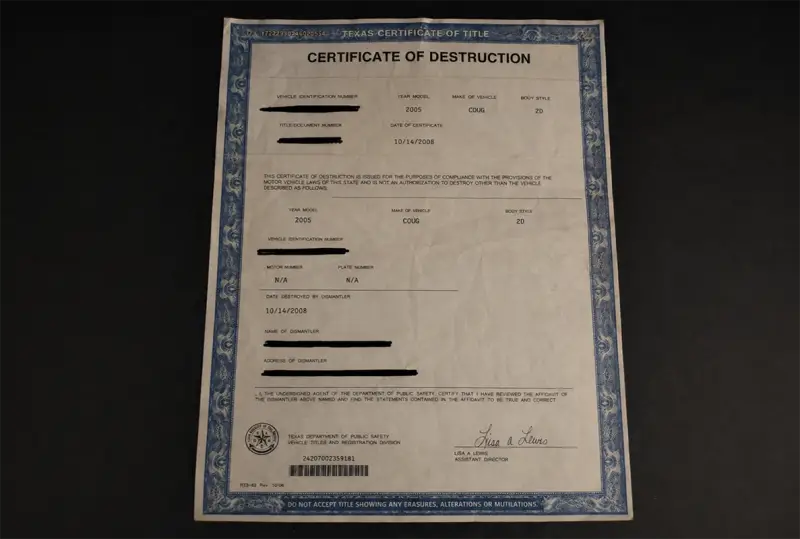
At its most basic, a Certificate of Destruction (COD) is a title indicating that a vehicle is no longer suitable for use on public roads. Depending on the state, this designation may be called a Nonrepairable Vehicle Title (Texas), a Nonrepairable Vehicle Certificate (California), a Junk Title (Virginia), or another similar title brand.
While some cars with a salvage title may return to service, a Certificate of Destruction generally means the vehicle can’t be titled, registered, or driven on public roads. That translates into a path that involves dismantling for parts, scrap, or possibly export.
For example, Florida defines a Certificate of Destruction as applying to vehicles that may not be rebuilt for road use after being declared a total loss under specified circumstances.
Certificate of Destruction vs. Salvage Title: The Key Difference
The biggest difference between these two title designations is permanence. Here’s how this breaks down:
|
Certificate of Destruction |
Salvage Title |
|
Permanently removed from road use |
May be repaired and returned to service |
|
Can’t receive another road title |
May become a rebuilt title after inspection |
|
Intended for parts, scrap, or export |
Intended for repair or dismantling |
|
Registration prohibited |
Registration may be possible after meeting state requirements |
This distinction is easy to overlook when reviewing an online auction listing. Sellers often use “salvage” and “nonrepairable” interchangeably. The DMV doesn't. The DMV doesn't.
If you’re researching “What is a salvage certificate of title?”, remember that a salvage certificate usually represents a repairable vehicle. In contrast, a Certificate of Destruction generally covers a car that has reached the end of its legal life as a road vehicle.
How a Vehicle Ends Up with a Salvage Title Instead
According to auto claims data firm CCC Intelligent Solutions, nearly one in four auto insurance claims involving vehicle damage resulted in a total loss during 2025. However, not every total-loss vehicle receives a Certificate of Destruction.
Instead, a salvage title designation often comes into play, usually set by state regulations that may use different methods to determine when a damaged vehicle should be considered “totaled.” Some states establish a percentage threshold—commonly between 70% and 80% of the vehicle’s actual cash value—while others use a “total loss formula” that compares the vehicle’s repair cost and salvage value with its pre-loss value.
After a salvage-title vehicle is repaired, many states require:
- Documentation showing major parts used during repairs
- A rebuilt vehicle inspection
- A new title reflecting the rebuilt brand
These steps must be completed before a vehicle can be registered and driven on public roads again. Salvage value thresholds and rebuilt-title procedures vary considerably by state. Buyers should become familiar with these rules based on where the vehicle will be titled.
How a Vehicle Ends Up with a Certificate of Destruction Instead
In many cases, a Certificate of Destruction is reserved for vehicles with damage that goes beyond being expensive to repair. In other words, the damage is so extensive that repairing and returning the car to the road is unrealistic under that state’s regulations.
Common examples include:
- Severe structural or frame collapse
- Catastrophic fire damage
- Extreme flood damage involving extensive corrosion or contamination
- Major collision damage affecting multiple structural systems
- Other damage meeting a state's definition of a nonrepairable vehicle
Keep in mind that a vehicle may look fine in an auction listing or after a casual in-person glance, but still carry a Certificate of Destruction designation. Structural failure or other severe damage may be harder to detect. A vehicle history report may help to disclose the title status that isn’t apparent in photographs.
Certificate of Destruction vs. Junk Title: Are They the Same Thing?
While Certificate of Destruction and Junk Title are often used interchangeably, the two terms don’t always have the same meaning, depending on the state. In many jurisdictions, Junk Title is a broader designation applied to vehicles suitable only for scrap or dismantling. In others, a Certificate of Destruction carries more specific legal implications. It’s a way of flagging a vehicle that can never be retitled or returned to public roads.
As mentioned, there isn’t a uniform term across all states to indicate vehicles in this category. You may come across Nonrepairable Title, Nonrepairable Vehicle Certificate, or Junk Certificate, to name a few.
Buyers should take the time to review title brand meanings in the applicable state. Two vehicles described as “junk” may have very different legal statuses depending on the state that issued the title.
Why Insurance Companies and States Issue a Certificate of Destruction
Think of a Certificate of Destruction as an added layer of consumer protection. State motor vehicle agencies don’t want cars with catastrophic damage to re-enter the marketplace as road-ready vehicles. Insurance companies are obligated to follow the law.
Among the usual reasons for Certificate of Destruction designation are:
- Severe structural or frame damage
- Extensive flood damage
- Major fire damage
- Significant airbag and occupant protection system damage
- Theft recoveries that have been stripped beyond economical repair
Think of a Certificate of Destruction as a way to prevent severely damaged vehicles from re-entering the marketplace as road-ready vehicles. Governments and insurance companies don’t want severely damaged vehicles being repaired, retitled, and resold to unsuspecting consumers.
What You Can (and Can't) Do with a COD Vehicle
A Certificate of Destruction significantly limits what buyers and owners can do with a vehicle.
|
You generally can: |
You generally can’t: |
|
|
It’s vital to remember that there is no legal path for Certificate of Destruction to rebuilt title for these vehicles. This is what separates a COD vehicle from one with a salvage title. Government agencies want to minimize the risk of title washing and other activities to protect buyers from these federal crimes.
Selling a COD Vehicle for Parts or Scrap
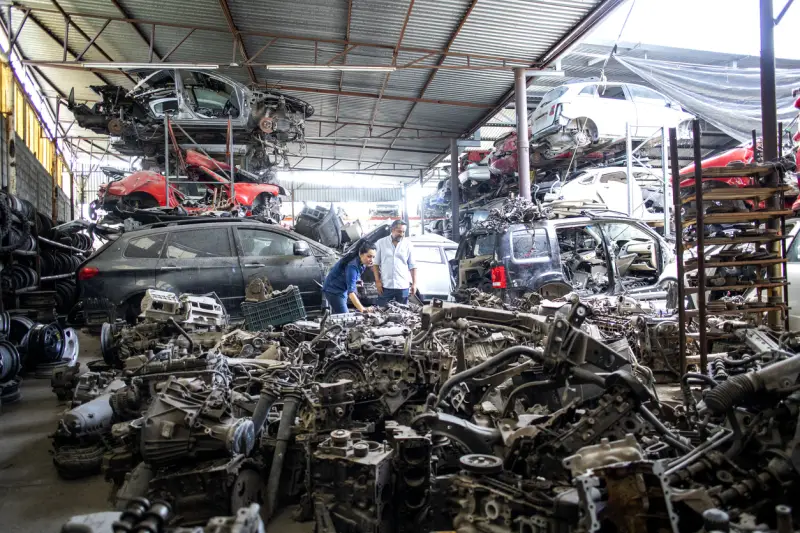
Although a COD vehicle can’t legally be on the road again, it may still have value thanks to individual components. Salvageable parts include:
- Engines
- Transmissions
- Wheels and tires
- Doors
- Interior components
- Body panels
- Electronics
Once valuable parts have been removed, the remaining shell is often worth little more than scrap metal, and disposing of it may require a valid title or other ownership documents, depending on state law.
Exporting a COD Vehicle Overseas
Ultimately, a vehicle with a Certificate of Destruction title may be exported rather than dismantled. There are no U.S. laws that prohibit this activity, but the process is very dependent on the destination country’s import and registration laws.
Some countries allow nonrepairable U.S. vehicles to be rebuilt and registered after meeting local requirements, while others prohibit their import altogether. If the idea behind buying a COD vehicle is to export it, it’s best to verify the receiving country’s rules before making a purchase. A seller’s statement that a vehicle is “export only” doesn’t guarantee suitability for an international transaction.
What Buyers Should Check Before Purchasing an Auction Vehicle
An auction listing may not provide all the information you need about a vehicle’s title status. A simple “total loss” label may not be enough to confirm if the car has a COD, salvage, or other title designation.
Smart bidding comes from verifying:
- The current title brand
- Whether the vehicle carries a salvage or Certificate of Destruction title
- The issuing state
- Whether the title history shows any branding changes
- The extent of the reported damage
Many auctions won’t disclose these details, but running a VIN-based vehicle history report is an easy way to learn about a car’s background. A GoodCar Vehicle History Report can identify title brands, previous total-loss records, and other vital information that may not appear in an auction listing.
What to Do If You Already Bought a Vehicle with an Undisclosed Certificate of Destruction
Purchasing a “salvage vehicle” with the intent of rebuilding it can be frustrating if you later discover a Certificate of Destruction. Your options for correcting the situation may be limited, depending on who sold you the car.
Licensed Dealer/Auction Company
Review the paperwork to check for any disclosures. In some states, licensed sellers are required to review any title brands before completing a sale. If you weren’t notified, you may have legal remedies under your state's motor vehicle or consumer protection laws.
Private Seller
Reversing a transaction for a COD vehicle is more difficult with a private seller. In most states, these purchases are made on an as-is basis. However, you may have recourse if the seller intentionally misrepresented the title status or concealed the Certificate of Destruction. If so, steps may include:
- Contacting your state's DMV or motor vehicle agency.
- Filing a complaint with your state's consumer protection office or attorney general.
- Reporting suspected title fraud to local law enforcement if appropriate.
- Consulting an attorney if the vehicle was sold through fraudulent misrepresentation.
Frequently Asked Questions
Can a Certificate of Destruction ever be reversed?
Usually not. A true Certificate of Destruction or nonrepairable title is intended to remove a vehicle from road use permanently. Unlike a salvage title, it usually cannot be converted into a rebuilt title after repairs.
Is a Certificate of Destruction the same as a totaled car?
No. A total loss is an insurance determination that repairing the vehicle isn't economically practical. Many totaled vehicles receive salvage titles and can eventually return to the road after repairs and inspection. A Certificate of Destruction is a much more restrictive title brand that generally means the vehicle can never be legally registered for use on public roads again.
Can I get insurance on a car with a Certificate of Destruction?
Probably not. Because these vehicles typically can’t be registered or legally driven on public roads, insurers usually won't issue a standard auto insurance policy for them. Limited coverage may be available while the vehicle is being stored or transported, but it won't qualify for normal liability or collision insurance.
Why would a good-looking car get a Certificate of Destruction?
A vehicle may look in good condition on the outside, but may have issues such as structural damage or extensive flooding that make it unsuitable for use on public roadways. Title brands cover a vehicle’s legal status, not its appearance.
How can I check if a vehicle has a Certificate of Destruction before buying?
A comprehensive vehicle history report from GoodCar can reveal critical title-brand information, including Certificates of Destruction, salvage titles, rebuilt titles, and total-loss records. It’s a simple effort to confirm a seller’s description or fill in the missing details of an online listing.