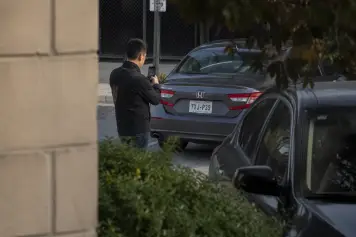


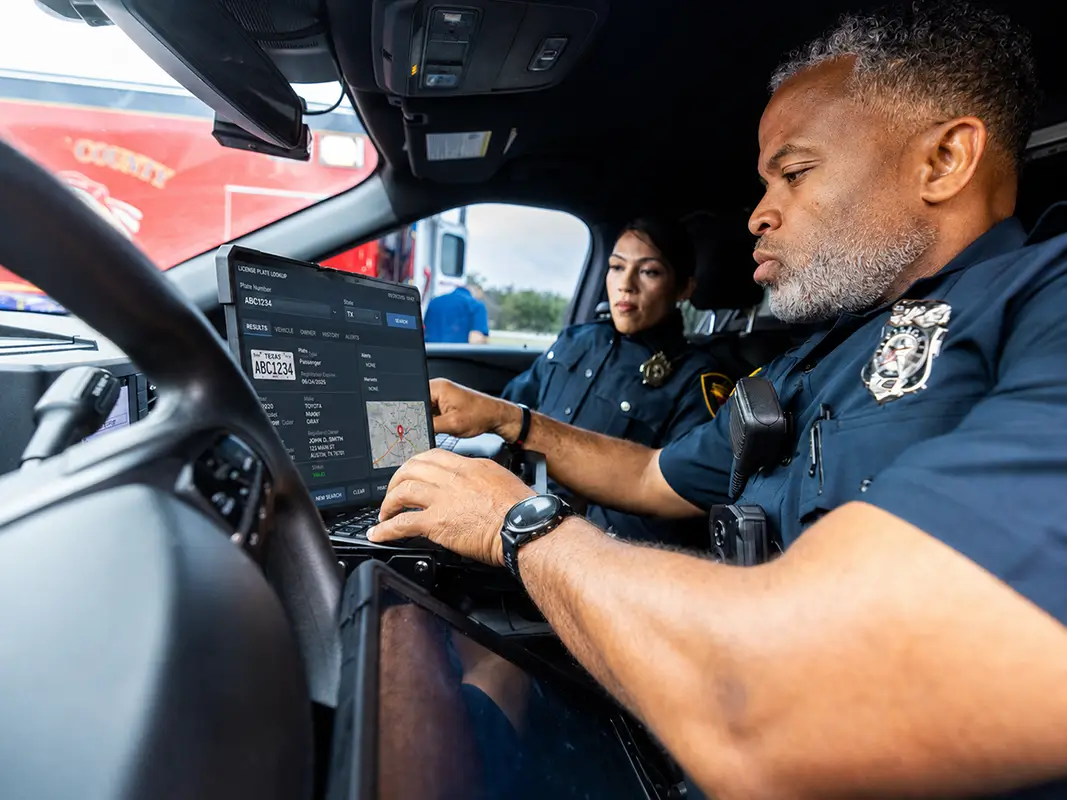

A police car in the rearview mirror is enough to make most drivers sit up straighter, and it may be more unsettling when the officer actually runs your plate. What comes back is largely administrative: the registered owner, current registration status, and any flags already in the system. What follows covers what officers can access, what remains off-limits, and how a routine plate check can lead to a traffic stop.
State law adds another layer on top of this: federal rules like the DPPA set the floor, but individual states can be stricter about who can access plate and registration data and for what purpose, so the exact list of what an officer (or anyone else) can pull may vary depending on where you're stopped.
What Databases Police Are Actually Checking
Contrary to what movies and TV often portray, officers aren't accessing a single nationwide database that contains everything about a driver. Instead, a license plate query typically involves multiple connected systems, each serving a different purpose.
The first access point is the state’s motor vehicle agency, which stores vehicle registration records and information about the registered owner. The plate look-up may include connecting to the FBI's National Crime Information Center (NCIC), which has records about stolen vehicles, wanted persons, missing persons, protection orders, and other law enforcement alerts.
Depending on the agency, police may also query state crime databases or local law enforcement records that contain warrants, investigative alerts, or other regional information. Together, these databases help officers determine whether additional investigation is required, but the information doesn’t provide a complete personal profile.
What Information Shows Up When Police Run a Plate?
As mentioned, police use license plate searches to gather a quick overview of the vehicle, its registration status, and the registered owner. Let’s break down what this means, although the details can vary by jurisdiction and law enforcement agency.
Vehicle Details
A primary reason to run a license plate check is to confirm that the vehicle in front of the officer matches the registration on file. These queries usually show the vehicle's make, model, model year, color, and vehicle identification number (VIN). A mismatch, such as a plate belonging to a blue 2022 Honda Civic but attached to a red 2015 Ford F-150, warrants a closer look.
Registration and Insurance Status
A vehicle operating on public roads must be legally registered; the police may want to verify this. The details may vary by state, but a license plate inquiry can generally confirm whether the registration is active, expired, suspended, or revoked.
More states are also starting to participate in electronic insurance verification programs that allow officers to verify a vehicle’s insurance coverage. However, some jurisdictions may still require drivers to carry proof of insurance to present during a traffic stop.
Registered Owner Information
It’s common for a license plate check to identify the vehicle’s registered owner. The results usually include the owner's name, address, driver's license status, and other identifying information maintained in DMV records. Keep in mind that the police can’t immediately identify who’s driving the vehicle, as a spouse, relative, or friend could be behind the wheel.
Warrants and Stolen Vehicle Flags
A priority for police is to locate a vehicle that may have been stolen or is connected with a law enforcement alert. A stolen vehicle report will appear in the NCIC database almost immediately. Depending on agency policy and available databases, officers may also receive information indicating that the registered owner has an outstanding warrant or other cautionary notice requiring additional attention.
Concealed Carry Permit Status
In some states, a license plate query may indicate whether the vehicle's registered owner holds a concealed carry permit.
What Police Can't See From a Plate Alone
There are limits to what information can be gathered from a license plate check. Police can’t access financial records, employment status, medical history, or other personal details. Further, a plate inquiry only covers the registered owner, not necessarily the person currently driving the vehicle.
Does the Officer Know Who's Driving?
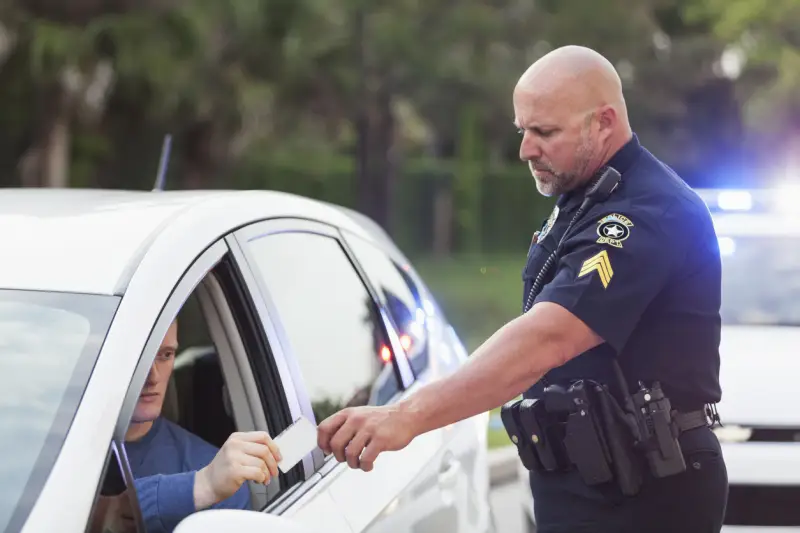
Although technology reaches far into everyone’s lives, we’re not at the point where police can know precisely who’s behind the wheel of every car. Instead, police generally assume that the registered owner is driving. That assumption is either validated or corrected during a traffic stop or other investigation.
Under the 2020 U.S. Supreme Court case Kansas v. Glover, it’s acceptable for an officer to assume the registered owner is driving unless there’s evidence to the contrary. For example, if the registered owner is a 65-year-old man but the officer clearly sees a young woman behind the wheel, that assumption no longer applies.
Can You Run a Plate Check Yourself?
You don't need a badge to check a lot of the same basics an officer sees. Consumer-facing tools can't pull DMV owner records the way police can (that data is restricted under the federal Driver's Privacy Protection Act), but a license plate lookup can surface title status, accident history, and other red flags before you buy or sell a car. If theft is your main concern, you can also run a dedicated check to see how to check if a car is stolen using the VIN. It's a useful gap-filler for the things a routine traffic stop covers but a private buyer normally can't access any other way.
Why Police Run Plates in the First Place
Running a license plate is part of routine police work; it’s a quick way for an officer to spot a potential issue without having to interact with a driver.
Common reasons for law enforcement to check license plates include:
- Confirming a vehicle’s registration status
- Determining if a car has been reported stolen
- Verifying if there are any outstanding warrants or other alerts connected with the registered owner
- Looking for vehicles associated with a BOLO (be on the lookout ) bulletin or an ongoing investigation
- Automatically scanning nearby vehicles through license plate reader technology while on patrol
Most license plate checks don’t result in a traffic stop because nothing unusual is identified.
Does a Cop Behind You Automatically Run Your Plate?
The idea that cops run your plates when they are behind you is a common concern among drivers. In reality, practices vary by law enforcement agency. According to the U.S. Department of Justice, about two-thirds of law enforcement departments use automated license plate reader (ALPR) systems that scan license plates continuously as officers drive. about two-thirds of law enforcement departments use automated license plate reader (ALPR) systems that scan license plates continuously as officers drive — meaning a plate can get checked without an officer ever singling out your car.
This technology enables one officer to check thousands of license plates in a single shift to look for stolen vehicles, wanted persons, expired registrations, and other law enforcement alerts. Police can perform other day-to-day activities and only receive an alert if a particular license plate is flagged.
Automated License Plate Readers (ALPRs): How They Work
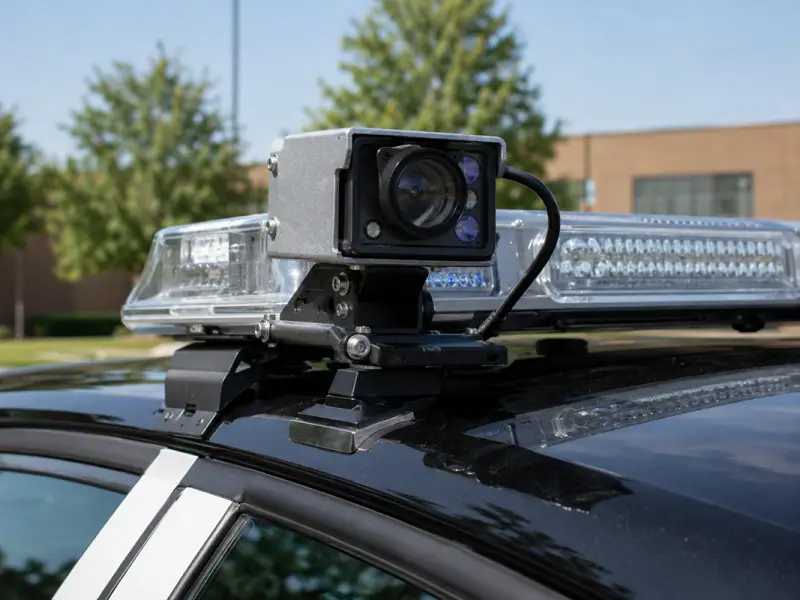
A license plate reader camera is a specialized camera system designed to capture license plate numbers either from a fixed location or a vehicle. The technology uses optical character recognition (OCR) software that converts plate images into searchable text. This information is then compared against various law enforcement databases.
An automated license plate reader (ALPR) can be mounted in several locations, including:
- Patrol cars
- Police motorcycles
- Highway overpasses
- Traffic signal poles
- Fixed roadside locations
- Temporary deployments
- Parking facility entrances
Officer.com reports that a modern cop’s license plate reader can scan up to 8,000 plates in a single shift with minimal officer involvement.
What Are Flock Cameras and What Do They Track?
Flock cameras are advanced ALPRs that are becoming more commonplace in the U.S. What are Flock cameras used for? In addition to typical license plate scanning, the system creates ‘fingerprints’ of each vehicle, according to the Electronic Frontier Foundation (EFF). Images of the make, model, color, and other features, such as roof racks and bumper stickers, help create a unique profile of a car that isn’t dependent on license plate information.
Flock Safety, the maker of Flock cameras, reports that its systems are used by thousands of law enforcement agencies, cities, businesses, schools, and homeowner associations to help locate stolen vehicles, identify suspect vehicles, and assist with criminal investigations.
Unlike traditional traffic cameras that monitor speeding or red-light violations, Flock cameras are designed to capture information about passing vehicles. Depending on the system and configuration, they can record:
- License plate number
- Date and time the vehicle passed
- GPS location of the camera
- Vehicle make
- Vehicle color
- Vehicle body style
- Distinguishing features
The company says that its devices don’t use facial recognition or track human behavior. Nonetheless, the technology has sparked debate over who owns the data (Flock indicates the agency operating the device does) and has spurred privacy advocates, like DeFlock, to identify ALPRs and encourage tighter controls over the resulting information.
Your Rights During a Plate-Based Stop
While license plate scans by police are common activities, these events don’t diminish your constitutional rights. If a license plate check leads to a traffic stop, the American Civil Liberties Union (ACLU) advises that your rights include:
- Remaining silent beyond providing the information required by law in your state
- Declining consent to a search of the vehicle unless officers have another legal basis to conduct one
- Recording any public interaction with law enforcement, provided such action doesn’t interfere with the officer’s duties and complies with applicable state laws
There are practical steps to follow that can make a traffic stop less eventful:
- Keep your hands visible at all times.
- Follow lawful instructions.
- Avoid making sudden movements.
If you believe your rights have been violated, it’s best to address these issues afterward through the appropriate administrative or legal channels rather than at the roadside.
Frequently Asked Questions
Can police run your plate without a reason?
In most situations, yes. Court cases, including Kansas v. Glover, have found that officers don’t need reasonable suspicion of a crime to conduct a license plate check. This activity is considered routine law enforcement activity, and license plates are displayed in public.
Will police know if my registered driver's license is suspended?
Often, yes. A plate inquiry commonly returns information about the registered owner's driver's license status. If the records show the owner's license is suspended or revoked, that information may provide grounds for additional investigation. However, officers must still determine whether the registered owner is actually driving.
Can someone else running my plate see my personal information?
No. DMV records containing names, addresses, and other personal information are generally restricted to authorized government agencies. Access to these details is tightly controlled under the federal Driver's Privacy Protection Act (DPPA) and other laws.
Do license plate readers track my location over time?
They can, but only where ALPR cameras are installed. Each time a vehicle passes a camera, the system may record the license plate, location, and timestamp. Whether those records are retained, how long they're stored, and who may access them depends on the policies of the agency operating the system and applicable state laws.
What happens if the plate comes back registered to someone else?
That usually prompts the officer to investigate further. A mismatch may indicate that the wrong license plate is displayed, the vehicle registration records haven't been updated, or, in more serious cases, the plate has been stolen or improperly transferred to another vehicle.