


California Lemon Law
Consumers assume a promise of quality when buying a vehicle. This expectation applies whether they are shopping for a used or new vehicle. Nobody wants to drive a car off the lot and have it break down multiple times in the span of a few months.
Such incidents cost vehicle owners time and money and are mentally exhausting. Lemon Law refers to legislation that protects consumers who purchase or lease defective vehicles, colloquially named "Lemons."
In California, these laws are formally called the Song-Beverly Consumer Warranty Act. This act requires sellers to compensate aggrieved consumers fairly through replacement or refund.
What is the Lemon Law in California?
California Lemon Laws are consumer protections that make sure vehicle owners recourse when buying cars that consistently malfunction or fail to perform. These consumer laws keep sellers accountable for maintaining a quality product and protect drivers from potentially fatal purchases.
Simply put, if you buy a car that has a serious defect that the seller cannot address after a reasonable number of repair attempts, you may be due for compensation.
In many states, Lemon Laws only apply to newly purchased vehicles. However, California's protections extend more generously.
Lemon Laws Protect:
- New cars, trucks, SUVs, and vans purchased or leased in California
- Used vehicles that are still covered by the original manufacturer's warranty
- Vehicles primarily intended for business purposes
Lemon Laws DON'T Protect:
- Non-conventional vehicles, such as some off-road vehicles like dirt bikes
- Vehicles transferred via private sales
- Vehicles abused by the new owner
How Does California Lemon Law Work?
In most cases, vehicle owners cannot simply claim their car is a lemon without proof. The process isn't instant, but many manufacturers offer California-certified arbitration programs that can streamline your situation.
Step-by-Step Process
Identify if Lemon Law Applies
Concerned owners should determine if their car is a lemon or just mildly problematic. To qualify, defects must significantly diminish the vehicle’s use, value, or safety and violate the manufacturer’s new vehicle warranty.
You can also run a title check on the vehicle through GoodCar. California Lemon Law applies to used vehicles still under the manufacturer’s original warranty. A title search will reveal whether your defect is a persistent problem experienced by past owners.
California requirements are looser than those in many other states. For more information, see our “California Lemon Law Qualifications” section.
Contact the Seller
Vehicles are not considered lemons until the manufacturer fails to bring them up to warranty standards. Contact the seller and schedule a convenient time to have them look at the vehicle.
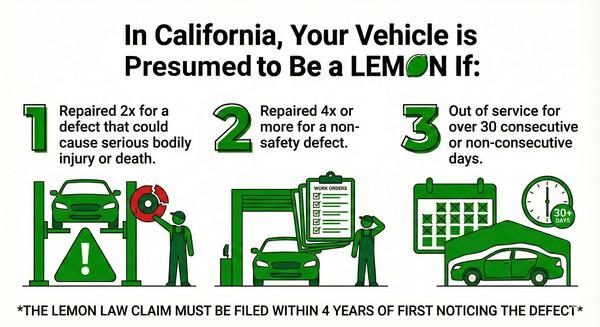
Dealers and manufacturers must take “reasonable” action to address the defect. California defines this as four or more repair attempts, or if the vehicle has been held for over thirty consecutive or non-consecutive days.
Lemon status may also be claimed after two failed repair attempts if the defect risks death or serious bodily injury to the driver or passengers.
If the seller refuses to look at your vehicle, then they violate California’s Lemon Law. At this point, you should seek either arbitration or legal representation through a specialty Lemon Law attorney.
Deliver the Lemon to the Seller
Most California dealerships will have a connected service facility. If the car is too defective or unsafe to drive to the facility, then the seller is responsible for arranging the delivery.
Understand that your vehicle may be held for up to 30 days before being considered a lemon. In the interim, you may want to discuss renting a vehicle from the dealership or manufacturer.
Record-keeping
Keep records of every seller interaction and service invoice. These records will help prove your case that the sellers failed to make reasonable repairs. It will also create a timeline for court reference.
Seek Arbitration or Legal Action
If the issue is not resolved through the seller, then consumers can contact California's arbitration services. Arbitration is a free service in which a licensed third party decides how to manage the situation.
The arbitrator may allow additional repair attempts, refund the purchase, or require the seller to provide an equivalent replacement. If the car is a lemon, the arbitrator may also pay the consumer for forced expenses throughout the process, such as towing or car rentals.
Arbitration often works to accommodate the consumer. The process is speedy, typically completing within 40 days of the consumer's application. Additionally, sellers cannot reject the arbitrator's decision, while consumers can still pursue further action in court.
If pursuing legal action, it is recommended to consult a Lemon Law specialist. These professionals can pinpoint warranty violations and explain complex paperwork. Many also do not charge a fee unless you win the case.
California Lemon Law Qualifications
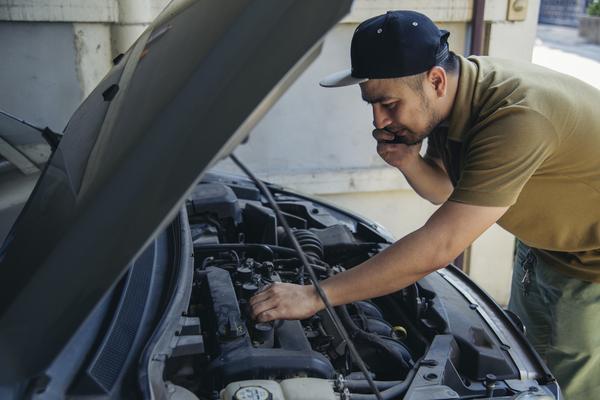
California has a consumer-friendly Lemon Law, but not every defective car will qualify. There are clear rules in place to ensure consumers do not abuse the system. Lemons must meet the following conditions:
- Covered by the manufacturer's warranty
- Defect must substantially affect the vehicles
- Failures to resolve the issue in a reasonable manner
- Purchased or leased in California
- Defect not caused by owner neglect or misuse
Warranty Coverage
A lemon must be actively covered by the manufacturer's new vehicle warranty. This means that California's Lemon Law does not protect modifications that void the warranty or aged-out vehicles.
Additionally, extended warranties or service contracts from dealerships do not apply. Only the original manufacturer's warranty is considered.
Vehicle Types
California Lemon Law covers cars, pickup trucks, vans, and SUVs. These vehicles must be purchased or leased primarily for business, personal, or family purposes.
Some less conventional vehicle types are also partially protected by the Lemon Law. Motor homes can claim the law for issues with their chassis, chassis cabs, and drivetrains. However, other types, like off-highway vehicles (motor bikes, some ATVs, etc.), cannot be lemons.
Covered Defects
Not all defects grant lemon status. The issue must significantly interfere with the vehicle's performance, value, or safety features. For example, an arbitrator would likely not consider a faulty infotainment system enough for a full refund, but repeated brake failure compromises safety.
Failed Repair Attempts
The manufacturer or dealer should attempt to bring the vehicle up to warranty standards. California allows two attempts for serious safety issues and four attempts for less critical, persistent issues. A vehicle may also be treated as a lemon if it spends over 30 days in a shop, not necessarily in a row.
Purchase Location and Use
The car must have been bought or leased within California. Vehicles purchased outside of California cannot qualify, even if the owner is a current resident. Lemon Law primarily covers personal vehicles, but businesses with a fleet smaller than five vehicles can also benefit.
California Lemon Law Time Limit
Vehicles that meet California's requirements may still be rejected if the defect isn't noticed or reported in time. The statute of limitations on a Lemon Law claim is four years after first noticing a warrantable defect.
So, it is recommended to contact the dealership or manufacturer immediately after discovering the issue.
In some cases, owners do not realize it is a persistent issue and wait years to act. This may make evidence more difficult to track down and the timeline murky and less reliable.
Additionally, automakers could argue that the vehicle is not worth its original price due to extensive use. The more miles that are on the lemon, the more they can claim general wear, which may decrease your refund in accordance with California Civil Code § 1793.2.
"…the amount to be paid by the manufacturer to the buyer may be reduced by the manufacturer by that amount directly attributable to use by the buyer prior to the time the buyer first delivered the vehicle to the manufacturer or distributor…"
See our step-by-step process above to learn how to start within the deadline.
Compensation and Remedies Under California Law
Lemon owners are entitled to multiple compensation options, depending on the situation. These choices include refunds (full or partial), vehicle replacement, or cash settlement.
Repurchase (Refunds)
The manufacturer may repurchase the car, refunding the vehicle and all associated costs such as taxes, registration fees, and repair bills. In California, the repurchase price is based on the original price paid by the buyer, unless damages occurred before discovering the defect.
Replacement
The seller can exchange the vehicle for a replacement of comparable value to your original purchase. The new vehicle will benefit from the same warranty as a conventionally purchased vehicle.
California law also states that sellers cannot force buyers into choosing a replacement. It is up to the consumer to elect for reimbursement.
Cash Settlement
In some cases, both sides may agree to a cash settlement, otherwise known as a "Cash and Keep." This means that the lemon's owner keeps the vehicle, but accepts some amount of cash to make up for the defect. This often occurs if the defect is inconvenient but doesn't make the car unusable.
Covering Other Costs
Lastly, manufacturers must pay the cost of retrieving a lemon if it cannot be safely driven to their service center. In California, written notice of nonconformity constitutes a valid return, and it becomes the manufacturer's duty to handle transportation.
Other reasonable costs incurred by the lemon and subsequent reimbursement are also the manufacturer's responsibility. These may include registration fees, rental car costs, towing, sales tax, and attorney fees if the claim leads to legal action.
Why Work with a California Lemon Law Attorney

Being forced to keep an undrivable lemon can severely impact your life. A manufacturer may fight your claim, or the California arbitrator may rule against you. In these situations, there are few options other than to pursue legal recourse.
A CA Lemon Law attorney knows the ins and outs of manufacturer warranty rules and how sellers victimize consumers. Specialists can maximize compensation, handle complex paper trails and forms, and directly negotiate with manufacturers.
The best part is that consumers often don't have to pay for these services. Manufacturers are the ones on the hook for your attorney fees in a successful case. Many Lemon Law attorneys only charge if you get paid, reducing risk to their clients.
So, don't navigate this life-altering process alone. Contact a qualified Lemon Law attorney to ensure you don't leave money on the table.
FAQ
Yes. Unlike many other states, California's Lemon Law applies to used cars. However, these vehicles must still be covered under the manufacturer's original new vehicle warranty.
Vehicle owners may file up to four years after first noticing the defect. Expedient action is always better than allowing sellers to work to reduce your reimbursement.
No, arbitration is not required before suing a manufacturer or dealership. Arbitration is a government-offered service that can ease the process. However, many consumers find more favorable results by working with an attorney.
What constitutes a substantial defect is open to interpretation. In general, it refers to any defect that affects the vehicle's use, safety, or value. For example, faulty brakes are a dangerous defect that may lead to extreme bodily harm.
Lemon owners are entitled to refunds, vehicle replacement, or a cash-and-keep settlement. Manufacturers and dealerships must also pay for any costs incurred in the process, such as new vehicle taxes, attorney costs, or registration fees.
Yes. Successful Lemon Law cases require the automaker to cover reasonable attorney's fees, removing the cost barrier to pursuing justice.
Lemon Law protects leased vehicles that meet all other requirements, such as warranty coverage and purchase location. This includes motorcycles and some parts of motorized RVs (motor homes).
California Resources


FREE Vehicle Search
- Accidents
- Problem Checks
- Title Records
- Recalls
- Values
- Specs


-
 InfoPay, Inc. (dba GoodCar) is an Approved NMVTIS Data Provider
-

-
