


Texas Lemon Law

Buying a lemon can leave a vehicle owner unable to perform essential tasks, such as getting to work or buying groceries. Even worse, it is financially draining to have to repair the same defect repeatedly. The Texas Lemon Law mitigates the impact on consumers and ensures manufacturers adhere to their warranties.
The Texas Department of Motor Vehicles (DMV) administers the terms. However, not all defective vehicles qualify as lemons under Texas law, and owners should understand the qualifications to make the best use of their options.
What is the Lemon Law in Texas?
Lemon Laws give consumers legal leverage when dealing with large manufacturers or dealerships. It holds sellers accountable for warranty-covered defects that significantly impact a vehicle's use, value, or safety.
For example, if Lydia buys a car from a Texas dealership and discovers that the brakes wear down during the warranty, she can contact the seller for repairs.
A vehicle is a "lemon" after the seller has had a reasonable opportunity to address the warranty issue. Failure to resolve the issue and bring the vehicle up to standard will entitle the owner to a refund or a comparable replacement.
Lemon Laws in Texas primarily apply to newly purchased or leased vehicles, covering a broader range of vehicle types than in other states. Texas Lemon Law protects the following:
Lemon Laws Protect:
- New or leased cars, trucks, motorcycles, ATVs, towable recreational vehicles, and neighborhood EVs
- Used cars that are still covered by the original warranty
Lemon Laws DON'T Protect:
- Repossessed vehicles
- Non-travel trailers
- Boats
- Farm equipment
How Does Texas Lemon Law Work?
Texas Lemon Law for new cars strongly favors the consumer, but it does not guarantee success in every case. Vehicle owners must follow certain conditions and potential claims processes before receiving compensation from the automaker or dealer.
Step-by-Step Process
Step 1: Identify if Lemon Law Applies
Whether your vehicle qualifies as a lemon depends on several factors; the most essential condition is that the defect violates an active manufacturer's warranty. The defect must also significantly impact the vehicle's performance, safety, or value.
Additionally, other factors, such as vehicle type, purchase location, and the severity of the defect, all play a role in the Texas Lemon Law.
Although used cars aren't always protected, it is worth the time to perform a title check through a service like GoodCar. Used vehicle owners can receive assistance if the vehicle is still under the original warranty or if the previous owner filed an ongoing lemon law claim.
See our "Texas Lemon Law Qualifications" section for how to determine if you bought a lemon.
Step 2: Contact the Dealership and Automaker
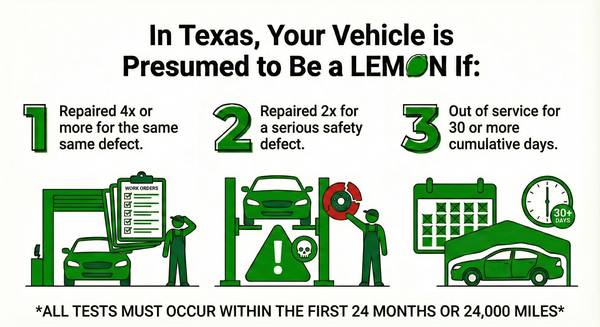
The lemon law requires that manufacturers and dealerships be given a reasonable opportunity to address the issue. Texas uses multiple tests to determine whether a manufacturer or automaker has failed to bring the lemon to warranty standards.
- Four-times test
- Serious safety-hazard test
- 30-day test
These tests demonstrate that the dealership either cannot repair the defect or that driving the vehicle poses a significant risk to life.
Dealers must also be sent a written notice of the defect. You should send the letter over certified mail. The Texas DMV has provided a sample letter that owners can use to ensure they include the correct information.
Step 3: Deliver the Lemon to the Seller
Franchised dealerships in Texas need access to a service facility to warranty repairs. You must take the vehicle to the dealer's facility for repairs. Failed repairs from third-party garages will not count toward the dealer's attempts.
If you cannot deliver the lemon due to unsafe driving risks or excessive damage, then the dealer must provide a tow to their facility. Dealers are responsible for incidental costs, such as towing and rental car fees, after a successful claim.
Step 4: File a Lemon Law Claim or Seek Legal Representation
If the other party does not comply with the written request or other issues arise, you will need to pursue alternative avenues through the Texas DMV or the court.
The DMV offers an online complaint system through which consumers can file a Lemon Law complaint for a $35 fee. Your case is assigned a mediator who will facilitate a conversation with the seller, according to the Texas Lemon Law.
Unresolved matters are escalated to a hearing, where a hearing examiner will render a judgment after hearing from both sides. Judgements come within sixty days of the hearing. However, either side may contest the decision in court.
If the dispute reaches this point, or you seek legal action from the start, you should contact a Lemon Law Attorney. These professionals specialize in warranty law and can navigate the pressure and paperwork of dealing with a large manufacturer.
Texas Lemon Law Qualifications

Owners should understand what constitutes a lemon before filing a claim. The process can take several weeks, and it may be better to seek other solutions to a malfunctioning vehicle. Lemons must meet the following requirements:
- The defect substantially affects the vehicle's usability, safety, or value
- The defect violates the manufacturer's written warranty
- The defect is reported to the dealer while the warranty is active
- Reasonable attempts by the dealer have failed to fix the defect
- The owner has sent a written notice to the manufacturer
Warranty Coverage
The warranty is the linchpin of a lemon law claim. A vehicle must have active coverage when the owner reports the defect to the dealer or manufacturer. The claim will remain valid even if the warranty lapses while the dealer is attempting repairs.
Additionally, the lemon law only applies to the manufacturer's original warranty. Dealer benefits, such as extended warranties or service contracts, are not considered.
Vehicle Types
Texas Lemon Law protects a wide range of vehicle types, including cars, trucks, motorcycles, ATVs, towable recreational vehicles, and electric vehicles. However, it does not cover vehicle types that are not typically used as primary transportation, such as trailers, farm equipment, and boats.
"Substantial" Defects
Substantial defects are problems that noticeably affect safety, performance, or value. Issues like repeated engine failures, malfunctioning brakes, or missing exterior components would qualify. In contrast, the DMV explicitly notes that problems like minor rattles and radio static are not enough.
Failed Repair Attempts
The dealer must fail to bring the vehicle up to proper condition within a reasonable timeframe. Texas uses three tests, depending on the situation, to determine whether the dealer has failed. All three tests must occur within a 24-month or 24,000-mile timeframe, whichever comes first.
- Four-Times Test: The dealer has not fixed the same defect after four repair attempts
- Serious Safety-Hazard Test: The dealer has not fixed a defect that significantly affects vehicle control or safety after two attempts.
- 30-Day Test: The dealer has held the vehicle for 30 or more total days
Notably, days are not added to the "30-day test" if the dealer provides a comparable replacement vehicle while they are working on your car.
Purchase Location
The Texas Lemon Law only applies to vehicles purchased or leased from locations within Texas. Vehicles purchased and registered outside of the state are not protected. However, there are exceptions for military personnel.
Texas Lemon Law Time Limit
There is a statute of limitations on filing a Lemon Law claim in Texas. This deadline prevents people from requesting fraudulent refunds after wearing out their vehicle.
In Texas, owners must file their complaint within six months of the following events:
- Expiration of the express warranty term
- 2 years after the purchase
- 24,000 miles after the vehicle's delivery date
Texas' statute of limitations lapses six months after any of these conditions occur. However, the defect must first occur during the warranty period.
Despite the six-month time frame, it is best to report the defect as soon as you become aware of it. Acting quickly will prevent the dealership from arguing that the problem is due to poor upkeep or misuse.
Additionally, the longer you wait, the less the dealer is obligated to refund. The Texas DMV's refund formula reduces amounts based on the vehicle's mileage.
Refer to our step-by-step process above to learn how to meet the deadline.
Compensation and Remedies Under Texas Law
There are three compensation options available after a successful Lemon Law claim. You can request a refund, a comparable vehicle replacement, or additional repair attempts.
Refunds
The dealership can buy back the vehicle, paying the owner based on DMV formulas. Dealerships are also responsible for incurred costs, like towing services, rental vehicles, registrations, and title fees.
New vehicle refunds are based on the original purchase price, reduced by the mileage at the time the defect was first reported. Leased vehicles repay the monthly rental costs, while also considering the number of "unimpaired miles." However, refunds do not include interest payments.
Vehicle Replacement
You may accept a comparable vehicle replacement. This means that the dealer must provide acceptable alternatives, such as offering the same make, model, and accessories as the original. The replacement must be covered by the manufacturer's original warranty.
Further Repairs
The dealership may continue repair attempts. You are not required to allow extra attempts if the dealership has already failed one of the DMV's three tests. In these cases, the dealership typically handles out-of-pocket repair expenses.
Why Work with a Texas Lemon Law Attorney

Dealerships and automakers often have large legal teams that intimidate the average vehicle owner. This power imbalance puts consumers in a difficult situation if the seller decides to be difficult or deny the lemon claim.
Texas Lemon Law attorneys are intimately familiar with warranty guidelines and can better argue how your consumer rights were violated. They can better handle complex paperwork, ensure deadlines are met, and maintain records thoroughly.
Lemon Law claims involve multiple repair attempts and communications with the dealer. There's ample time for complications, so it can be reassuring to have a specialist standing behind you.
Best of all, Lemon Law attorneys are often paid from a case's earnings. This means that they only charge after a successful claim, deducting their fees from the opposing party's pocket.
FAQ
Only in limited situations. The law primarily protects new or leased vehicles. A used car may qualify if it is still covered under the original manufacturer's warranty.
You must file a complaint with the Texas DMV within six months of any of these conditions:
- The warranty lapsed
- 24 months after the delivery date
- Adding 24,000 miles to the delivery mileage
No, mediation is a service offered through the DMV's consumer claims process, but it is not required before pursuing legal action.
A defect is "substantial" if it seriously impacts the vehicle's use, safety, or market value. For example, brake failure or engine failure would qualify, while minor cosmetic issues would not.
If your vehicle is declared a lemon, you may receive one of three remedies:
- Adjusted refund
- Comparable replacement vehicle
- Repair reimbursement
The exact outcome depends on the defect and the DMV mediator's decision.
Yes, Lemon Law attorneys often focus on claims they have a reasonable chance of winning. This is because they are paid by the manufacturers only after a successful claim. Consumers do not have to pay out-of-pocket costs.
Yes, the Texas Lemon Law applies to leased vehicles, motorcycles, and towable recreational vehicles. These listed vehicle types must still meet specific conditions, such as being purchased in Texas and having an active warranty.
Texas Resources



FREE Vehicle Search
- Accidents
- Problem Checks
- Title Records
- Recalls
- Values
- Specs


-
 InfoPay, Inc. (dba GoodCar) is an Approved NMVTIS Data Provider
-

-
