


Ohio Lemon Law

Car problems can be dangerous and frustrating, especially when they occur in a new car. Manufacturers have a responsibility to ensure their vehicles meet the promises in their warranties. Each state codifies these obligations to the consumer in a set of Lemon Laws.
Ohio offers strong consumer protections, allowing drivers to replace or receive a refund for defective vehicles without having to go to court. The Lemon Law provides recourse to consumers who may be intimidated by a manufacturer's professional legal team.
Lemon Laws specify a set period in which vehicle owners can return a lemon after purchase. The statute outlines a straightforward process, starting from the initial report and proceeding through to compensation guidelines, while giving the manufacturer a fair opportunity to rectify the situation.
What Is the Lemon Law in Ohio?
Ohio's Lemon Law, also known as the Nonconforming New Motor Vehicle law, requires manufacturers to repair or compensate owners of substantially defective vehicles. However, not all vehicles qualify, and owners must follow specific procedures and adhere to specific deadlines to receive the benefits.
First of all, the defect must be reported within a year or before driving 18,000 miles, whichever condition occurs first. It must also substantially impact the vehicle's use, value, or safety. This requirement reserves lemon laws' protections for severe defects, rather than flooding dealerships with countless returns for minor scratches.
"Substantial" defects include items such as malfunctioning brakes, damaged headlights, or problematic steering. Any defect that may put the driver or passengers in physical danger automatically meets this standard.
Owners with these types of problems can contact the manufacturer or dealership for repair. The seller must have a reasonable opportunity to address the defect before being forced to compensate the consumer.
Lastly, not all vehicle types are eligible under the Lemon Law. Ohio protects new passenger cars and some recreational vehicles. The NOT covered vehicle types include:
- Used vehicles
- Vehicles purchased for resale
- Commercial or industrial motor vehicles
- Electric bicycles
- Vehicles purchased outside of Ohio
How Does Ohio's Lemon Law Work?
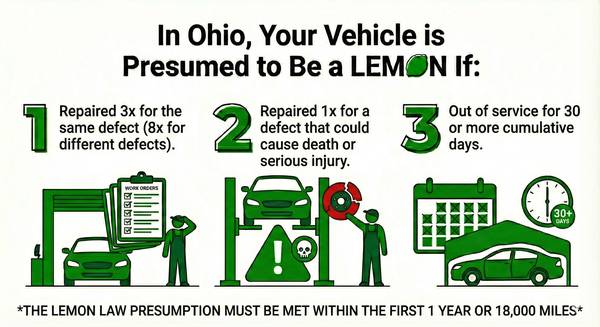
Before beginning the process, owners should check whether their vehicle defect qualifies and if they are still within the reporting deadlines.
Afterwards, the manufacturer will get a few attempts to repair the problem. The number of chances they get will depend on the nature of the defect, as life-threatening defects have special conditions.
If the defect persists, the manufacturer must provide the owner with a comparable vehicle or refund the entire purchase price of the lemon. This compensation must include collateral fees incurred due to the defective vehicle.
Below is a more in-depth breakdown of Ohio's Lemon Law process:
Step-by-Step Process
Step 1: Check the Defect and Deadlines
The Ohio Lemon Law requires that your vehicle be either newly purchased or leased for a minimum of thirty days. The defect must also substantially impact the vehicle's overall value, safety, or performance. Comparatively minor issues, such as radio static, do not qualify.
Additionally, the defect must be noticed and reported to the seller within one year or 18,000 miles following the date of original delivery. The vehicle is not protected by the Lemon Law if either condition lapses.
Step 2: Bring the Vehicle to the Seller
Manufacturers and their agents (dealerships) typically maintain service facilities to address nonconformities. They must have a reasonable chance to correct the defect.
Ohio presumes that a vehicle is a lemon if the manufacturer has failed to correct the same defect three times or separate defects eight times. The condition is also fulfilled if the vehicle is out for repair for a cumulative total of thirty days or more.
Manufacturers have less leeway when dealing with defects that can cause death or serious bodily injury. Their repair facility only has one chance to fix these defects before compensating the consumer.
It is recommended that you provide a written description of the defects before the first repair attempt. Mechanics must also describe the repair, even if the warranty covers all the service costs.
Maintaining these records provides multiple benefits, including:
- Show separate repair attempts on the same defect
- Track how many days the vehicle has been out of service
- Record odometer readings when calculating collateral fees
- Cost of repairs
Step 3: Review Arbitration
The Ohio Attorney General's Office approves arbitration programs for Lemon Law disputes. Arbitration involves a neutral third party that reviews the case and makes an unbiased decision on whether your vehicle is a lemon and what acceptable compensation is.
Many manufacturers participate in one of these programs to streamline the process. Participating manufacturers will inform you of the arbitration process in the warranty materials.
However, not all arbitration programs are state-certified, so you should verify the program's credentials with the Attorney General's Consumer Protection Section. Nor are consumers required to follow the arbitration board's decision.
Step 4: Request Compensation from the Manufacturer
You can request a refund after giving the dealership a reasonable opportunity to fix the defect. The request must be sent via a certified letter to the manufacturer. The send address will be in the owner's manual, but the dealership will also have the information.
The letter should contain a detailed description of all the vehicle's defects and any attempts made by the dealership's repair facility to rectify them. You may include copies of the facility's invoices, which should include the necessary information.
Lastly, include your desired type of compensation and your vehicle's VIN (Vehicle Identification Number). This number allows the manufacturer to track the repair history and determine the refund terms independently.
Step 5: Court Action
If available, you must pursue arbitration before going to court. However, this is only required if the manufacturer participates in a program that is certified by the Ohio Attorney General's Office.
Manufacturers must follow arbitration, but consumers can appeal in court if they disagree with the board's decision. This step is where copies of repair attempts and communications with the seller are most useful. They can prove that the defect exists and cannot be fixed through normal means.
Some attorneys specialize in Lemon Law claims, who can judge whether you have a claim and navigate the process. In successful claims, the manufacturer pays the consumer's attorney fees. This means there is little risk in consulting a professional.
Ohio Lemon Law Qualifications

Having a defect isn't enough to make a lemon. Vehicles must meet several conditions before the owner is entitled to a refund or replacement. These conditions help prevent bad faith claims and ensure that both the consumer and the manufacturer are treated fairly.
- The vehicle was sold in Ohio
- Defect is substantial and breaches the warranty
- Be a qualifying vehicle type
- The defect was noticed within the protected period
- The manufacturer failed to repair the defect in a reasonable time
Substantial Defect
Nonconformities refer to defects that breach the written or express warranty. Most vehicles come with a written warranty at the time of sale, outlining the manufacturer's guarantees regarding the vehicle's quality and performance.
Even if you don't have a warranty, the Federal Magnuson-Moss Warranty Act applies an express warranty to vehicles, entitling owners to a safe and dependable mode of transportation. So, new vehicles are always covered.
However, breaking the warranty isn't enough to meet Ohio Lemon Law standards. The defect must substantially affect the vehicle's use, value, or safety. This standard can sound vague, which is where arbitration boards come in handy.
However, in most cases, a substantial defect refers to problems that would impair your ability to control the vehicle. For example, a missing side mirror or a sputtering engine would render you incapable of driving safely, whereas a bumper dent is only a cosmetic issue.
Manufacturers may try to argue that the defect is the result of improper owner maintenance or abuse. Defects not arising from natural wear or a manufacturing error are not covered by the Ohio Lemon Law.
Vehicle Types
Ohio defines motor vehicles in Section 4501.01 of its Revised Code. The covered vehicle types include passenger cars, motorcycles, light trucks, and the non-utility portions of recreational vehicles.
The vehicle must also have been purchased for personal use. Vehicles purchased for resale are not protected under this policy. The section also states that "motor vehicles" refers only to wheeled, non-commercial motor vehicles. This removes heavy-duty equipment, trailers, and boats from coverage.
Unlike some other states, Ohio's Lemon Law does not cover used vehicles. This exemption remains unchanged, even if the vehicle is still within the protected deadline. The original owner must retain the title and file the lemon claim.
Failed Repair Attempts
Lemon Laws provide manufacturers with limited opportunities to rectify nonconformities before requiring consumer compensation. This limit prevents sellers from constantly trying new things, thereby depriving consumers of reliable transportation.
Ohio determines whether the manufacturer has made reasonable attempts by measuring the number of repair attempts or the total days in the shop.
Manufacturers are allowed three attempts to address the same defect and eight attempts for multiple different defects. This limit is reduced to a single attempt if the defect has the potential to cause death or serious bodily injury.
The Lemon Law also protects consumers from being without their vehicle for an unreasonable amount of time. Dealer service facilities can only hold a vehicle for a cumulative total of 30 days before it is deemed a lemon.
Only one of the previous conditions must be met before contacting the manufacturer for compensation. You should contact the manufacturer directly, as dealerships may recommend repeated repairs.
Ohio Lemon Law Rights Period and Time Limit
Consumers must report the defect within a limited window to receive protection. The initial reporting deadline lasts until one of the following occurs:
- One year has passed from the vehicle's original delivery date
- The vehicle is driven 18,000 miles
The vehicle owner must report the defect to the dealership and attempt to initiate repairs within these deadlines. However, they do not have to send a certified letter to the manufacturer at this point.
The manufacturer is obligated to complete necessary repairs, even if subsequent repair attempts occur after the deadline has passed. For example, you can continue to schedule repair attempts after 14 months, so long as you first reported the issue within 12 months.
After the manufacturer fails to repair the vehicle reasonably, you must notify the manufacturer in writing. This deadline lasts five years after the vehicle's original date of delivery.
This rights period prevents bad faith claims that occur due to long-term wear or abuse, while ensuring that consumers receive repairs that bring the vehicle in line with the warranty.
Refer to the step-by-step process above to ensure your report and repair timeline meet Ohio's legal requirements.
Compensation and Remedies Under Ohio Law
Vehicle owners can seek multiple remedies under the Ohio Lemon Law. The manufacturer must comply with the consumer's chosen form of compensation, whether that is a refund or a comparable replacement vehicle.
Refund
A refund requires the manufacturer to accept the return of the vehicle and reimburse the consumer for the full purchase price. This includes the original cost of the car, as well as collateral expenses like registration, title fees, and rental vehicles.
In a refund, the manufacturer also pays off parties with a secured interest in the title. Credit lenders deduct their portion from the refund, and the remainder is delivered to the consumer. The manufacturer also covers any reasonable fees for canceling the loan.
Replacement
Many other states require that manufacturers provide a "comparable" replacement. This typically refers to a vehicle of the same make and model as the original vehicle. However, Ohio's Lemon Law only stipulates that the manufacturer offers a replacement that is acceptable to the consumer.
This means that the manufacturer could offer a vehicle whose value is lower than the original purchase price. So, you must confirm the replacement's value before accepting any offers.
The manufacturer will also contact lienholders, informing them of the replacement. However, the lienholder is not obligated to finance the replacement or cancel the lien on the lemon. Their refusal may make seeking a refund a better option, as it will pay off the loan first.
Why Work with an Ohio Lemon Law Attorney

Hiring an Ohio Lemon Law attorney can simplify the process and dramatically improve your chances of success. These lawyers specialize in Ohio's consumer warranty statutes and know how to present repair records, correspondence, and service reports to strengthen your claim.
An attorney also ensures that you meet strict filing deadlines and procedural requirements, such as participating in arbitration before initiating a lawsuit.
Most importantly, they typically work on a contingency basis, meaning they are paid only if you win. When you do, the manufacturer is responsible for covering court expenses and reasonable attorney's fees.
FAQ
No, Ohio's Lemon Law does not cover used vehicles. Only new vehicles or leased vehicles with contracts of 30 days or more are protected.
You must report the defect to the dealership within one year of the original date of delivery or the first 18,000 miles. However, you have up to five years from the delivery date to complete the entire claims process.
Arbitration is required before going to court if the manufacturer participates in an Attorney General-certified arbitration process. Consumers can ask the dealership if one is available or check their owner's manual for the information.
A substantial defect is one that seriously impacts a vehicle's use, value, or safety. They include problems such as brake or steering wheel failure, and not minor cosmetic issues.
Affected owners may choose between a refund and a replacement. Refunds are valued at the vehicle's original purchase price, plus any incurred costs, such as title fees, taxes, and towing. Replacements involve receiving an acceptable replacement vehicle from the manufacturer.
Yes. Lemon Law Attorneys are typically paid from the earnings of a successful claim. Most also operate on a contingency basis, only accepting payment if they win.
Leased vehicles are protected as long as the lease contract lasts at least thirty days. Refunds repay the security deposit, monthly payments, taxes, and other incurred costs.
Ohio law requires that manufacturers include a clear notice in the owner's manual. The notice reads, "IMPORTANT: IF THIS VEHICLE IS DEFECTIVE, YOU MAY BE ENTITLED UNDER STATE LAW TO A REPLACEMENT OR TO COMPENSATION."
The manual also outlines the process for sending a certified letter to the manufacturer and whether an Attorney General-certified arbitration program is available.
Ohio Resources


FREE Vehicle Search
- Accidents
- Problem Checks
- Title Records
- Recalls
- Values
- Specs


-
 InfoPay, Inc. (dba GoodCar) is an Approved NMVTIS Data Provider
-

-
