


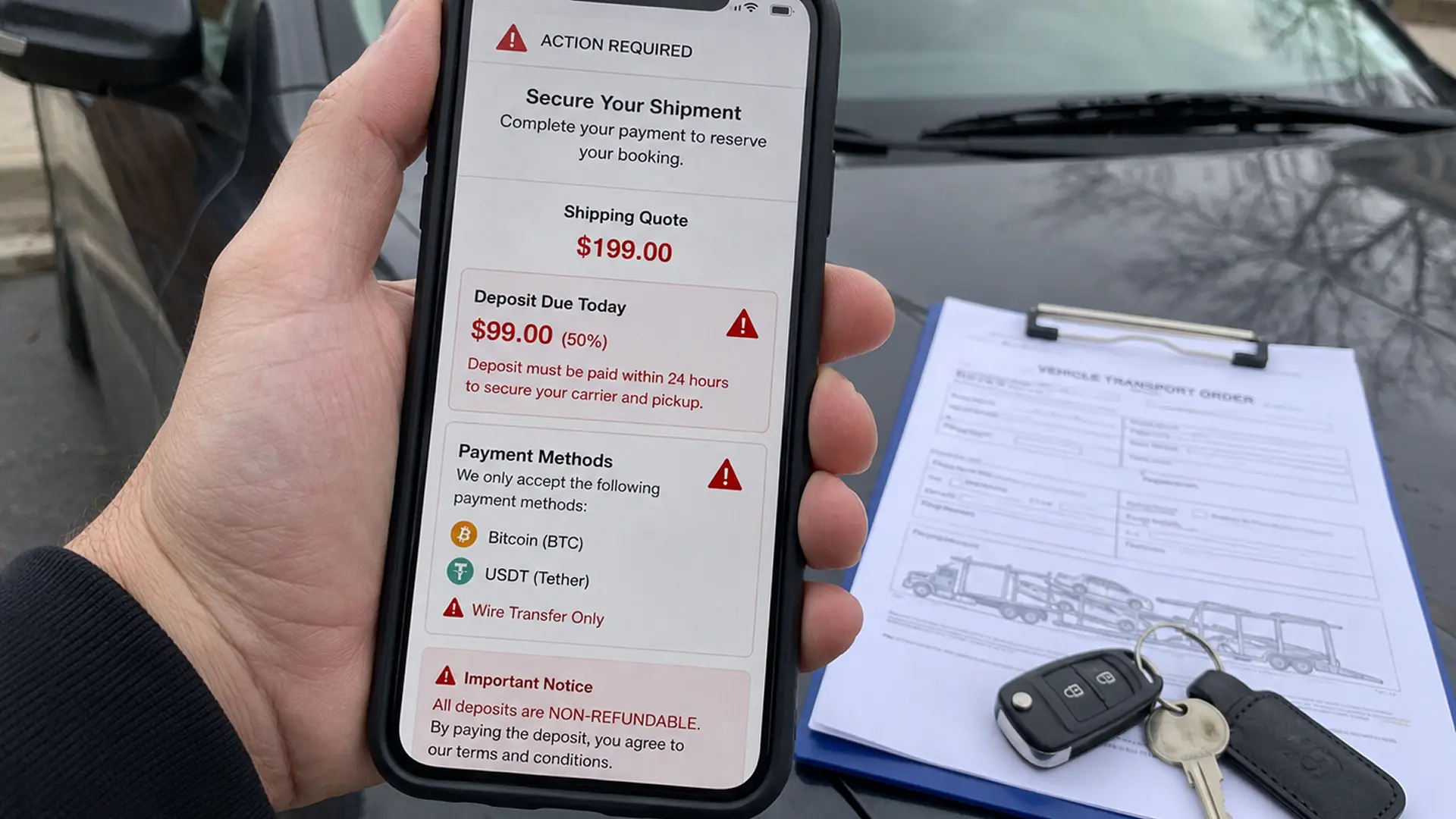
Trusting your vehicle to someone else's care is stressful enough without the added worry of car shipping scams. But the reality is that while most auto transport companies operate legitimately, auto transport scams do happen if you're not paying attention. This guide will explore how to avoid car shipping scams and the common red flags to watch out for.
Why Auto Transport Scams Happen
In the auto transport industry, there are many moving parts. You've got the brokers, carriers, and marketplaces, and while most of these companies operate legitimately, scams can occur, and they may be more common than you think. Because the car shipping industry is in high demand and frequently uses online services and deposits, the opportunity for scams is also high. In online environments, fake websites, false promises, and bait-and-switch tactics are common and perfect breeding grounds for fraud.
But that doesn't mean you need to avoid booking your car shipping online. It just means you need to be smart about it and know the red flags.
Common Auto Transport Scams to Watch For
Vehicle shipping is a very cost-effective and convenient way of transporting your vehicle, but it does come with risks. By understanding the risks and common schemes used, you'll be able to ship your vehicle with peace of mind.
1 Extremely Low "Too-Good-To-Be-True" Quotes
This is the most common type of car shipping scam, and luckily, it's pretty easy to spot if you know what to look for. Companies will advertise very low quotes compared to competitors. Once they collect the deposit from you, that low price will suddenly jump due to "unexpected factors" like changes to the route, vehicle weight, fuel prices, or the original rate not being accepted by the carrier.
Because you've already paid the deposit, companies will put you in a difficult spot, leaving little choice but to agree to pay the extra costs.
2 Large Upfront Deposits
Deposit scams are common with unlicensed brokers, who require full payment to reserve your transport date. While deposits are common in car shipping, excessive amounts or unusual payment terms, such as wire transfers or cryptocurrency, are signs of a scam. What usually happens after paying the deposit is that the broker won't assign your car to a carrier, and all communication suddenly stops.
3 Fake Carriers or Brokers
Because most of the car shipping process is done online, suspicious companies pop up to take advantage by posing as fake carriers or brokers. They'll create fake car shipping websites with stock content, which makes them hard to spot at first glance.
Signs that a carrier or broker might be fake include:
- No physical business address
- No valid or verifiable USDOT or MC number
- No proof of active insurance
- Fake, copied, or unusually poor reviews
In addition to knowing the red flags, it is strongly recommended that you verify the carrier's DOT and MC numbers (motor carrier) in the FMCSA (Federal Motor Carrier Safety Administration) database.
4 No Insurance Documentation
All licensed carriers are required to carry cargo insurance according to FMCSA regulations, and any reputable company will be more than willing to share this information with you. You can verify insurance coverage by using the FMCSA database. A lack of documentation is a serious warning sign that the carrier is not legitimate.
5 Disappearing Companies After Payment
If the company is quick to take your money but issues no dispatch updates, leaves calls unanswered, and provides vague responses, it's a sign of a scam. Before paying any money, it is critical that you have confirmed communication and written agreements.
How to Verify a Legitimate Auto Transport Company
Don't get caught out. Use this checklist to avoid being scammed:
- Verify the USDOT and MC numbers All legitimate car shipping companies will have a USDOT and an MC number. You can request these numbers and verify them using the FMCSA's database. Make sure that the information you've been given matches what's in the database.
- Check FMCSA registration You can use the SAFER website to check the status of a USDOT number.
- Request a certificate of insurance Under FMCSA regulations, all car shipping carriers must carry cargo insurance, and you can request a copy of this certificate. Companies that refuse to share this with you are more than likely to be illegitimate.
- Review the written contract terms It's vital that you read the fine print carefully and that all fees, dates, and payment terms are explained clearly. A good company will be more than willing to answer your questions and concerns.
- Confirm contact information Because most of this process is online, communication is crucial, so you need to confirm that information. Phone numbers that go straight to voicemail are a good indicator of a shady company.
- Read independent reviews Don't just rely on website testimonials. You need to look through reviews on multiple websites, like Google and Trustpilot, for a thorough overview.
 A few minutes of research before booking, checking USDOT numbers, insurance, and reviews, can save you from a costly scam.
Warning Signs Before Booking
Before handing over any money, pay close attention to the following warning signs:
- Pressure to book immediately
- Refusal to provide documentation on insurance or USDOT numbers
- No written agreement
- Phone numbers that go straight to voicemail
- Prices that are drastically lower than those of competitors
- Vague answers about pickup windows
- Excessively large deposits
Safe Payment Practices
Protect yourself from potential scams by avoiding full upfront payment and using only secure payment methods. If a company is asking for wire transfers, cash, prepaid cards, or cryptocurrency, this is your signal to run.
It is always best practice to keep all written receipts and fully understand the refund policy for any disputes.
Protecting Yourself During Pickup and Delivery
Scams don't just happen during the booking process but also during pickup and delivery. During pickup, carefully inspect your vehicle alongside the driver and make sure to review the Bill of Lading for any discrepancies.
It's recommended to also take timestamped photos of the vehicle's condition during the inspection. These photos, along with the Bill of Lading, will be used during the delivery inspection to verify that no damage was caused by the carrier. If there is damage, do not sign the clean Bill of Lading.
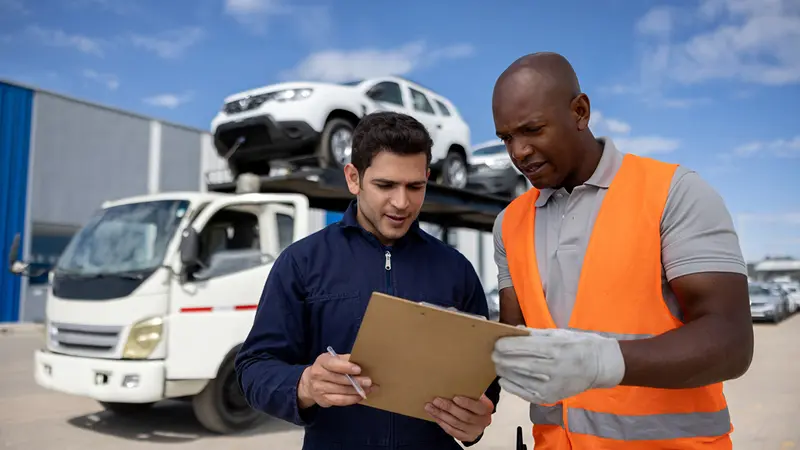 Reviewing the Bill of Lading carefully alongside the driver at pickup protects you if a damage dispute comes up later.
Insurance and Claims Protection
All carriers will have cargo insurance, which includes basic coverage for damage resulting from the carrier's negligence. Before paying for shipping, it's recommended to review exactly what's covered and the limits. Remember, a company with no insurance documents is a big red flag.
If your vehicle is damaged during transit, it's important to file claims as soon as possible. You'll start by notifying the carrier of the damage. The carrier will direct you on how to file the claim.
How to Avoid Auto Transport Fraud Step-by-Step
Here's how to avoid auto transport scams:
- Compare multiple quotes from at least three car shipping companies
- Verify licensing and insurance using the FMCSA database
- Review the written contract for unusual or unclear terms
- Confirm payment terms and watch out for unusual payment terms like wire transfers
- Document vehicle condition using timestamped photos and correct BOL
- Stay reachable during pickup
FAQs About Auto Transport Scams and Safety
Yes, which is why knowing the warning signs is important.
You can verify their USDOT and MC numbers through the FMCSA database.
No, it's recommended to avoid paying the full amount.
First, confirm the schedule and check that you have not missed communication about a schedule change. You should also contact the broker or carrier to assist.
The carrier will share the process with you.
Yes. While the car is exposed to the elements, this shipping method is common and safe.
The safest shipping method is enclosed car shipping because of the added protection from the elements.