


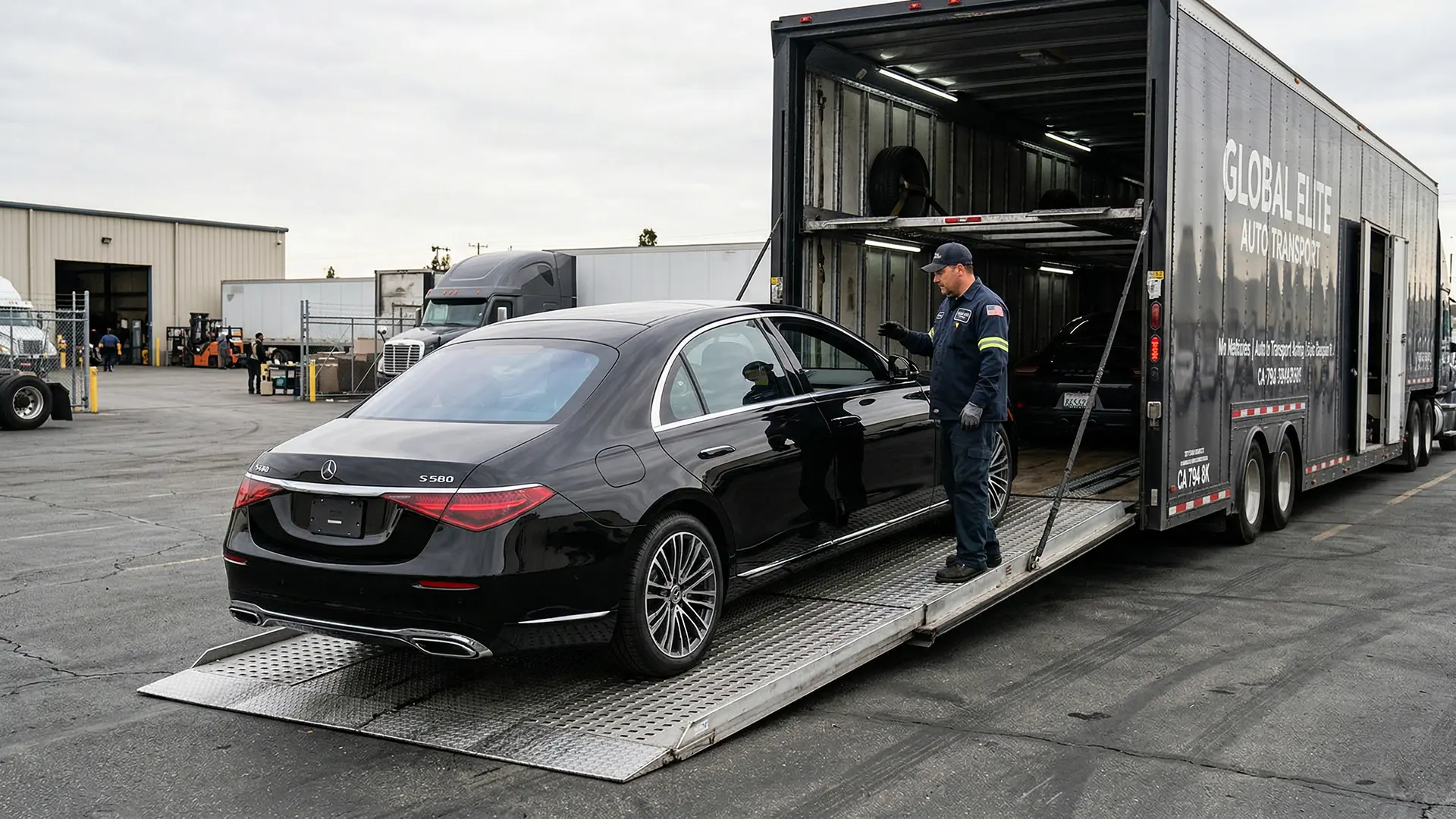
If you've got a larger, heavier, or more complex vehicle, getting it from A to B can be challenging. That's why specialty vehicle shipping exists. Unlike standard vehicle shipping, this type of service is designed to safely transport non-standard vehicles. Whether you're shipping a new yacht or a heavy-duty truck, this guide covers everything you need to know, from how it works and the costs involved to the equipment used and the preparation steps.
What Is Specialty Vehicle Shipping?
Specialty vehicle shipping is a customized transport service typically used for high-value or non-standard vehicles, such as oversized, heavy, marine, or commercial vehicles that cannot be transported on standard car carriers. This type of shipping differs from standard vehicle shipping in that it often includes enhanced insurance coverage, enclosed transport, and staff trained to handle specialized equipment.
One of the biggest differences between specialty and standard vehicle shipping is that specialty shipping can offer greater protection, especially when enclosed transport is used. However, this also means the service often comes with a higher price tag.
Boat Shipping
Boats are often considered specialty shipments because of their size and unique transport requirements. Unlike standard vehicles that can be driven onto a carrier, boat shipping may require specialized equipment. As a boat owner, you typically have two transport options: trailer transport or cradle support.
Boat trailers are often the default option because they're easier to load and transport. The trailer is designed to support the boat's hull and absorb road shock. For boats that can't travel on their own trailer, such as larger boats with wider beams or boats moving long distances, cradle transport may be recommended.
With cradle transport, the boat is loaded onto a custom-built cradle and secured to a flatbed trailer. While this is usually the more expensive option, it is also one of the safest methods for interstate and seasonal transport.
Yacht Transport
Moving oversized yachts can be more complex than moving other vehicles due to their sheer size. Yachts are often considered oversized if they exceed 8.5 feet in width or 13.5 to 14 feet in height. Transporting a yacht by road will often require permits and, in some cases, escort vehicles. Depending on the size and route, some shipments may also require additional traffic coordination.
Water-based yacht transport is also an option. In some cases, a transport vessel is used to carry yachts in a more controlled environment. However, this method can cost more.
Marina-to-marina delivery is another popular option, in which a professional crew sails your yacht to its destination. This option is often more practical for larger yachts.
Golf Cart Shipping
Unlike shipping yachts, golf cart transport is much less complex. These vehicles can be transported on open trailers for a more affordable option or enclosed trailers for increased protection and longer distances. Golf carts that are not drivable can also be shipped on liftgate trucks. Both options can work well for short-distance deliveries, such as community relocations.
Truck Transport (Heavy-Duty and Commercial)
Heavy-duty trucks, such as pickup trucks, box trucks, utility trucks, modified or lifted trucks, and fleet vehicles, may require flatbed or heavy-haul transport. Shipping these trucks may require specialized equipment, such as multi-axle and lowboy trailers.
How Specialty Vehicle Shipping Works
Specialty vehicle shipping works similarly to standard shipping, but there are some differences in paperwork, logistics, and loading.
- Custom quote - The process begins by requesting a quote from a specialized shipping company. Because this service is customized, you will need to provide details on the vehicle type, pickup and delivery locations, preferred transport type, and dates.
- Accurate dimensions and weight - Regardless of the transport method you use, accurate dimensions and weight must be provided. This helps the transport company determine what equipment, route planning, and permits may be needed.
- Route planning and permits - Oversized vehicles, such as yachts and heavy-duty trucks, may require special permits and may not always be able to use routes with low-clearance areas. Additional route planning is often needed.
- Secure loading - Once the logistics have been finalized, the vehicle will be loaded using special equipment depending on the shipping method and vehicle type. Common equipment includes liftgates, cranes, hydraulic trailers, and boat cradles. During this stage, an inspection usually takes place, and the Bill of Lading is completed.
- Specialized transport - Heavy or oversized vehicles may be moved using specialized equipment such as flatbed trailers, lowboy trailers, and boat cradles.
- Delivery and inspection - Upon delivery, a final inspection is performed to make sure the vehicle is in the same condition noted in the Bill of Lading.
Equipment Used in Specialty Transport
To safely move oversized and non-standard vehicles, shipping companies may use specialized equipment such as:
- Flatbed trailers: Used for wide or long loads.
- Step-deck trailers: Also known as drop-deck trailers, these are designed for taller cargo that needs more height clearance.
- Lowboy trailers: Heavy-duty trailers with a low deck height used for heavy and tall cargo.
- Hydraulic trailers: These trailers adjust to the weight and size of the cargo by lowering, raising, or tilting the trailer.
- Boat cradles: Made from wood or steel and designed to securely hold a boat's hull.
- Liftgate trucks: Trucks equipped with a hydraulic platform on the rear that acts like an elevator.
- Heavy-haul carriers: Designed to transport oversized cargo using heavy-duty trucks, lowboys, and multi-axle trailers.
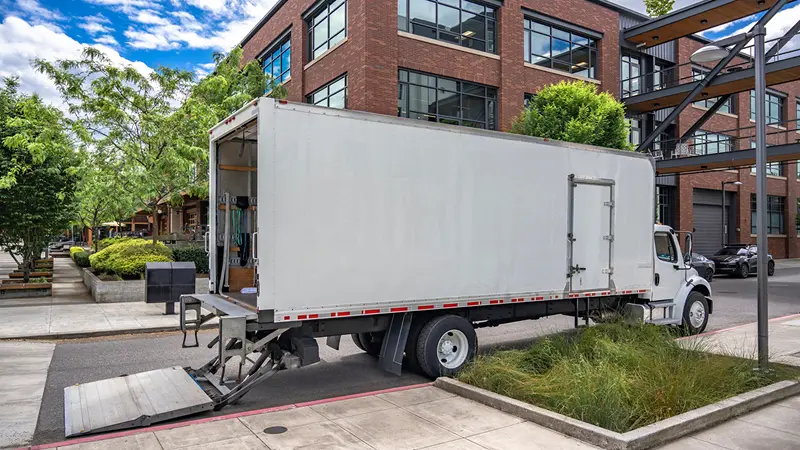 Liftgate trucks use a hydraulic platform at the rear to safely load and unload vehicles that cannot be driven or rolled on, essential for non-running or specialty cargo.
How Much Does Specialty Vehicle Shipping Cost?
The cost of specialty vehicle shipping varies more widely than standard car shipping because of unique size, weight, permit, and escort requirements.
| Vehicle Type | Typical Cost Range | Notes |
|---|---|---|
| Small boats | Varies by trailer type and distance, with prices often starting around $1.50 to $4.00 per mile | Easier and less expensive if already on a trailer |
| Yachts | Higher due to oversize permits, with prices often starting around $2,000 | Escort vehicles and permits may be required |
| Golf carts | Generally lower than full-size vehicles, starting around $100 for short moves and $400 or more for longer distances | Can be shipped open or enclosed |
| Heavy-duty trucks | Depends on weight and dimensions, with cost per mile often starting around $1.25 to $2.50 or more | May require a heavy-haul trailer and specialized loading equipment |
What Affects Specialty Shipping Pricing?
Multiple factors determine the price you see in a quote. Using a boat shipping cost calculator or specialty vehicle shipping calculator can give you a rough idea of costs.
Dimensions (height, width, length)
One of the biggest factors in the quote is the vehicle's size. Larger vehicles often require specialized equipment and handling, which may result in additional fees. Oversized vehicles may also require route planning and restricted travel routes.
Total weight
Heavy vehicles may require heavy-haul transport and specialized handling equipment. Some routes also have weight restrictions that need to be accounted for.
Escort vehicle requirements
Oversized vehicles, such as certain heavy-duty trucks and yachts, may require escort vehicles to accompany the shipment, manage traffic, and help ensure road safety.
Permits and oversize regulations
Depending on state requirements, larger vehicles may need special permits to travel on certain roads or through certain regions. These permit costs are typically added to the shipping total.
Route complexity
The route also plays a major role in pricing. Routes with restrictions or mountainous terrain may require additional planning, which can increase costs. Longer routes on major highways can sometimes result in lower per-mile costs.
Fuel costs
Long-distance or heavy-duty shipping is affected by fuel costs, which can fluctuate based on the shipment's size and weight.
Loading equipment needed
Specialty shipping often involves specialized loading equipment, such as hydraulic lifts and cranes, as well as additional labor. These can all increase the cost of shipping.
Seasonal demand
Prices often increase during high-demand seasons like summer and early fall. Being flexible with your dates may help you secure a lower rate.
Preparing a Specialty Vehicle for Transport
Prevent delays and damage by properly preparing your vehicle.
- Drain fuel or water tanks when required, especially for boats
- Deep clean the vehicle for inspection, making it easier to document the existing condition
- Remove loose accessories
- Remove personal belongings
- Secure detachable components
- Document the condition with photos
- Confirm measurements
- Disconnect batteries if required
- Disable alarms and electronics if needed
Specialty Vehicle Shipping vs. Standard Auto Transport
| Feature | Specialty Vehicle Shipping | Standard Auto Transport |
|---|---|---|
| Equipment differences | Flatbed trailers, step-deck trailers, lowboy trailers, hydraulic trailers, boat cradles, liftgate trucks, and heavy-haul carriers | Open or enclosed car carriers |
| Pricing | Depends on size, weight, permits, route complexity, and special equipment | Depends on distance, vehicle size, and transport type |
| Permits | Often required for oversized or heavy vehicles | Rarely required |
| Scheduling | More complex and may require additional route planning | Simpler and usually more flexible |
| Complexity | Higher complexity due to restricted routes and specialized handling | Typically more straightforward |
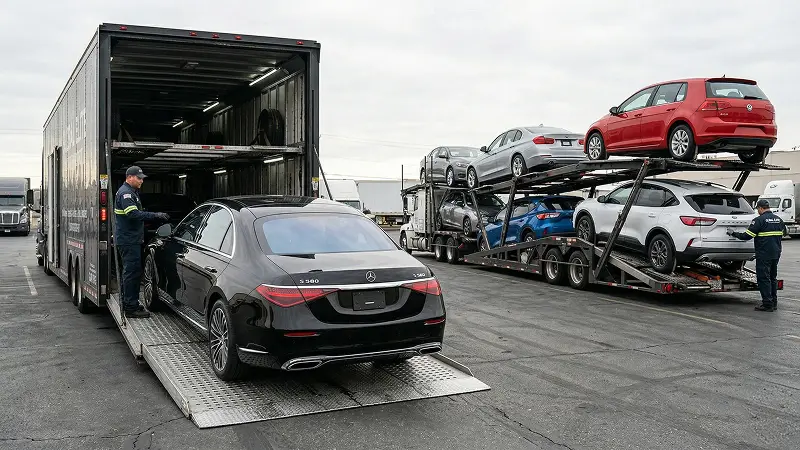 Specialty vehicle shipping often involves enclosed carriers for high-value vehicles, a stark contrast to the open carriers used for standard auto transport.
Frequently Asked Questions
Yes, but they may require state-issued permits and escort vehicles depending on their dimensions and route.
Yes, road transport for yachts often requires permits, depending on the size, route, and destination. International shipments may also require import or export documentation.
Golf cart shipping can be done using either an open or enclosed trailer. Open transport is commonly used for shorter distances, while enclosed transport offers more protection.
The timeline depends on multiple factors, but transit times may start around four to six days for distances of 1,000 miles or more.
Yes, most reputable shipping companies provide insurance coverage for damage during transport. It's still important to confirm the policy limits and what is covered.
You'll typically need to provide the vehicle type, size, weight, condition, pickup and delivery locations, and preferred dates.
Yes, but they may require specialized equipment and handling, which can increase the cost.