


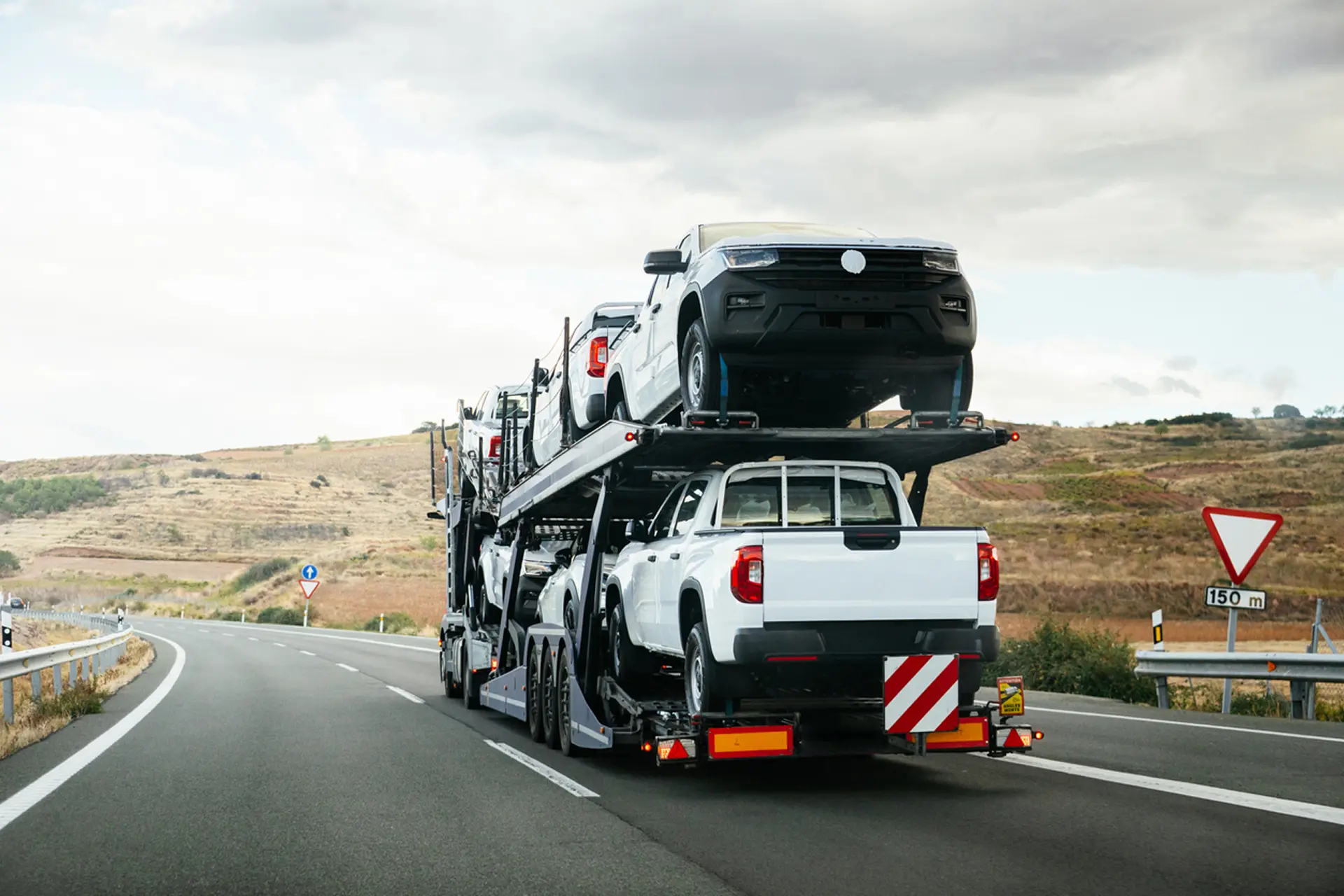
If you've just started the process of shipping your vehicle, you've likely come across a wide range of transport options. From open carrier trucks and single-car haulers to multi-level trailers, these carriers are the backbone of the vehicle shipping industry. Each trailer type is designed for specific use cases, whether you're moving a standard sedan, an oversized truck, or a vehicle that needs specialized handling.
Understanding the different types of trailers used in car shipping can help you choose the car carrier truck that best fits your vehicle, route, and budget.
Open Car Carrier Trucks
Open car carrier trucks are the most common method for shipping vehicles. You've probably seen them hauling multiple cars along the highway. They're widely used because they are efficient, readily available, and usually the most cost-effective option. Since open carriers can often transport up to 7 to 10 vehicles at once, the cost per vehicle is usually lower than with more specialized shipping methods.
The tradeoff is that vehicles on open carriers are exposed to weather and road conditions, including dirt, dust, and debris. For many standard vehicles, that tradeoff is acceptable. For high-value, classic, or exotic cars, however, open transport may not offer the level of protection you want.
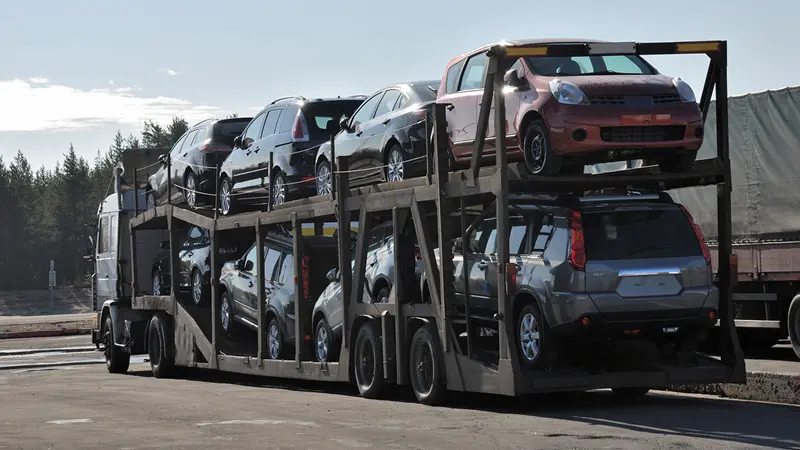 Open carriers can move 7-10 vehicles at once, making them the most cost-efficient option for standard vehicle shipping.
Enclosed Auto Transport Trucks
If you want a higher level of protection, enclosed carriers are often the preferred choice. These trucks fully cover the vehicles they transport, which helps shield high-value, vintage, luxury, and exotic cars from weather and road debris. Enclosed carriers can be single-level for smaller loads or designed to transport several vehicles at once.
Because enclosed transport offers more protection and typically operates with lower overall capacity, it usually costs more than open shipping. Enclosed trailers can also have tighter size constraints, especially for height and width, which can matter when shipping lifted or oversized vehicles.
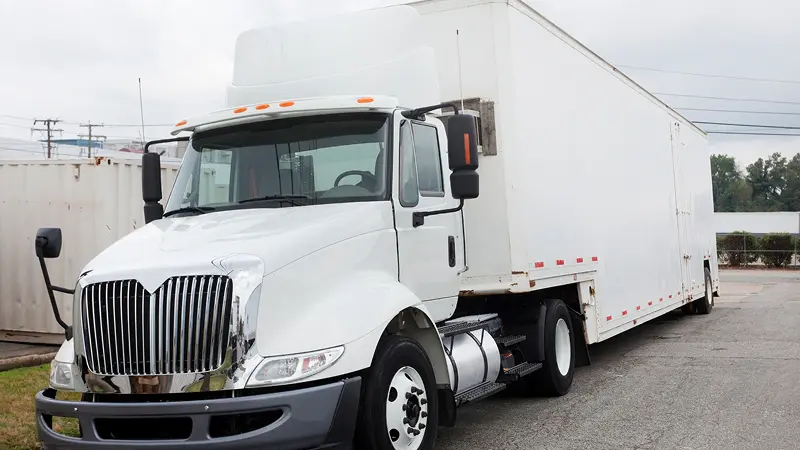 Enclosed carriers fully protect vehicles from weather and road debris - the preferred choice for high-value, luxury, and exotic vehicles.
Single-Car Haulers
Single-car haulers, including tow trucks and small trailers, are a practical option for shorter routes, urgent deliveries, dealership moves, or high-value vehicles that require direct transport. Because they are smaller, they can often access narrow roads, tight neighborhoods, or driveways that larger multi-car carriers cannot reach.
That added convenience usually comes at a higher per-vehicle cost. And unless the hauler is enclosed, the vehicle will still be exposed to the elements during transport.
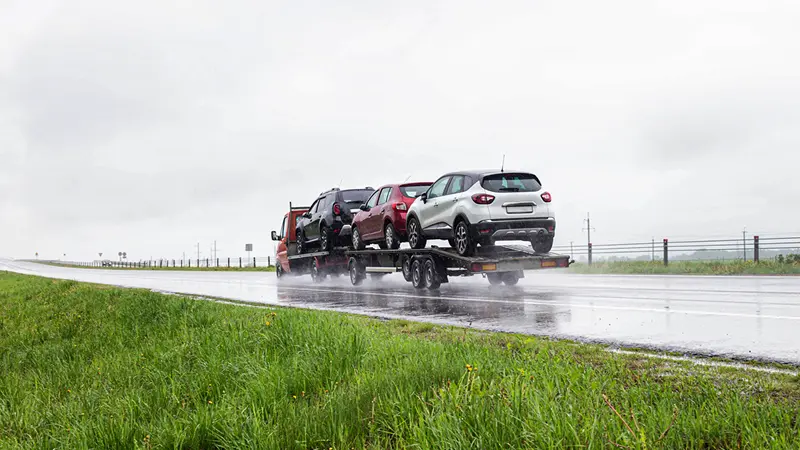 Single-car and small haulers can reach locations that full-size carriers can't - useful for tight residential streets or urgent deliveries.
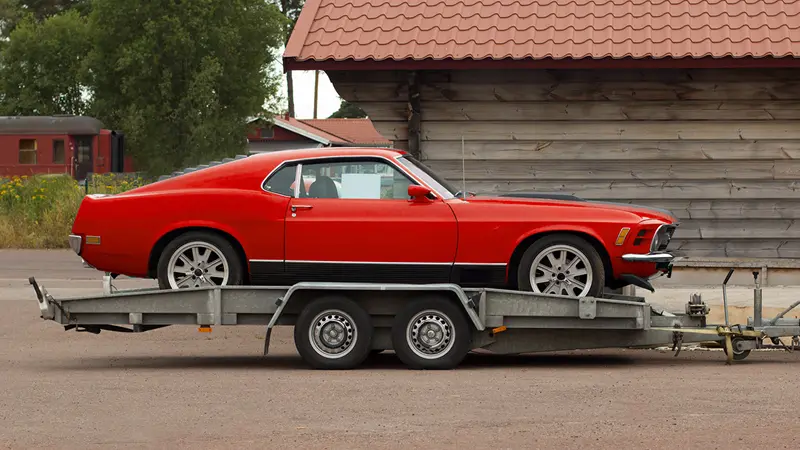 For high-value or classic vehicles, a single-car hauler provides dedicated, direct transport without sharing space with other vehicles.
Flatbed Auto Transport Trucks
For oversized vehicles, non-operational vehicles, or specialized deliveries, flatbed trailers are often the recommended option. These open flatbeds are well suited for heavily modified vehicles, oversized loads, low-clearance vehicles, or equipment that cannot be safely loaded onto a standard carrier.
Flatbeds are also commonly used for priority shipments and for vehicles that require easier loading and unloading. While they are extremely flexible, they are generally more expensive than standard open transport.
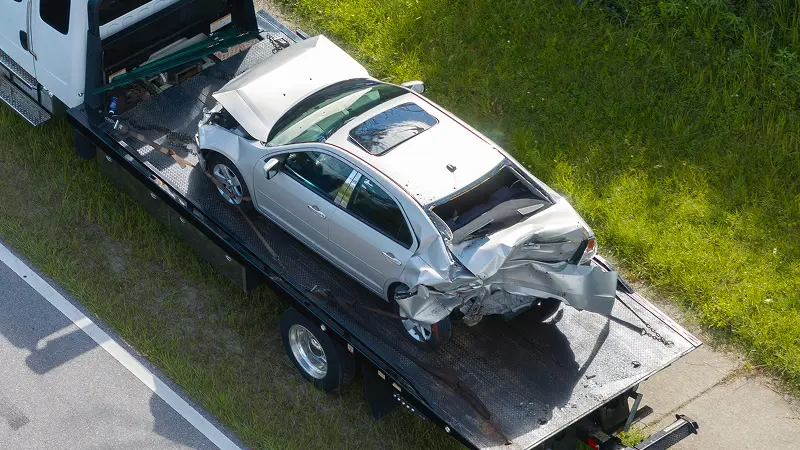
Flatbed trucks are ideal for non-running, damaged, or oversized vehicles that can't be safely loaded onto a standard multi-car carrier.
Multi-Level Car Transport Trailers
Transporting multiple vehicles at once is commonly done with multi-level car carrier trailers. These two-level systems use ramps, hydraulic components, and secure tie-down methods to load and unload vehicles efficiently. Because they can move several vehicles in one trip, they help reduce the cost per vehicle.
These trailers are especially common on long-distance routes, dealership moves, and high-volume shipping lanes where efficiency matters most.
Hard-Sided vs Soft-Sided Enclosed Transport
Protection is one of the main reasons people choose enclosed transport, and there are two common enclosed trailer styles: hard-sided and soft-sided.
Hard-sided enclosed carriers provide the highest level of protection. These trailers use solid walls, often made from metal or fiberglass, to create a more sealed transport environment. That added shielding can help protect against weather, road debris, and outside visibility, which makes hard-sided transport especially attractive for luxury, collector, and exotic vehicles. Because of that protection, hard-sided enclosed shipping usually costs more.
Soft-sided enclosed trailers also provide added protection, often at a lower price point than hard-sided options. These carriers use durable weather-resistant fabric panels stretched over a trailer frame. They still offer better shielding than open transport while allowing more flexibility in loading and operations. Soft-sided enclosed shipping is often used when customers want additional protection without paying for the highest-end enclosed option.
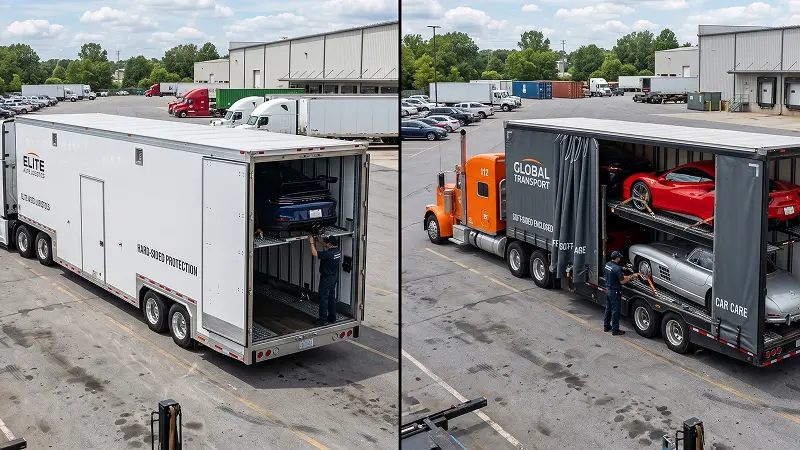
Hard-sided trailers (left) offer maximum protection with solid walls; soft-sided trailers (right) provide enclosed protection at a lower price point.
Auto Transport Trucks for Inoperable Vehicles
Vehicles that cannot be driven onto a trailer require specialized handling. In these cases, shipping companies may use equipment such as winches, liftgates, or specialized loading systems to move the vehicle safely onto the trailer.
Because this process requires additional equipment and labor, shipping an inoperable vehicle is often more expensive than shipping a standard running vehicle.
Commercial Fleet Transport Trucks
Commercial fleet transport is used to move multiple business vehicles, including vans, trucks, service vehicles, and dealership inventory. Depending on the vehicle type and volume, companies may use open carriers, enclosed carriers, or specialized flatbeds.
This type of shipping is commonly used by businesses, auctions, rental fleets, and dealerships for both regional and long-distance moves. Because fleet transport typically involves multiple vehicles, it usually requires more scheduling and coordination than one-off consumer shipments.
Regional vs Long-Distance Auto Transport Trucks
Not all transport trucks operate on the same kinds of routes. Some are better suited for regional moves, often under 1,000 miles, while others are designed for long-distance or cross-country transport.
Route type can affect both cost and delivery timing. Rural areas, mountain regions, and hard-to-access roads can slow down transport and increase the price, while major metro corridors and interstate routes tend to be more efficient.
How to Choose the Right Auto Transport Truck
Choosing the right auto transport truck depends on your vehicle type, distance, timing, budget, and the condition of the vehicle. Oversized, modified, and non-running vehicles usually need specialized equipment. High-value, classic, or exotic vehicles are often better suited for enclosed transport.
The best way to get an accurate recommendation is to give the shipping company clear information about your vehicle and delivery needs so it can match you with the right trailer type.
FAQ
Open carriers can typically transport between 7 and 10 vehicles at once, although total capacity depends on the size and weight of the vehicles being shipped.
Yes. Auto transport trucks are subject to federal transportation laws and safety regulations enforced by the Federal Motor Carrier Safety Administration (FMCSA).
Yes. Commercial auto transport trucks must comply with federal gross vehicle weight limits, which are generally capped at 80,000 pounds on U.S. highways.
Not always. Oversized vehicles may require specialized equipment such as flatbed trailers or other custom transport solutions.
Loading and unloading times vary depending on the number of vehicles, the trailer type, vehicle condition, and site access.
Some reputable shipping companies offer GPS tracking or shipment updates, but availability varies by carrier and route.
Carriers operate year-round, but severe weather can cause delays, route changes, or scheduling adjustments.
Yes. Dealerships may use different trailer types depending on vehicle mix, route needs, timing, and the level of protection required.
Auto transport carriers must follow the Federal Motor Carrier Safety Regulations (FMCSRs), along with other applicable federal and state transportation requirements.
Yes. Larger transport trucks can face more restrictions in tight residential areas, difficult terrain, and low-clearance routes, which can affect timing.