


PCS orders can be stressful. You've got to think about housing, relocating your family, filling out paperwork, and transporting your car. Military car shipping can be a lot more confusing than standard car shipping. You may be confused about things like what the government pays and the different shipping rules between deployment and PCS. This guide will explore everything you need to know about military car shipping.
What Is Military Car Shipping?
If you've received your permanent change of station (PCS) and started the car shipping process, you've probably noticed there are a lot of moving parts. Very simply, military car shipping is a service that transports a service member's car during an assignment, whether within the U.S. (CONUS) or overseas (OCONUS).
To make the move easier, the military sometimes covers shipping costs, especially for overseas moves. However, being an active service member does not automatically guarantee that the government will cover the costs. To have the military cover the cost of shipping your privately owned vehicle (POV), you must be an active-duty member with at least 12 months remaining on your overseas tour as of the date of turn-in. The vehicle also needs to meet certain requirements, like being a standard passenger vehicle in safe running condition. If all requirements are met, the government will only cover the cost of one POV. Additional vehicles will be provided at your own expense.
PCS Moves and Vehicle Shipping Basics
Military shipping, unlike standard car shipping, can be more confusing due to the use of multiple acronyms. If you've started the process of car shipping, you've likely come across terms like PCS, CONUS, and OCONUS. Understanding these terms can make this process a whole lot clearer.
Permanent Change of Station (PCS)
PCS is an order where a service member is officially reassigned to a new duty station. To help with the move, the military provides benefits such as moving expenses (HHG), Dislocation Allowance (DLA), and, in some cases, vehicle shipping.
CONUS (Within the U.S.)
CONUS refers to relocation within the U.S. and often includes benefits like a taxable CONUS Cost-of-Living Allowance (COLA) and basic housing allowance. Because the relocation is within the country, vehicle shipping is not always provided except for special cases. Moves of more than 600 miles may qualify for reimbursement.
OCONUS (Overseas Assignments)
Overseas assignments to duty stations such as Europe, Japan, or Hawaii will include military-paid vehicle shipping, provided all eligibility requirements are met. Other benefits include a tax-free Overseas Cost-of-Living Allowance (COLA) and Dislocation Allowance.
Deployment vs PCS Differences
Car shipping rules vary, which is why it's important to know the difference between deployment and PCS.
Deployment is a temporary and operational movement to a forward location. This move only lasts months compared to a PCS that can last for years. Service members are often deployed on active assignments to fulfill a mission or conduct combat operations. During deployment, the service member's family will remain at the home base. It's only during a PCS that a servicemember will need to relocate their entire household, including their vehicle.
Does the Military Pay to Ship Your Car?
The military doesn't automatically pay for all moves. It will depend on the type of military order and eligibility factors.
CONUS PCS Moves
For moves within the country, the military is unlikely to cover shipping costs unless there are special circumstances, like being medically unable to drive. However, some military servicemembers may qualify for Partial DLA (Dislocation Allowance), which they can use to help cover some costs.
OCONUS PCS Moves
For most overseas moves to locations like Germany, South Korea, Japan, Hawaii, Alaska, and Italy, the military generally covers the cost of shipping one personal vehicle. The rules on what is covered may vary by location and order.
For example, vehicles must be dropped off at a designated Vehicle Processing Center (VPC).
Multiple Vehicles
The military typically only covers the cost of shipping one vehicle overseas. Service members with multiple vehicles will be required to pay out of pocket.
Military Car Shipping Costs (If Paying Out of Pocket)
If you are moving within the country, there will be some costs you will need to pay out of your pocket.
| Move Type | Typical Cost Range | Notes |
|---|---|---|
| State-to-state (CONUS) | Varies by distance but typically costs $1.40 per mile | Based on open carrier shipping, the price per mile drops for longer distances. |
| Cross-country move | Higher total, lower per-mile starting from as little as $.60 cents per mile | Common for PCS coast-to-coast |
| OCONUS additional vehicle | Varies widely | Includes port handling fees |
The price you'll pay will depend on various factors, such as:
- Distance
- Vehicle type
- Timing
- Pickup location
- Market demand
Required Documents for Military Vehicle Shipping
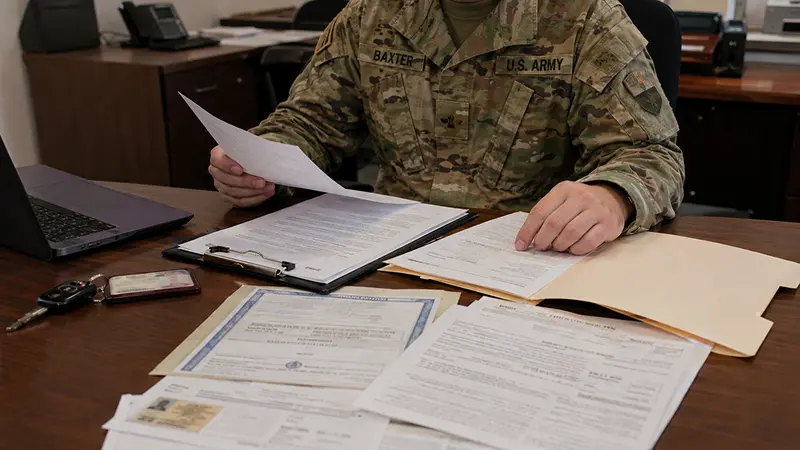
For a smooth and successful shipping journey, it's recommended to have all required documents correctly completed on hand. You'll first need the official PCS orders, including any amendments, your military ID, and proof of vehicle ownership, such as a valid title or registration. If your vehicle is financed, you'll need a notarized letter from the lienholder, and if someone else is handling the pickup, you'll need a power of attorney.
Shipping a Car Overseas (OCONUS Assignments)
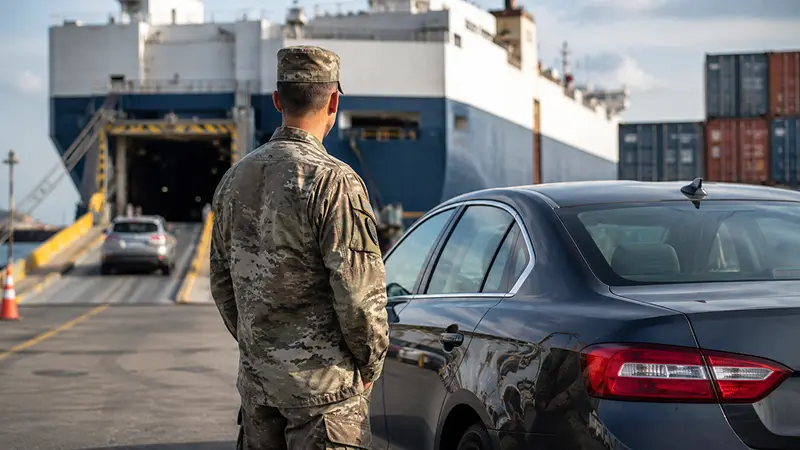
OCONUS car shipping is usually handled by the military. You'll be assigned to a Vehicle Processing Center (VPC), where you'll need to drop off the car. Once there, the vehicle will undergo an inspection to document its condition and confirm it meets the shipping requirements.
After inspection, the vehicle will be loaded onto an ocean carrier, most likely on a Roll-on/Roll-off (RORO) vessel. Once the vehicle arrives at the destination, it will undergo a final inspection before being released for pick-up.
Military Car Shipping Rules and Restrictions
Military car shipping requires that vehicles be in a safe and operable condition. Vehicle condition requirements include:
- No leaking fluids (oil)
- Clean vehicle (interior and exterior)
- No personal items inside
- Mechanical working condition
- Tires must be deflated
Damaged vehicles will require additional handling, which may incur additional fees.
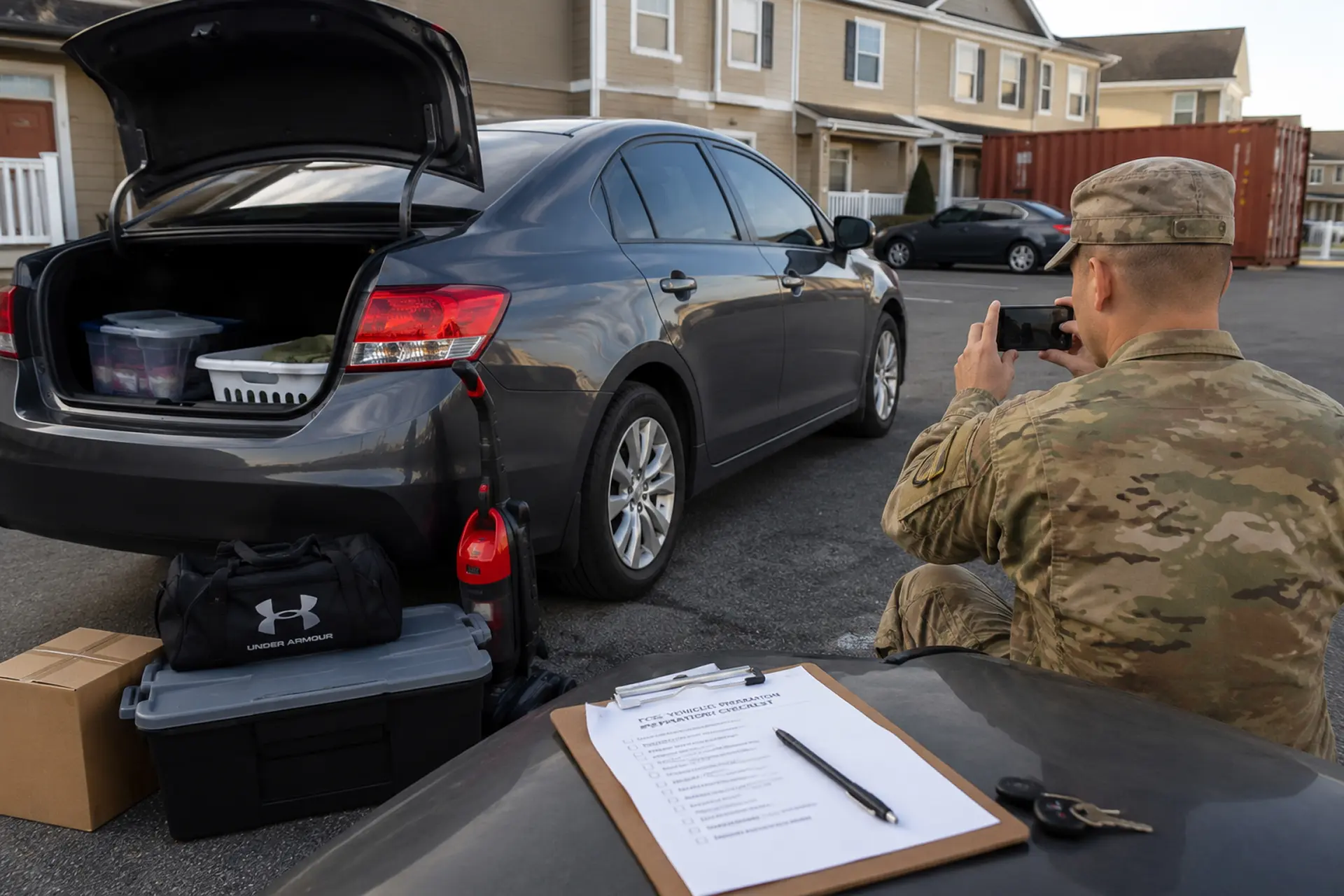
Preparing Your Vehicle for a PCS Move
Preparing your vehicle for military car shipping is a crucial step for a successful experience. You'll need to:
- Wash the interior and exterior of the vehicle. This makes it easier to see the condition of the vehicle during the inspection period
- Remove personal belongings from the vehicle
- Check for leaks
- Keep the fuel level low according to the carrier's requirements
- Disable alarms
- Remove loose objects
- Take photos of the vehicle for your records
Domestic vs. International Military Car Shipping
| CONUS Shipping | OCONUS Shipping | |
|---|---|---|
| Cost | Based on distance. Longer mileage can lower costs. Costs are generally covered by the servicemember. | Costs are generally covered by the military. |
| Paperwork | Minimal documentation. | Extensive documentation. |
| Transit timeframe | It can take a few days to a few weeks, depending on the location and the route used. | It can take weeks, depending on the location and shipping method used. |
| Process | Direct pickup and delivery, with service members driving the vehicle themselves. | Requires drop-off and pick-up at Vehicle Processing Center (VPC). |
| Inspections | Straightforward | Has stricter requirements |
Timeline: How Long Does Military Car Shipping Take?
Domestic CONUS moves generally take a couple of days for moves under 500 miles and up to 10 days for longer distances. Overseas shipping can take up to 8 weeks, depending on the destination, season, and carrier availability. These timelines are estimates, as car shipping is heavily influenced by factors such as distance, location, and even weather. Incomplete paperwork can also result in delays.
Frequently Asked Questions
No, it will depend on the order. OCONUS PCS orders will typically include military-paid car shipping.
Domestic shipping can take up to 10 days, while overseas shipping can take up to 8 weeks.
The military will only pay for one POV. Additional vehicles will be covered at your expense.
Yes, but if it does not meet military requirements, the costs may not be covered, and additional handling fees may be required.
No, you can assign someone else with the power of attorney.
You should schedule vehicle shipping as soon as you receive your PCS order.
Yes, the benefits of OCONUS shipping include government-paid insurance.
No.