


Car shipping is a convenient and safe way to get your vehicle from point A to point B without driving it yourself. If you've just started the process, you've likely noticed two common shipping methods: RoRo and container shipping.
While both methods are safe and reliable for international car transport, they work differently, and what might suit one person might not be the best option for you. This guide will explore the differences between the two and how to choose a shipping method that meets your needs and budget.
What Is RoRo Shipping?
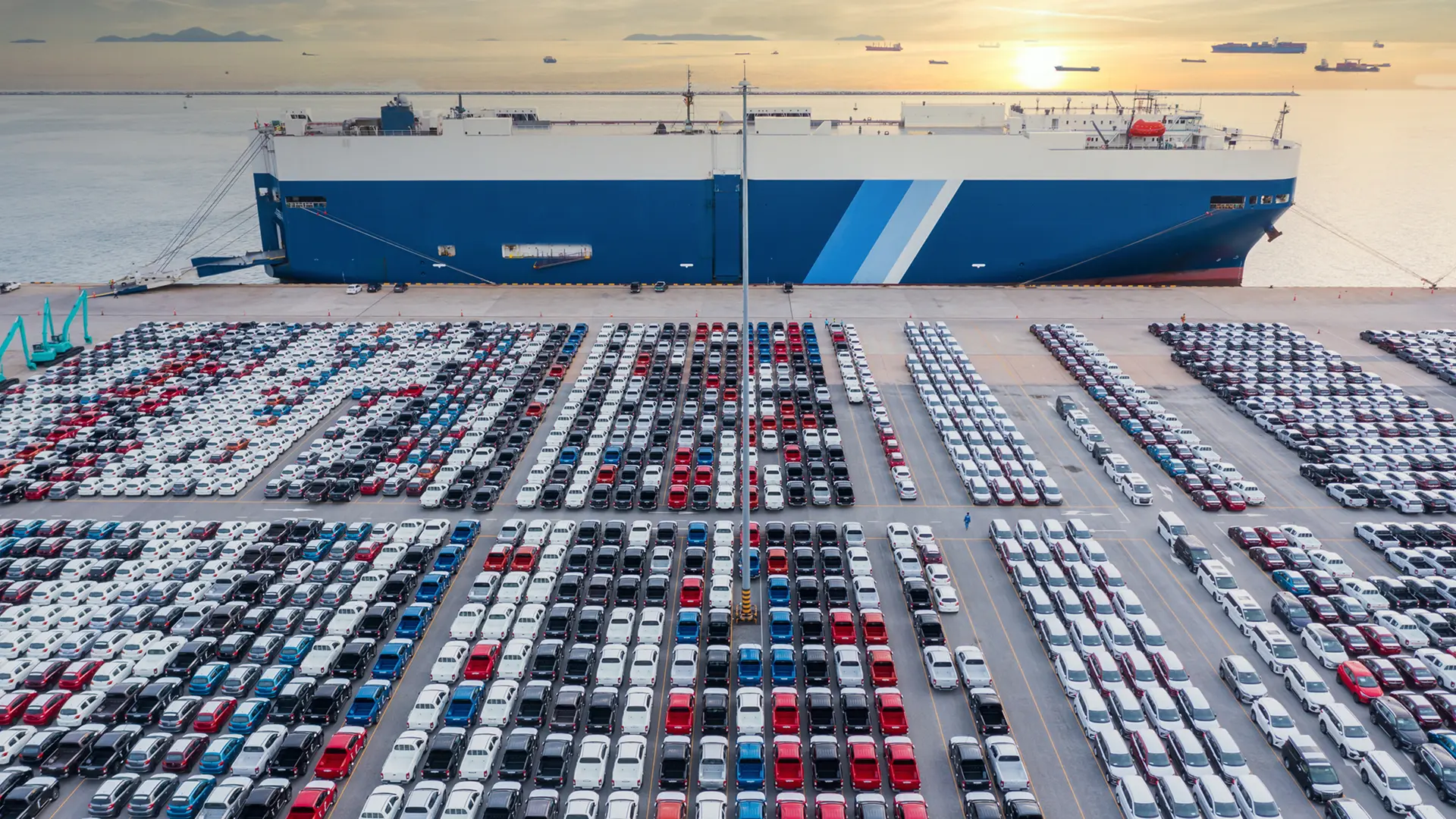
Roll-on/Roll-off (Ro/Ro) shipping is the most commonly used car shipping method because it's the simplest and most cost-effective option. In this method, the cars are simply driven onto the ship and parked inside. Think of Ro/Ro carriers as floating parking structures.
Because the vehicles are driven on and off the carrier during pickup and delivery, this shipping method is mainly used for operational vehicles, oversized vehicles, and heavy equipment.
How RoRo Shipping Works
Understanding how RoRo shipping works can help make the process as efficient as possible with added peace of mind.
1 Delivering the vehicle to the port
You have two choices here. You can either drive your vehicle to the carrier or arrange for the carrier to pick it up, known as door-to-door shipping. Both are well-used options, but while door-to-door is more costly, it is more convenient.
2 Vehicle inspection and documentation
Once your vehicle has arrived at the carrier, the inspection will begin. This important process will document the vehicle's condition, noting all dents and scratches, and record it in the Bill of Lading. This document will be used during the delivery inspection and is crucial for claims purposes if damage occurs.
3 Driving the vehicle onto the vessel
The carrier will expertly drive the vehicles onto the vessel using the built-in ramps. Once onboard, the vehicle will receive a deck assignment based on the vehicle specifications and weight distribution.
4 Securing the vehicle inside the ship
The vehicle is then secured with a lashing system, in which it is strapped down with nylon straps and chains. Other commonly used equipment includes wheel chocks to keep the vehicle stationary.
5 Ocean transit
During this process, the vehicle is transported from port to port. Most reputable car shippers will offer some form of vehicle tracking, whether through satellite tracking or regular updates.
6 Offloading at the destination port
Upon arrival at the destination port, the crew will begin unloading, which includes inspecting the vehicle using the Bill of Lading. The paperwork transfer also takes place here, including customs documents.
What Is Container Car Shipping?
Container shipping involves transporting vehicles in sealed 20-ft or 40-ft shipping containers, which are then loaded onto the cargo vessel. What makes this a popular choice is that containers can hold more than one vehicle, and personal belongings can sometimes be shipped as well.
While this shipping method is more costly, it does offer increased protection and can be used for non-running vehicles.
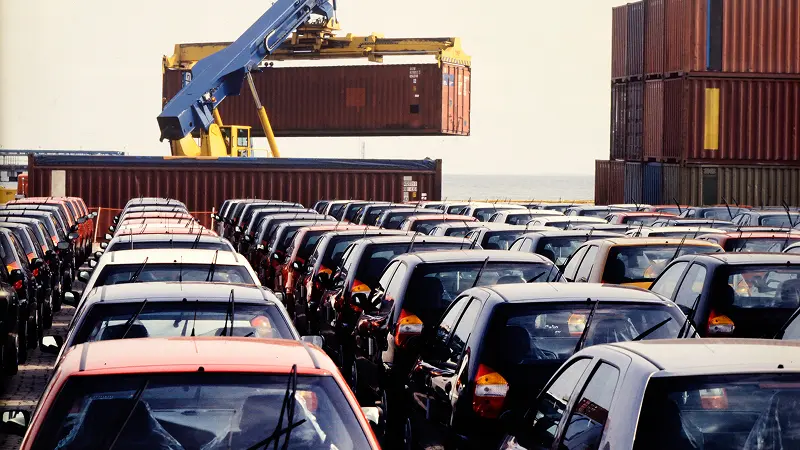 Container shipping loads vehicles into sealed 20-ft or 40-ft containers rather than driving them directly onto the vessel deck.
RoRo vs Container Shipping: Key Differences
RoRo and container shipping are good choices, but they suit different budgets and needs.
| Feature | RoRo Shipping | Container Shipping |
|---|---|---|
| Loading method | Driven onto the vessel and secured with lashing systems | Loaded into a sealed 20-ft or 40-ft shipping container |
| Cost | Typically lower | Usually higher, but it offers enhanced protection. |
| Protection level | Standard protection inside the vessel deck | Higher protection inside an enclosed container |
| Personal items allowed | Generally not allowed | Sometimes allowed, but this will vary depending on the destination and the carrier's regulations |
| Vehicle condition | Must be operable as it is driven on and off the vessel | Can ship non-running vehicles using specialized loading equipment |
| Availability | Limited to ports with RoRo vessels | Widely available globally |
When to Choose RoRo Shipping
RoRo shipping makes sense if you're looking to transport your standard operable vehicle in a cost-effective but efficient way. Compared to crane loading, RoRo shipping has a much faster loading and offloading process, which can shorten the shipping timeline. Because RoRo shipping is a popular method, it uses major global trade routes, enabling faster transit.
If you're relocating overseas, RoRo shipping is a reliable option for transporting your personal vehicle.
When to Choose Container Car Transport
If you're planning to ship luxury, classic, collector, or high-value vehicles, container shipping is recommended for its enhanced protection. This shipping method is also recommended for vehicles that cannot be driven on and off the vessel. While this shipping method is more costly, you can often ship your personal goods along with your vehicle.
For remote destinations, container shipping may be the only option, as some ports may not offer RoRo services.
How Much Does RoRo Shipping Cost?
Pricing for RoRo will largely depend on external factors like:
- Origin and destination ports
- Vehicle size
- Shipping route demand
- Port handling fees
- Customs clearance costs
Because of the simplified loading and unloading process, labor and handling costs are reduced, making RoRo a more affordable option. For example, RoRo shipping can typically cost between $900 - $2,000 per vehicle, depending on size and destination. But while this shipping method may be more cost-effective, it may have stricter requirements.
Port Requirements and Documentation
In order to ensure the shipping process goes smoothly and delays are avoided, it's important to understand which documents you need based on the destination port's requirements. This will typically include a valid ID, the vehicle title, bill of sale, or lienholder authorization if the vehicle is financed.
Depending on the destination, the port may require that export declarations and customs paperwork be completed correctly. Errors or missing paperwork can result in delays.
 Getting your paperwork right the first time, ID, title, bill of sale, and any customs documents, helps avoid delays at the port.
Insurance Considerations for RoRo vs Container Shipping
While both shipping methods are safe, container shipping has lower risk exposure, which you should consider. RoRo vehicles are stored in enclosed cargo decks, but not inside containers, so there is still some exposure to outside elements. Container shipping does provide an extra layer of protection.
It's also recommended to have marine insurance, as while carriers offer basic liability, it is limited to damage caused by negligence. All-risk marine insurance provides more comprehensive cover.
Restrictions and Limitations of RoRo Shipping
While RoRo shipping is a simpler and more affordable option, it does come with limitations. For example, only operable vehicles that meet the fuel level and height requirements can be shipped. Carriers also restrict personal items in the vehicles.
RoRo shipping is also limited to port availability.
RoRo vs Container Car Shipping
RoRo Shipping
Pros
- Cost-effective
- Faster loading and offloading
- Simplified logistics
- Versatile
Cons
- Operable vehicles only
- No personal items
- Higher risk of damage
- Less frequent routes
Container Car Shipping
Pros
- Increased protection
- Allows personal items in the vehicle
- More flexibility
- Lower risk of damage
Cons
- Higher costs
- Slower transit and loading times
FAQs About RoRo and Container Car Shipping
Yes, the vehicles are secured in an enclosed cargo area.
No, personal items need to be removed.
The timeline depends on factors such as shipping method, destination, and season, but it generally takes between 2 and 8 weeks.
Yes, there is increased protection.
RoRo shipping is cheaper because of the simpler loading process.
It is recommended if you want comprehensive cover.
Yes, you can use container shipping for non-running vehicles.