


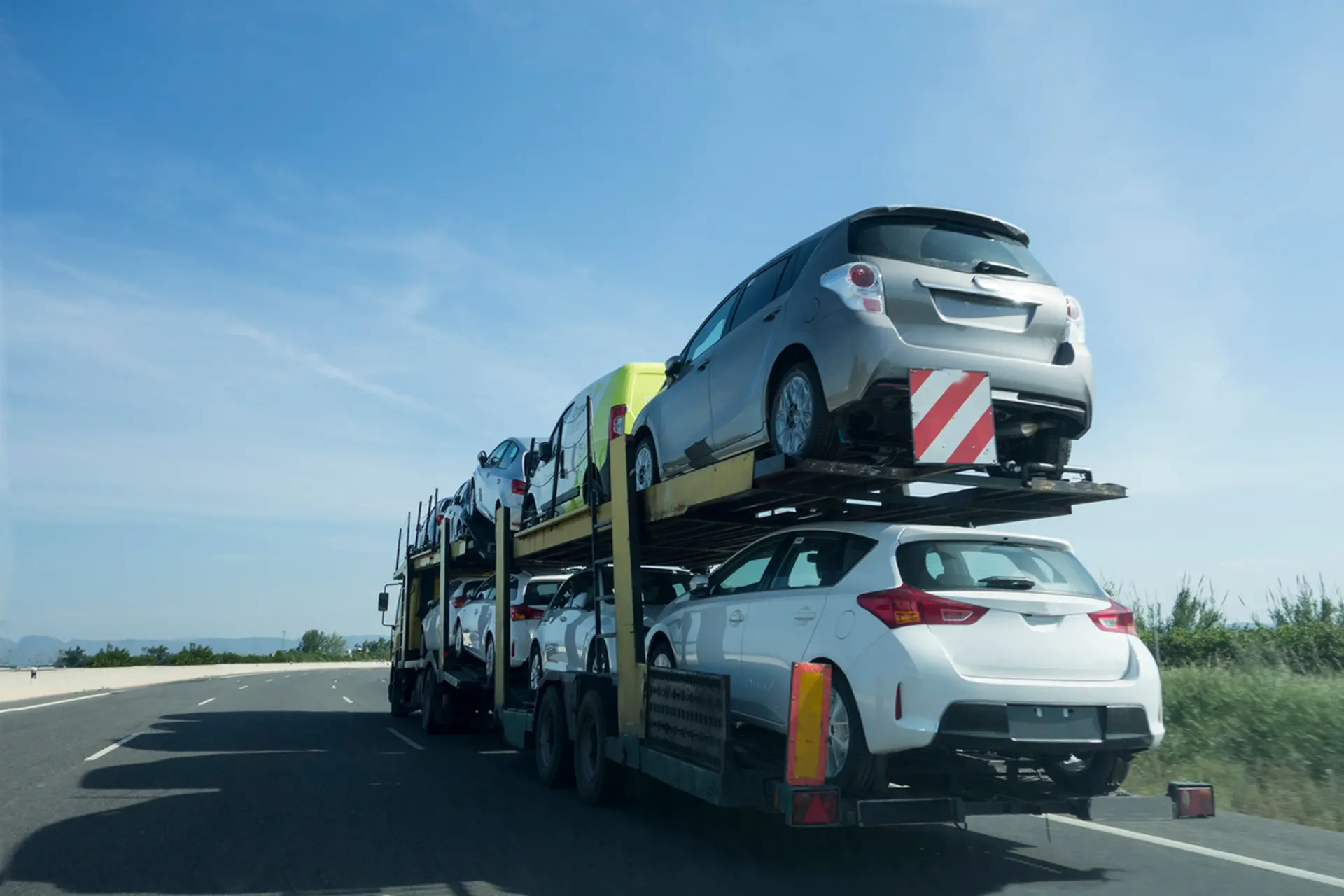
If you've started researching the car shipping process, you've likely seen that open transport car shipping is the most popular option. But just because it's the most popular option doesn't automatically mean it's the right one for you. Understanding how open auto transport works, its advantages, and what to consider can help you make the right choice for your needs.
What Is Open Auto Transport?
As the name implies, open auto transport uses open-air trailers. Cars are stored on single or two-level trailers with straps and wheel chocks. Because open carriers are such a popular option, they're more widely available, often resulting in faster deliveries and more flexible scheduling. As the industry standard, this transport method is considered safe, reliable, and cost-effective for most vehicles.
If you're shipping a high-value, modified, or exotic car, you should be aware that there is no protection from the elements, such as weather, UV rays, dirt, and road debris. In that case, enclosed carriers are usually the better option for added protection.
How Open Car Shipping Works
Among all car shipping methods, open car shipping is one of the simpler processes.
Getting a quote
You'll begin by using an online shipping cost calculator or getting a direct quote from a shipping company. To get an accurate cost estimate, you must provide clear information about the car's condition, size, dates, transport type, and pick-up and drop-off locations.
Booking
When you're ready to move forward, you'll confirm the final agreed-upon rate and schedule the pickup date.
Pickup inspection
Before your vehicle is loaded onto the carrier, the driver will inspect its condition and note any existing damage. This information is captured on the Bill of Lading and is for both your protection and the carrier's.
Transport
During this stage, the route is planned, and the vehicle is delivered to the drop-off location. You may be able to track your vehicle using GPS tracking if available.
Delivery inspection
Before your vehicle is handed over, the driver will conduct a final inspection to ensure the vehicle is in the same condition as when it left, in accordance with the Bill of Lading. If there is new damage, you will need to file a claim with the carrier company.
Open Transport Equipment & Capacity (Carrier Specs)
Open transport can load different cargo depending on the required equipment and capacity. Not all open carriers are designed to transport the same cargo. For example, two-level trailers can carry up to 10 vehicles. However, larger vehicles require more space, which means carriers can't load as many cars.
Abnormal vehicles that exceed weight and height limits will need to be transported in flatbed trailers and heavy-duty haulers.
| Feature | Common Specifications | Why It Matters |
|---|---|---|
| Trailer length | Typically 48-53 feet | Longer trailers can carry more vehicles, which often reduces the cost per car. |
| Carrier design | Two-tier, open-air trailer | Vehicles are loaded on two levels to maximize space and route efficiency. |
| Vehicle capacity | Around 7-10 cars per load | Larger SUVs and trucks reduce total capacity; smaller cars increase it. |
| Trailer width | About 102 inches (standard highway width) | Determines clearance on ramps and narrow streets. |
| Maximum vehicle height | Usually 7-7.5 feet | Tall vans or lifted trucks may require route adjustments or enclosed auto transport. |
| Weight limits | Up to 80,000 lbs gross vehicle weight (legal highway limit) | Heavier loads may impact routing and spacing. |
| Securing system | Wheel straps, soft tie-downs, or nets | Protects suspension and wheels without damaging the vehicle frame. |
| Top deck placement | Sometimes available for a small additional fee | Can reduce exposure to road spray or fluids from vehicles above. |
| Low-clearance vehicles | May require special ramps or a winch | Helps prevent scraping during loading and unloading. |
| Non-running vehicles | Winch loading required (extra cost) | Safe loading without engine power. |
| Multiple pickups/deliveries | Adds time and possibly cost | Each stop affects scheduling and route planning. |
How Much Does Open Auto Transport Cost?
The price of open-transport car shipping depends on several factors, including vehicle type and size, distance, dates, and demand. Keep in mind that most prices in quotes are estimates, not the final agreed-upon price.
Estimated Price Overview
| Shipping Distance / Factor | Average Price Estimate | What It Means |
|---|---|---|
| Short-distance routes | ~$1.30 - $2.10 per mile | Short trips cost more per mile because loading and dispatch expenses are fixed. |
| Mid-range trips (~800-1,000 miles) | ~$850 - $1,250 total | Based on transporting a standard sedan on a common route. |
| Cross-country transport | ~$1,200 - $1,900 total | Coast-to-coast shipment for a standard passenger vehicle. |
| Large SUVs or pickup trucks | +$75 - $250 | Extra cost due to size, weight, and trailer space used. |
| Upper-deck placement (if available) | +$75 - $175 | Sometimes requested to minimize exposure to road spray. |
 Open transport pricing varies by distance, vehicle size, and demand - always compare quotes before booking.
What Affects Open Auto Transport Pricing?
Vehicle shipping prices often change. The final price you'll end up paying will be influenced by multiple factors.
Distance and route popularity
Despite what you might think, shorter distances often cost more compared to longer distances because of the cost per mile. Longer distances, especially on interstate corridors, are often more cost-efficient than rural or remote routes.
Vehicle dimensions and weight
Vehicle size plays a big role in costs because larger vehicles occupy more space and may require larger trailers. Oversized cargo may also require specialized equipment and increased handling.
Pickup and delivery access
Hard-to-reach delivery locations with narrow streets, low clearance, or remote areas can cost more due to the driver's time and additional fuel.
Scheduling flexibility
Being flexible with your pickup windows can often result in more affordable pricing than guaranteed or expedited services.
Seasonal demand
The time of year you ship your vehicle can also be a major factor. For example, peak moving seasons, snowbird demand, and major holidays can increase car shipping volume and pricing.
Vehicle operability
Operable vehicles can be rolled on and off the carrier more easily, but non-running vehicles may require specialized equipment such as winches or liftgates, which can add fees and labor costs.
Optional add-ons
The price can increase with add-ons like top-deck placement for added protection, multiple stops, and special handling.
Pickup, Delivery & Service Options in Open Auto Transport
Because open transport car shipping is so commonly used, you have multiple options for the type of service you choose.
Door-to-Door vs. Terminal Shipping
Door-to-door service is the most convenient option because the carrier will pick up and deliver your vehicle as close to your address as possible. Low clearance, narrow streets, HOA restrictions, and steep driveways can limit access. If this happens, the driver will reach out to arrange a nearby meeting point.
Terminal-to-terminal shipping is a more cost-effective option because it involves dropping off and picking up your vehicle at a designated transport facility. This option might include additional coordination and possible short-term storage.
Both options are commonly used for open car shipping. The right choice usually depends on your budget and convenience needs.
Residential vs. Commercial Pickup Locations
If you live in an area that has narrow streets or where access is difficult, most shipping companies will recommend using a commercial pickup location instead. These areas are often easier to access and load from.
Pickup Windows & Estimated Arrival Times
You'll notice on your quote that you'll be given a pickup window and estimated arrival time, not an exact time. This is because the carrier can be affected by traffic, road closures, and bad weather conditions. In these cases, the carrier will usually provide updates.
Vehicle Inspections & the Bill of Lading
An inspection will be carried out during both pickup and delivery. During pickup, the driver will visually inspect the vehicle for existing damage. The condition will be noted on the Bill of Lading, and it's recommended that you take photos of the car as well.
During delivery, another inspection is conducted, during which the vehicle's condition is compared with the Bill of Lading. If damage has occurred, you can file a claim with the carrier's insurance.
Optional Services & Special Requests
Some shipping companies will have add-ons available like expedited shipping, upper-deck placement, and specialized equipment for non-running vehicles. These add-ons can be requested during booking.
How to Prepare Your Vehicle for Open Car Transport
The key to avoiding delays, damage, and extra fees is proper preparation.
1. Wash the Vehicle
Washing your vehicle will make it easier to document the condition, as dirt can conceal dents and scratches.
2. Remove Personal Items
Remove all personal items from your vehicle as they are not typically covered by the carrier and can be damaged during transport. Some shipping companies will have a limit on what personal items you may store in the trunk.
3. Check for Leaks and Mechanical Issues
Check for mechanical issues and leaks before the pickup inspection to avoid costly add-ons. For example, some companies can refuse vehicles with fluid leaks as they can become a safety hazard.
4. Leave Only a Small Amount of Fuel
Most transport companies recommend leaving a ¼ tank of fuel. This is just enough for loading and unloading.
5. Disable Alarms and Secure Loose Parts
Loose parts like roof racks, mirrors, retractable antennas, GPS systems, and alarm systems can be damaged from road movement and vibration. It's best to remove or secure these accessories.
6. Document the Vehicle's Condition
While the Bill of Lading is important, having timestamped photos from multiple angles can help during damage claim disputes.
7. Provide Accurate Vehicle Information
The best way to prevent cost surprises and delays is to provide accurate information during the quote and booking stages. Be clear about the height, weight, modifications, and operability. Oversized or non-running vehicles will need specialized equipment, which can cost more.
Open Auto Transport vs Enclosed Auto Transport
Both open and enclosed auto shipping are reliable and commonly used options. Which one you should use will depend on your specific needs.
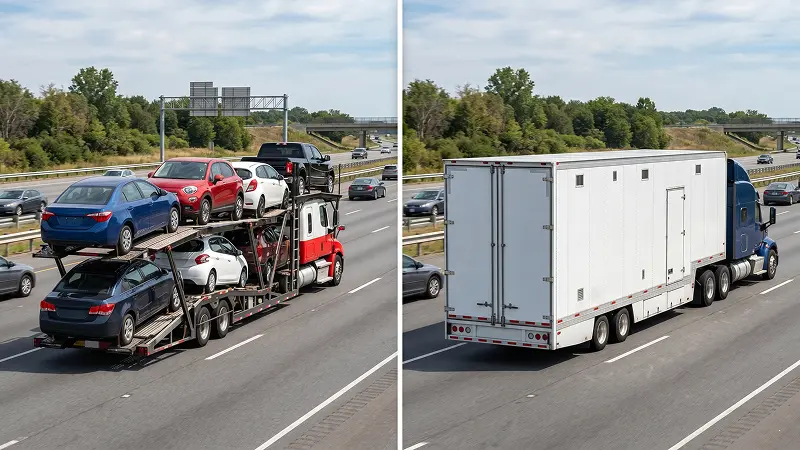 Open carriers (left) are more affordable and widely available; enclosed trailers (right) offer added protection for high-value vehicles.
Open Auto Transport
Pros
- More affordable
- More widely available
- Faster booking in most cases
- Suitable for most vehicles
Cons
- Exposure to weather elements like UV rays
- Minor risk of cosmetic dust or debris
- Less privacy compared to enclosed carriers
Enclosed Auto Transport
Pros
- Increased protection
- Enhanced security
- Less risk of damage from weather and road elements
Cons
- Higher costs
- Slower delivery times
- Fewer enclosed carriers are available
FAQs About Open Auto Transport
Yes, most reputable car shipping companies will include cargo insurance to cover damage during transit.
Open car shipping is safe, cost-effective, and reliable for shipping new cars.
The delivery timeline will depend on factors like distance, location, carrier availability, and the weather.
Yes, non-running cars can be shipped with specialized equipment such as flatbed service, liftgates, or winches.
Both are standard shipping methods. Enclosed car shipping offers added protection from elements like weather and road debris.
You should choose enclosed shipping if you want added protection or if you're shipping a high-value vehicle.
It's not recommended because carrier insurance often does not cover personal belongings.